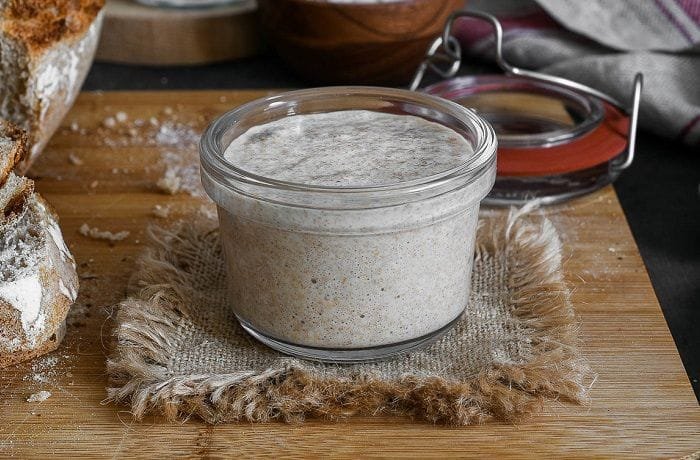
A natural sourdough starter is made by fermenting golden raisins, unpeeled organic apple, and brown sugar in filtered water for 7 days, then feeding 30 ml of that liquid with 30 g of strong flour and refreshing it with equal parts flour and water every 12 hours for 3 days until it doubles. It takes 30 minutes of hands on time and 10 days of fermentation.
A simple process that calls for care, consistency, and a good scale.
How to Make a Natural Sourdough Starter?
Use clean utensils and wash your hands well so no unwanted microbes get into the fermentation. Keep the starter in a warm place, around 20°C (68°F).
Nutritional Information
Each serving of sourdough starter contains approximately 100 kcal, 20 g of carbohydrates, 1 g of protein, and less than 1 g of fat, with no significant fiber, sugars, cholesterol, or sodium. These values are estimates and may vary depending on ingredients and portion sizes.
Natural Sourdough Starter Recipe
Preparation: 30 minutes (plus 10 days of fermentation)
Servings: 1 starter
Ingredients
- 75 g (½ cup) of golden raisins
- 50 g of organic apple
- 2 tablespoons of brown sugar
- Strong (bread) flour
- Filtered water

Instructions
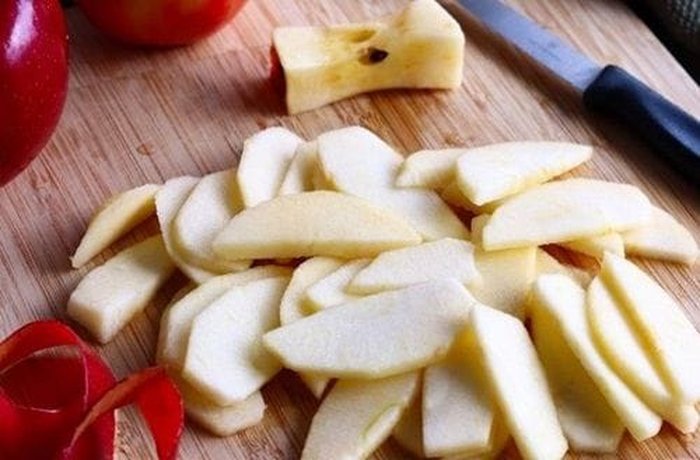
- Without peeling the apple, remove the core and seeds, dice it, and put it in a large glass jar with the raisins and brown sugar. Cover with room temperature filtered water, close, and shake gently. Leave in a cool, dark place for 7 days.
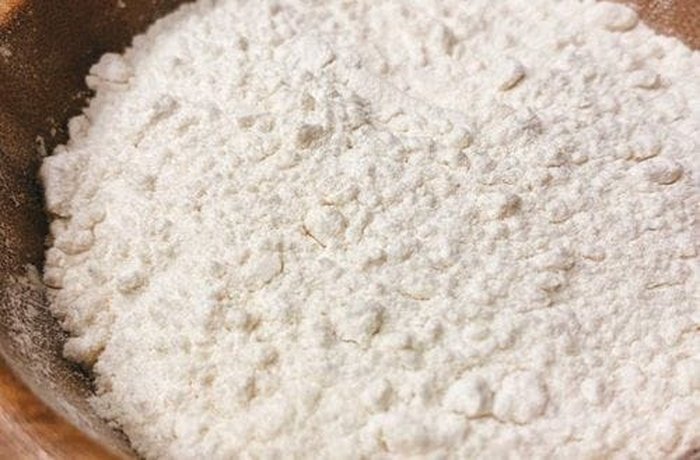
- After 7 days, strain the liquid, set it aside, and discard the fruit; it will smell of alcoholic fermentation, like beer or wine. In a glass jar with an airtight lid, mix 30 g of flour with 30 ml of the soaking liquid into a porridge, close, and leave in a warm place at about 20°C (68°F) for 24 hours.

- Add another 30 g of flour and 30 ml of water, and repeat every 12 hours for 3 days. This is called refreshing or feeding; the starter rises slowly at first, then soon doubles or even triples. Put a rubber band around the jar to track its growth.
- From this point the starter is ready. If you bake every day, feed it every 24 hours at room temperature. If you bake weekly, feed it, leave it an hour at room temperature, refrigerate, and feed every five days; take it out two days before baking and feed every 24 hours to reactivate it.
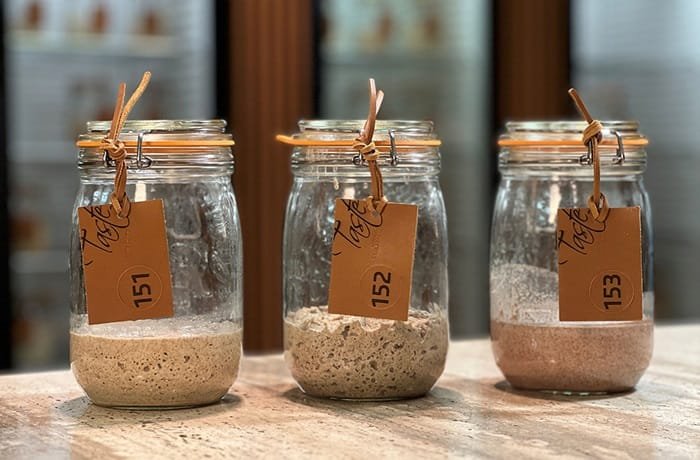
- Because the starter grows quickly, discard part of it at each feeding. Feed at a 1:1:1 ratio of starter, flour, and water; too little flour leaves it underfed and very sour.

- To keep a small reserve, use or discard all but 30 g, feed it, and refrigerate, refreshing every 5 days and reactivating 48 hours before use. Always keep about 30 g to start the cycle again.
Additional Tips
Filtered water
Tap water chlorine is designed to kill bacteria and can stall your starter; filtered water lets wild yeasts thrive.
Feed generously
With too little flour, bacteria use up the sugars and start breaking down proteins, giving an acetone or vinegar smell.
Use a scale
Weighing flour and water keeps the ratio consistent.
Warm spot
Around 20 to 25°C (68 to 77°F), the starter is more active.
| Original ingredient | Substitute | Ratio | Flavor note |
|---|---|---|---|
| Strong flour | All purpose flour | 30 g | Runnier, less volume |
| Golden raisins | Dark raisins | 75 g | Same method |
| Brown sugar | White sugar | 2 tbsp | Same method |
| Daily feeding | Fridge, every 5 days | 1:1:1 | For weekly baking |
Frequently Asked Questions (FAQs)
1. What is the dark liquid on top?
Bakers call it hooch: alcohol and water that separate when the starter has gone too long without food. It is harmless; pour it off or stir it in, but feed your starter soon.
2. Why use an organic apple?
Non organic apples are often treated with fungicides that kill the natural yeasts on the skin, which this method relies on to start a vigorous fermentation, so the apple goes in unpeeled.
3. My starter does not float. Is it dead?
Try the float test: drop a teaspoon into a glass of water. If it floats, it is full of carbon dioxide and ready; if it sinks, it needs more time or has peaked and needs another feeding.
4. Can I use regular flour instead of strong flour?
Yes, but strong flour has more gluten, which traps gas better. With regular flour the starter is runnier and the bread has less volume.
What Is a Sourdough Starter?
A sourdough starter is a symbiotic culture of wild yeasts naturally present on fruits and grains, together with lactic acid bacteria from the environment.

Benefits of Sourdough
Sourdough fermentation partly breaks down starches, gives bread a lower glycemic index, and produces lactic and acetic acids that help preserve it naturally.
How to adapt this recipe to a vegan or vegetarian version?
How to adapt this recipe to a gluten-free version?
How to adapt this recipe to a keto (ketogenic) version?
Recommended
- Homemade Sourdough Bread Recipe
- Homemade Multigrain Bread Recipe
- Chilean White Sandwich Bread Recipe
- Homemade Oat Bread Recipe