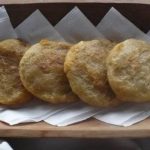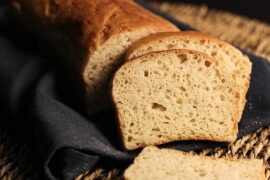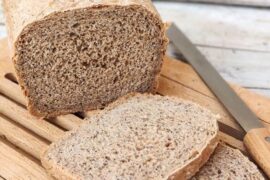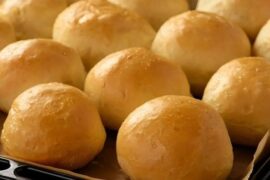
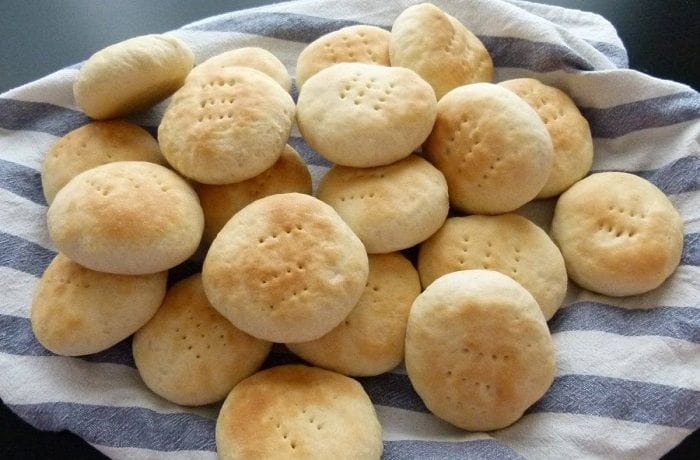
Chilean amasado bread is the bread of the house, the one our mothers and grandmothers used to make, the bread we enjoyed for breakfast straight out of the oven, spread with fresh butter or fruit jam.
Nutrition Facts
Each serving of Chilean Amasado Bread (1 medium loaf) contains approximately 280 kcal, 7 g of protein, 8 g of fat, 45 g of carbohydrates, 15 mg of cholesterol, and 380 mg of sodium.
How to Make Chilean Amasado Bread
The recipe for making easy, homemade, and soft amasado bread is undoubtedly a must-have in any Chilean cookbook, and there are multiple local variations, such as churrascas, Lota miner’s bread, or even unleavened bread.
Prep Time: 150 minutes
Cook Time: 20 minutes
Servings: 6
Ingredients
- 500 g (17.6 oz) of flour
- 250 ml (8.5 fl oz) of warm water
- 30 g (1.1 oz) of butter (2 tablespoons)
- 10 g (0.35 oz) of dry yeast (1 tablespoon)
- 7 g (0.25 oz) of sugar (1 teaspoon)
- 5 g (0.18 oz) of salt (1 teaspoon)
Instructions
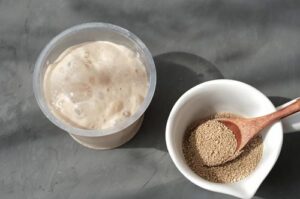
- In a medium-sized bowl, dissolve 10 grams of dry yeast or 30 grams of fresh yeast in about 100 ml of warm water, add sugar, stir, and let rest for 10 minutes in a warm place. Sift the flour and salt into a large bowl, make a well in the center, and add the yeast mixture, the remaining water, and room temperature butter.
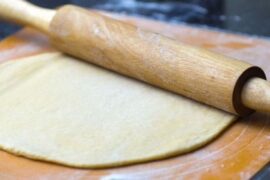
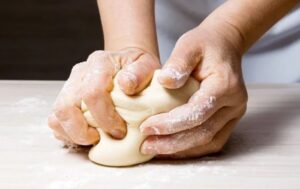
- Mix everything with your hands or a wooden spoon and knead for about 5 minutes until you obtain a soft and flexible dough that doesn’t stick to your fingers. Transfer the dough to a large greased bowl, roll to grease the surface, cover with a clean kitchen cloth, and let rise at room temperature for 1 to 2 hours or until the dough doubles in size.
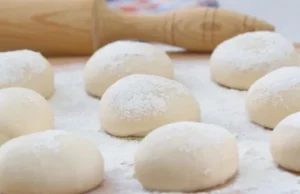
- Transfer the dough to a floured surface and work it with your hands until you obtain a smooth and elastic texture. Divide it into 10 or 12 pieces, shape small round loaves with your palms, distribute them on a baking tray, prick them with a fork, cover again with a clean kitchen cloth, and let rise for another 30 minutes.
- Preheat the oven to 190°C (374°F) for at least 10 minutes. Place the loaves in the preheated oven and bake for about 20 minutes or until they are lightly golden and produce a hollow sound when tapped on the base. Remove and cool on a wire rack. Serve the amasado bread warm or cold, plain or spread with butter, jam, or any other accompaniment of your choice.
Expert Cooking Tips
- Yeast Activation via “Fermento”: Dissolve the dry yeast with sugar in warm water and let it rest for 10 minutes. This “blooming” phase ensures the yeast is alive and healthy; if the mixture doesn’t foam, your bread will not rise. The sugar acts as immediate fuel for the Saccharomyces cerevisiae.
- Controlled Proofing Temperatures: Let the dough rise in a greased bowl in a warm, draft-free place until it doubles in size. If the room is too cold, the fermentation will stall; if it’s too hot (above $45\text{°C}$), you risk killing the yeast. A consistent $25\text{°C}$ environment is ideal for flavor development.
- The Fork Prick Technique: Pricking the loaves with a fork before the second rise isn’t just for decoration. These small channels act as “steam vents” that prevent the bread from bursting unevenly in the oven and help maintain the traditional flat, rounded shape.
Frequently Asked Questions (FAQ)
1. Can I use lard instead of butter?
Yes, and many traditionalists prefer it. Lard (manteca) provides a richer, more rustic flavor and a slightly different crumb texture.
2. Why is my bread hard the next day?
Amassado bread is best fresh. Because it contains no preservatives, it tends to dry out. Store it in a cloth bag or a bread box to maintain its moisture.
3. What is the difference between dry and fresh yeast?
They are the same organism, but dry yeast is more concentrated. Use a 1:3 ratio (1 g of dry yeast equals 3 g of fresh yeast).
4. Can I make these in an air fryer?
Yes, but you must lower the temperature to about 160°C and check them frequently, as the circulating air can dry out the crust too quickly.
History and Origin
The origin of pan amasado is a fusion of Spanish baking traditions and the rural necessity of colonial Chile. When wheat was introduced in the 16th century, it became a staple crop. Unlike the “pan francés” (marraqueta), which arrived later with European immigrants to the cities, pan amasado remained the bread of the countryside.
Dry Yeast vs. Baking Powder
Whether you use dry (powdered) yeast or fresh yeast, just consider that for every gram of dry yeast used, the equivalent amount of fresh yeast needed is three grams (1:3).
Did You Know?
Traditionally, it was baked in a clay oven (horno de barro), which provided a unique smoky aroma and a thick, crunchy crust.
How to adapt this recipe to a vegan or vegetarian version?
How to adapt this recipe to a gluten-free version?
How to adapt this recipe to a keto (ketogenic) version?
Recommended
- Chilean Conger Chowder Recipe
- Picarones with Chancaca Syrupe
- Chilean Pantrucas Soup Recipe
- Homemade Chilean Hallullas