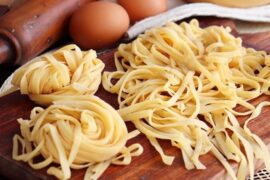
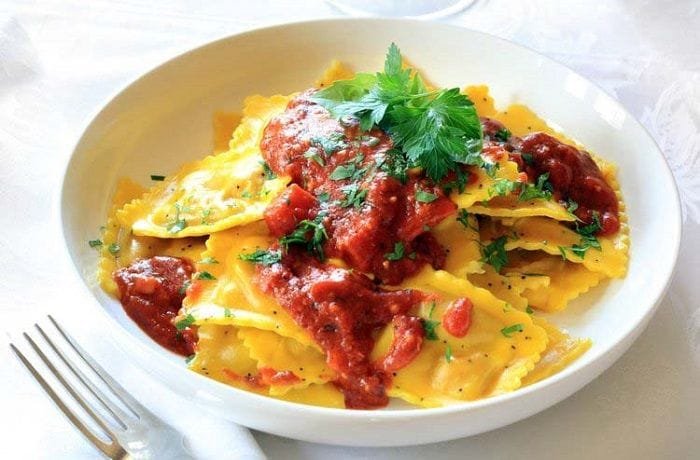
Homemade ham and ricotta ravioli are squares of fresh egg pasta made with flour, eggs, olive oil, warm water, and salt, rolled to about 3 mm and filled with a mixture of ricotta, chopped ham, and grated Parmigiano Reggiano, then boiled for 3 to 5 minutes. They take 45 minutes of preparation and 5 minutes of cooking, and serve 4.
An Italian classic that you can fill with spinach, meat, or cheese, ideal to impress your guests.
How to Make Homemade Ravioli?
Fresh pasta is kneaded, rested, and rolled into thin sheets. Small mounds of filling go on one sheet, the second sheet seals them, and the ravioli are cut, crimped, and boiled briefly in salted water.
Nutritional Information
Each serving of homemade filled ravioli contains approximately 450 kcal, 65 g of carbohydrates, 14 g of fat, 22 g of protein, 3 g of fiber, 2 g of sugars, and 150 mg of sodium. These values are estimates and may vary depending on ingredients and portion sizes.
Homemade Ham and Ricotta Ravioli Recipe
Preparation: 45 minutes
Cooking: 5 minutes
Servings: 4
Ingredients
Fresh pasta
- 500 g (4 cups) of flour
- 150 ml (⅔ cup) of warm water
- 3 eggs
- 3 tablespoons of olive oil
- 1 pinch of salt
Filling
- 500 g of ricotta
- 200 g of ham
- 100 g of Parmigiano Reggiano cheese

Instructions
- In a large bowl, make a well in the sifted flour and add the eggs, oil, salt, and the warm water little by little. Mix by hand until combined, then knead for 8 to 10 minutes until the dough is firm and no longer sticks to your hands.
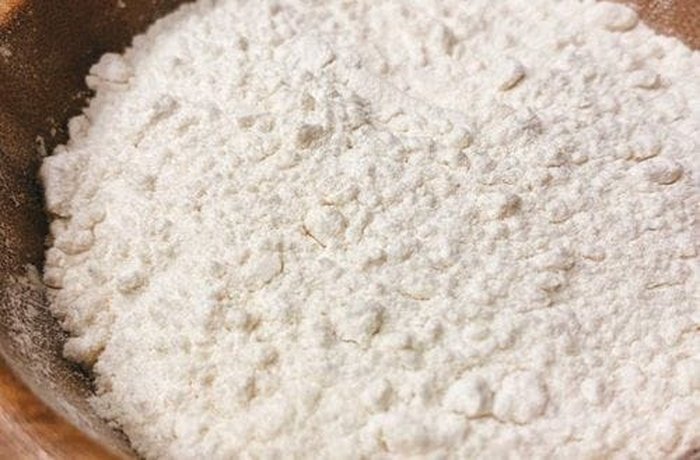
- Wrap the dough in plastic wrap and chill for about 20 minutes. Roll it out on a clean, floured surface into a rectangular sheet about 3 mm thick, or use a pasta machine at setting 6 to 7. Chop the ham, grate the cheese, crumble the ricotta, and mix them together. Set aside.
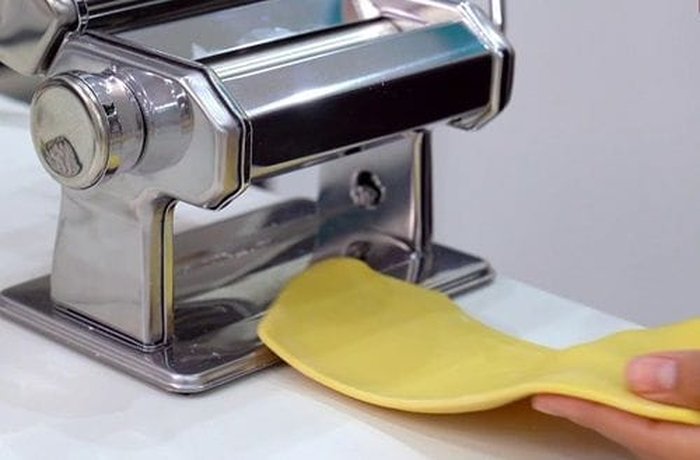
- Divide the dough into two sheets. On one, place ½ teaspoon of filling at regular, well spaced intervals. Moisten around each mound with water, cover with the second sheet, and press gently around the filling to seal, pushing out any air.
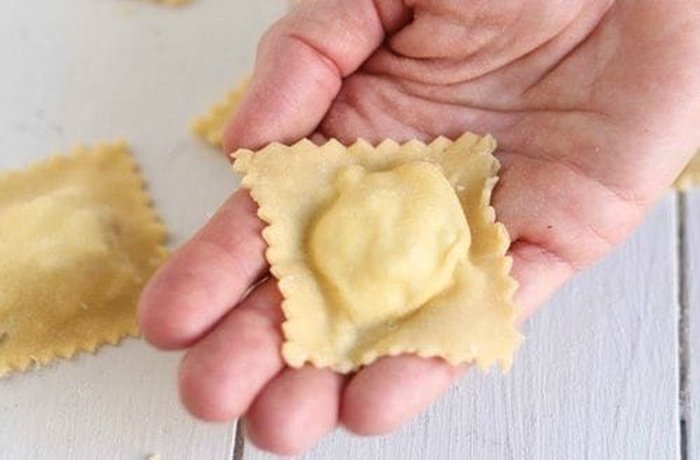
- Cut out each ravioli with a knife or pasta cutter, seal the edges with a fork, and dust with a little flour. Cook in a large pot of salted boiling water for 3 to 5 minutes, depending on size, and serve right away.
Additional Tips
Use soft flour
Type 00 flour or soft flour gives a silky dough that is easy to roll.
Seal well
Moisten the edges, press firmly, and leave no air inside, since bubbles can burst the pasta.
Freeze raw ravioli
Freeze them on a floured tray, then store in airtight bags for up to 3 months.
| Original ingredient | Substitute | Ratio | Flavor note |
|---|---|---|---|
| Ham | Spinach with cream | 200 g | Vegetarian |
| Ham and ricotta | Blue cheese with hazelnuts | Same amount | Gourmet |
| Parmigiano Reggiano | Grana Padano | 100 g | Similar flavor |
| Sage butter sauce | Fresh tomato sauce | To taste | Lighter |
Frequently Asked Questions (FAQs)
1. How thick should ravioli dough be?
About 3 mm. Roll it into an even sheet on a floured surface, or use setting 6 to 7 on a pasta machine.
2. Does ravioli dough need to rest?
Yes, about 20 minutes in the fridge wrapped in plastic wrap. It relaxes the dough so it rolls without shrinking.
3. How much filling goes in each ravioli?
Half a teaspoon, well spaced. With more filling the edges are hard to seal and may open while boiling.
4. How long do homemade ravioli cook?
3 to 5 minutes in plenty of salted boiling water, depending on size. Fresh pasta cooks much faster than dried.
Which Sauce Goes Best?
A light butter and sage sauce or a fresh tomato sauce lets the ham, ricotta, and cheese shine.
Did You Know?
The word ravioli is often traced to the Genoese dialect word raviolo, and filled pasta has a long history in northern Italy.
How to adapt this recipe to a vegan or vegetarian version?
How to adapt this recipe to a gluten-free version?
How to adapt this recipe to a keto (ketogenic) version?
Recommended
- Homemade Potato Gnocchi Recipe
- Spinach Gnocchi Recipe
- Homemade Tomato Sauce Recipe
- Chilean Ají de Color Recipe