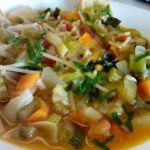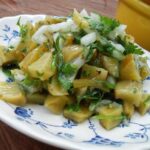
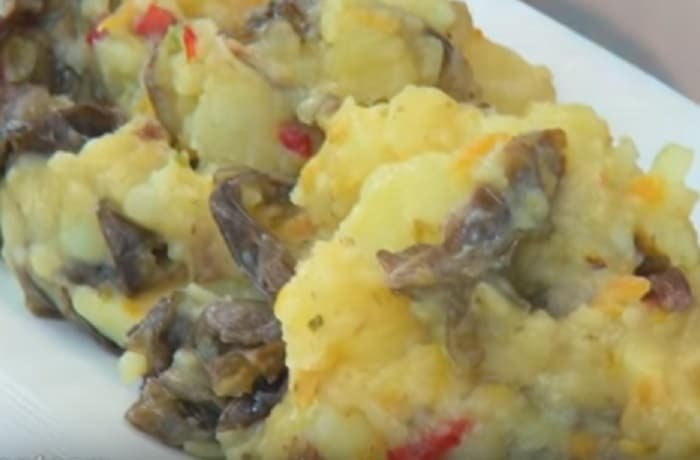
Papas con luche is a dish from Mapuche cuisine that brings together the region’s farmed crops with what is gathered along the coast, blending a hearty, starchy texture with a distinctly salty, oceanic profile. The recipe stands out for its simplicity, traditionally eaten in coastal communities and rural areas of Chile’s southern regions. It’s made with skin-on boiled potatoes, roughly mashed, mixed with a sauté of white onion, garlic, and red bell pepper cooked over medium heat, then combined with rehydrated dried luche seaweed. The final texture is adjusted with the reserved cooking water. An ancestral Mapuche dish from southern Chile, ready in 40 minutes.
Nutritional Information
Each serving of papas con luche contains approximately 280 kcal, 5 g of protein, 6 g of total fat (1 g saturated fat), 0 mg of cholesterol, 50 g of carbohydrates, 5 g of total sugars, and 600 mg of sodium. (*)
(*) Values may vary depending on ingredients and portion sizes.
How to Make Homemade Papas con Luche?
Papas con luche is without a doubt one of the staple dishes of Mapuche gastronomy, a traditional combination of ingredients from the sea and the land, simple and highly nutritious.
Prep time: 30 minutes
Cook time: 20 minutes
Servings: 4 people
Ingredients
- 2 kg (4.4 lb) potatoes
- 200 g (7 oz) dried luche seaweed
- 2 medium onions
- 2 carrots, grated
- 2 celery stalks
- 2 garlic cloves, chopped
- 1 red bell pepper
- 1 tablespoon salt
- 1 teaspoon oregano
- ½ teaspoon cumin
- Vegetable oil
- Fine salt
Instructions
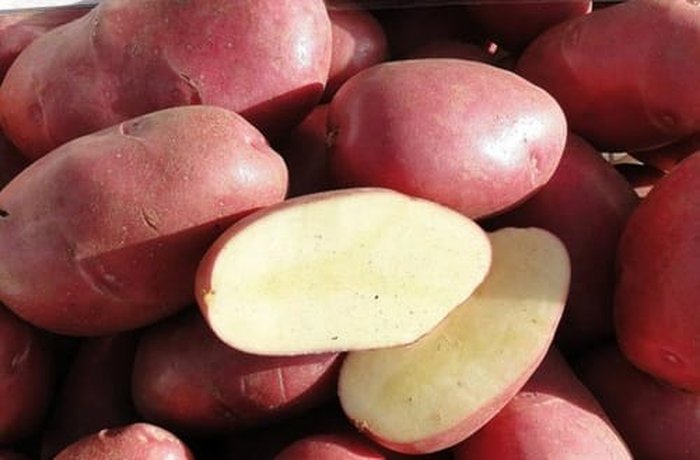
- Wash and peel the potatoes, cut them in half, and cook them covered in cold water with a tablespoon of salt for 20 minutes from the boil, checking with the tip of a knife. Drain and reserve the cooking water.
- In a large pot, add a splash of oil and heat over medium heat, add the diced onion and bell pepper, the grated carrot, the ground garlic, salt, oregano, and cumin, stirring and cooking gently for 5 to 10 minutes.
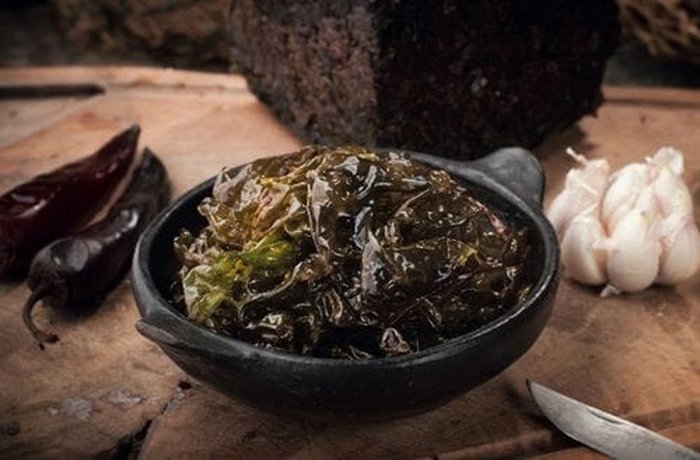
- Soak about 2 cups of chopped luche in cold water for one minute, then add it to the sauté, stirring to combine, and add a little of the reserved potato cooking water, little by little, so the mixture doesn’t dry out.
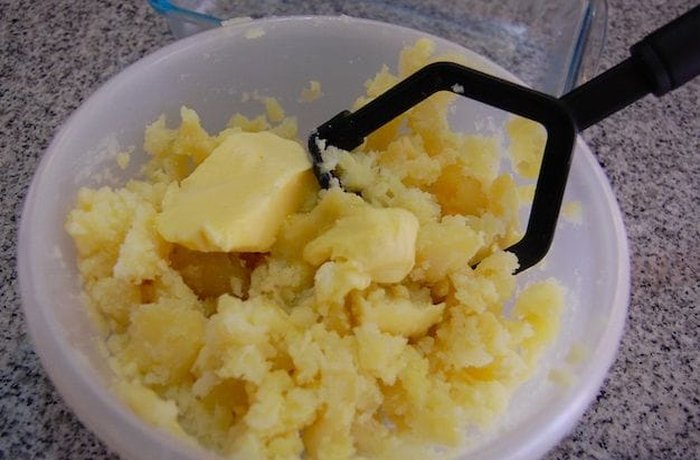
- Add the cooked potatoes and mash them with a wooden spoon, mixing and adding a little of the cooking water until you reach a coarse, chunky consistency; stir in the butter to combine. Serve immediately, on its own or alongside, for example, lamb chops, and sprinkle with chopped cilantro.
Additional Expert Tips
Why save the potato cooking water?
The cooking water contains dissolved starch that works as a natural binder without adding extra flavors. When mixing the mashed potatoes with the sauté and the luche, the mixture tends to turn dry and hard to combine without it.
How to rehydrate dried luche correctly
Soak the dried luche in warm water, since excessive heat damages the seaweed’s texture. The seaweed expands 3-4 times in volume when rehydrated. Squeeze it well with your hands to remove excess water before adding it to the sauté.
What’s the right point for the sauté before adding the luche?
The onion should turn completely translucent and soft, with no resistance when pressed against the side of the pan. The garlic should smell sweet, not sharp. The bell pepper should have lost its firm texture and be soft.
Seaweed in Chilean Cooking
| Seaweed | Scientific name | Region | Main culinary uses |
|---|---|---|---|
| Luche | Pyropia columbina | South (regions VIII-X) | Papas con luche, stews, empanadas |
| Cochayuyo | Durvillaea antarctica | Entire coastline | Salads, casseroles, charquicán |
| Ulte | Lessonia spp. | South (regions VIII-X) | Raw salads, ceviches |
| Pelillo | Gracilaria chilensis | North-central | Soups, food-grade agar |
Frequently Asked Questions (FAQs)
1. How is luche different from other seaweeds?
Luche (Pyropia columbina) is an edible red seaweed with a fine texture and an intense oceanic flavor. Unlike cochayuyo, which is thicker and meatier, luche is dried and pressed into thin sheets.
2. How should dried luche be properly hydrated?
Just soak the luche in cold water for 1-2 minutes, rinsing it well to remove any sand or impurities. It doesn’t need to be cooked beforehand, since it’s added directly into the hot sauté or dish.
3. Is it safe for people with thyroid issues to eat luche?
Luche is very rich in iodine, which makes it beneficial for health in moderate amounts. People with hyperthyroidism or undergoing thyroid treatment should consult their doctor before consuming it frequently.
4. Why is the potato mashed roughly instead of smoothly?
A coarse, rustic mash keeps some texture in the dish and lets the potato hold together with the seaweed and the sauté without turning into a completely smooth purée, which is closer to how it’s traditionally served.
What Is Papas con Luche?
Papas con luche is one of the staple dishes of Mapuche gastronomy, a traditional combination of ingredients from the sea and the land that is simple to prepare and highly nutritious.
Health Benefits of Luche
Luche is a seaweed rich in protein, dietary fiber, and vitamins that help support the immune system and the function of the kidneys and liver, helping eliminate toxins and reduce the absorption of heavy metals. It also contains iodine, calcium, iron, zinc, magnesium, and phosphorus, and is rich in lutein, a natural pigment that helps protect the eyes from cataracts.
Did You Know?
The word luche comes from Mapudungun and means “sea herb that is eaten”; it has been part of the traditional diet of the Mapuche people for many centuries, who historically stored it by drying it in the sun and pressing it into flat sheets.
How to adapt this recipe to a vegan or vegetarian version?
How to adapt this recipe to a gluten-free version?
How to adapt this recipe to a keto (ketogenic) version?
Recommended
- Chilean Cochayuyo Seaweed Jam
- Chilean Cochayuyo Seaweed Burgers
- Chilean Salmon Cancato
- Homemade Mapuche Merkén