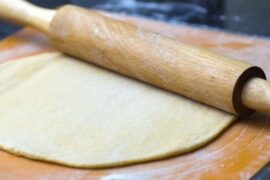
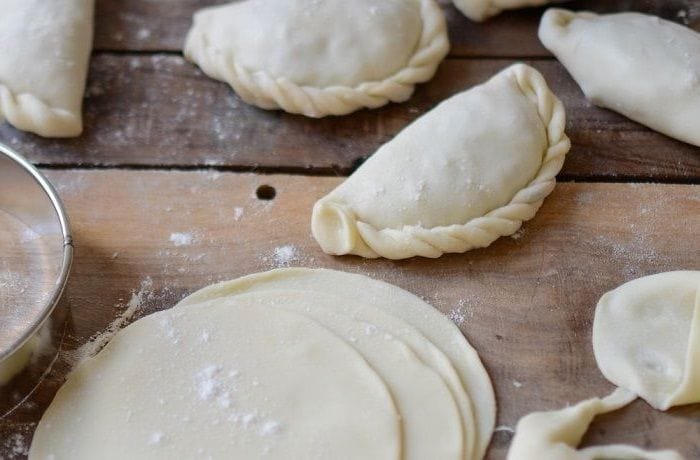
Gluten-free empanada dough is made by sifting 500 g of rice flour, 300 g of cornstarch, and 200 g of chuño starch, adding an egg and 180 g of melted lard, kneading with a warm brine of milk, water, and salt, resting 30 minutes, and rolling it 2 to 3 mm thick for baked or fried empanadas. It takes 30 minutes of preparation plus 30 minutes of cooking and serves 6 people.
It is an essential recipe so people with celiac disease or gluten intolerance can enjoy homemade Chilean empanadas.
How to Make Gluten-Free Empanada Dough?
The challenge with gluten-free dough is getting enough elasticity to roll and fold without cracking. This version uses flours and starches that are easy to find in Chile, bound with egg, lard, and a warm brine.
Nutritional Information
Each serving of gluten-free empanada dough contains approximately 510 kcal, 9 g of protein, 20 g of total fat (11 g of saturated fat), 75 g of carbohydrates, 1 g of sugars, 35 mg of cholesterol, and 280 mg of sodium. These values are estimates and may vary depending on ingredients and portion sizes.
Homemade Gluten-Free Empanada Dough Recipe
Preparation: 30 minutes
Cooking: 30 minutes
Servings: 6 people
Ingredients
- 500 g (1.1 lb) of rice flour
- 300 g (10.5 oz) of cornstarch
- 200 g (7 oz) of chuño (potato starch)
- 250 ml (1 cup) of cold milk
- 250 ml (1 cup) of hot water
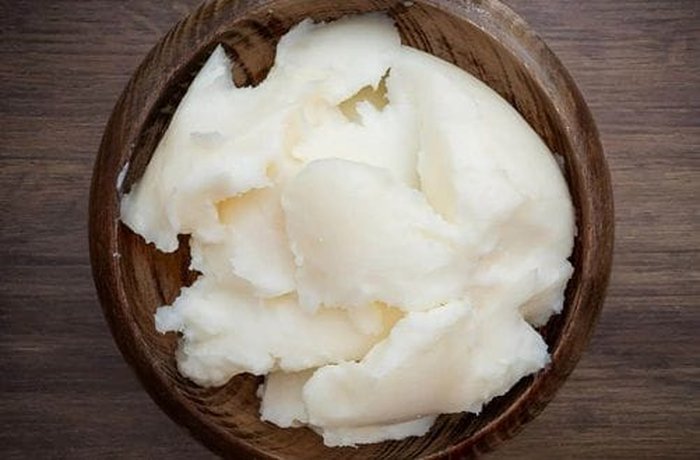
- 180 g (3/4 cup) of lard, melted
- 1 egg
- 1 teaspoon of fine salt
Instructions
- In a medium bowl, make a brine by mixing the cold milk, hot water, and salt until dissolved. In a large bowl, sift the rice flour, cornstarch, and chuño. Make a well in the center, add the egg, and mix gently.
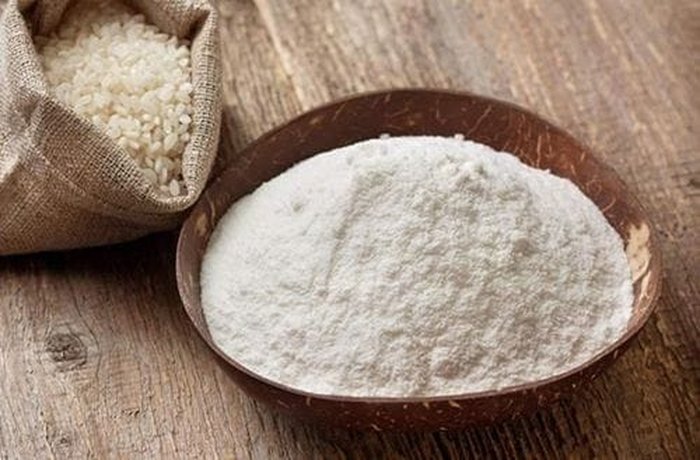
- Add the melted lard and mix with your hands. Add the brine little by little, kneading into a smooth, soft, pliable dough, adding a few drops of hot water if it is dry. Cover with a clean cloth and rest for 30 minutes so the flours absorb the moisture.
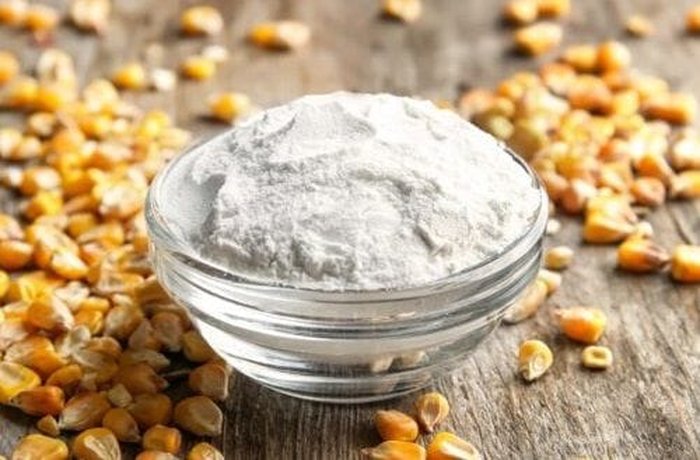
- Divide the dough into two large portions or 20 to 30 small ones, depending on the size of the empanadas. Roll each on a surface dusted with cornstarch to 2 to 3 mm thick and cut circles of 15 cm (6 in) for fried or 20 cm (8 in) for baked empanadas. Preheat the oven to 200 C (392 F) or heat oil to 180 C (356 F).
- Fill, moisten the edges with milk or water, fold into half-moons, and seal well. For baked empanadas, brush with beaten egg and bake for 30 minutes or until golden. For fried, cook in hot oil for about 5 minutes per side until crisp.
Additional Tips
Add xanthan gum
A teaspoon of xanthan gum in the dry mix partly replaces gluten and makes the dough much more elastic.
Rest it cold
Chilling the dough for 30 minutes lets the flours hydrate fully so it rolls without cracking.
Roll between sheets
Rolling between two sheets of parchment prevents tearing.
| Original ingredient | Substitute | Ratio | Flavor note |
|---|---|---|---|
| Lard | Butter or vegetable shortening | 1:1 | Different flavor |
| Chuño | Potato starch or tapioca | 1:1 | Similar elasticity |
| Milk | Plant milk | 1:1 | Dairy-free |
| Egg | Flax egg | 1 tbsp flax + 3 tbsp water | Egg-free, less binding |
Frequently Asked Questions (FAQs)
1. Why does gluten-free dough crack?
It lacks the elastic gluten network; resting, xanthan gum, and enough moisture help it stay pliable.
2. Can I use it for fried and baked empanadas?
Yes. Cut 15 cm circles for fried and 20 cm for baked empanadas.
3. What is chuño?
In Chile, chuño is a fine potato starch used to thicken and lighten preparations.
4. Can I freeze the dough?
Yes, wrapped well for up to 2 months; thaw in the refrigerator before rolling.
What Is Gluten-Free Empanada Dough?
It is a dough for Chilean empanadas made without wheat, using rice flour, cornstarch, and potato starch so celiacs can enjoy them.
Chilean Empanadas
Empanadas are central to Chilean food culture, especially the baked empanada de pino eaten during the September national holidays.
Did You Know?
Cross-contamination is a real risk for celiacs; use clean surfaces and utensils and certified gluten-free ingredients.
How to adapt this recipe to a vegan or vegetarian version?
How to adapt this recipe to a gluten-free version?
How to adapt this recipe to a keto (ketogenic) version?
Recommended
- Chilean Fried Tuna and Cheese Empanadas
- Chilean Llama Charqui Empanadas
- Chilean Gluten-Free Sopaipillas
- Gluten-Free Hojarascas