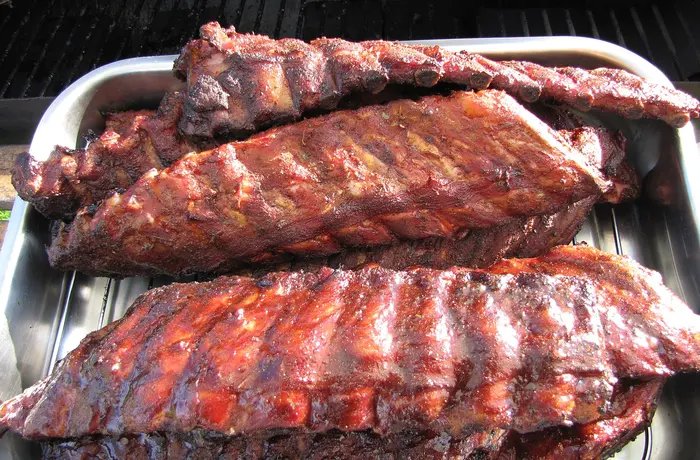
Chilean Cantonese pork ribs, or costillar cantonés, are pork ribs marinated in soy sauce, honey, garlic and ginger, baked slowly and finished with a glossy sweet and sour glaze. They need about 4 hours and 20 minutes of prep, most of it marinating time, plus 1 hour and 50 minutes in the oven for 4 servings.
In Chile these ribs reached the table through neighborhood Chinese restaurants, where they share the menu with chapsui (chop suey) and arroz chaufán (fried rice). Making them at home is simple if you follow the order of the recipe, marinating ahead, baking covered at a moderate temperature and glazing at the end over high heat.
How to Make Cantonese Pork Ribs?
The method uses two oven stages. First the ribs bake covered at 160°C (320°F) so the collagen softens and the meat pulls away from the bone. Then they are uncovered, the oven goes up to 200°C (392°F) and the reserved sauce is brushed on in three coats, which caramelize into the typical glaze.
Nutritional Information
Each serving of Chilean Cantonese pork ribs (one 350 g / 12 oz serving, bone-in) contains approximately 650 kcal, 38 g of protein, 42 g of total fat (15 g of saturated fat), 140 mg of cholesterol, 28 g of carbohydrates, 24 g of sugars and 1,600 mg of sodium. These values are estimates and may vary depending on ingredients and portion sizes.
Homemade Cantonese Pork Ribs Recipe
Preparation: 4 hours 20 minutes
Cooking: 1 hour 50 minutes
Servings: 4 servings
Ingredients
- 1.5 kg (3.3 lb) pork ribs
- 6 tablespoons soy sauce
- 4 tablespoons honey or light brown sugar
- 3 tablespoons ketchup
- 2 tablespoons hoisin sauce
- 2 tablespoons rice vinegar or white vinegar
- 4 garlic cloves, finely minced
- 1 piece fresh ginger, 3 cm (1¼ inches) long
- 1 teaspoon Chinese five-spice powder
- 1 tablespoon vegetable oil
- ½ cup (125 ml) water
- 2 scallions, chopped
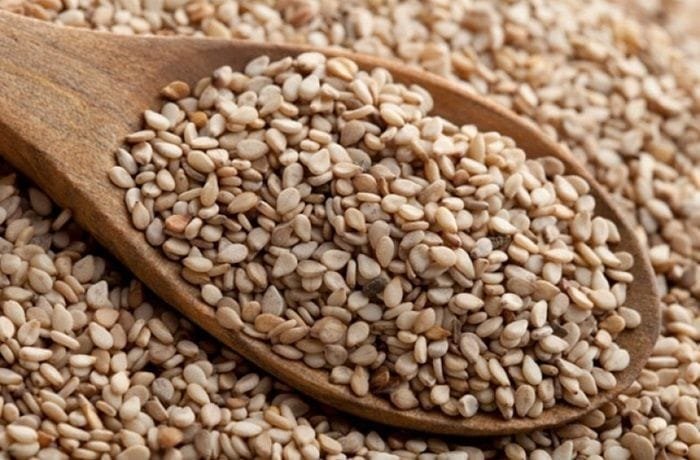
- 1 tablespoon sesame seeds
Instructions
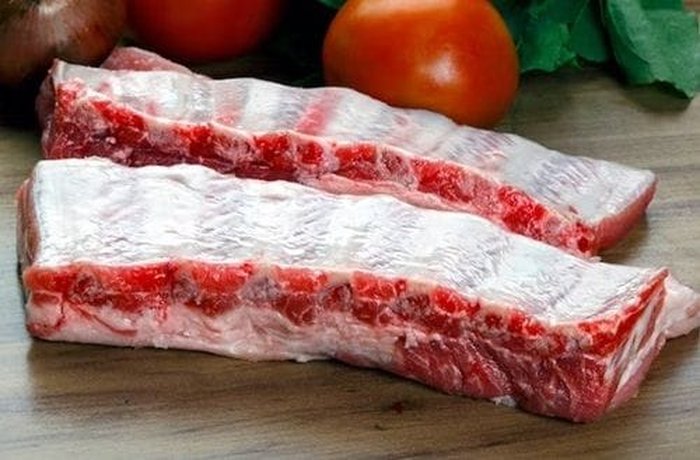
- Remove the white membrane covering the bone side of the ribs, lifting it with the tip of a knife and pulling it off with a kitchen towel. Pat the meat dry with paper towels. If the ribs come in one piece, cut them into strips of 3 or 4 ribs so they fit easily in the baking dish and marinate evenly.
- In a bowl, mix the soy sauce, honey, ketchup, hoisin sauce, vinegar, garlic, ginger, five-spice powder and oil until the honey dissolves. Set aside one third of this sauce in a jar and keep it in the refrigerator, because it will be the final glaze and must not touch the raw meat.

- Rub the ribs with the remaining two thirds of the sauce, on both sides and between the bones. Place them in a zip-top bag or in a dish covered with plastic wrap and refrigerate for at least 4 hours, or overnight if you have time. Turn them once halfway through so the flavor penetrates evenly.

- Preheat the oven to 160°C (320°F). Place the ribs bone side down in a baking dish, pour the marinade left in the bag and the ½ cup of water into the bottom, and cover tightly with aluminum foil. Bake for 1 hour and 30 minutes, until the meat is tender when pierced and starts to pull away from the bone.

- Remove the foil and raise the oven to 200°C (392°F). Brush the ribs with one third of the reserved sauce and bake for 10 minutes. Brush again and bake for 5 minutes, then repeat with the last third for 5 more minutes, for a total of 20 minutes, until the surface is glossy and dark at the edges. Watch the last few minutes closely, because honey burns quickly.
- Let the ribs rest for 5 minutes out of the oven, cut them between the bones and serve topped with the chopped scallions and sesame seeds. Serve with white rice, arroz chaufán or stir-fried vegetables, and spoon the thick juices from the bottom of the dish over the ribs.
Additional Tips
Why Set Aside Sauce Before Marinating?
Sauce that has touched raw pork can carry bacteria, so it is not suitable for brushing on at the end, when the ribs are already cooked and the oven only works for a few minutes. Reserving a clean third from the start gives you a safe glaze with the fresh flavor of garlic and ginger. The used marinade is not wasted, because it goes into the bottom of the dish and cooks during the hour and a half of covered baking.
How to Control the Sodium
Six tablespoons of soy sauce supply most of the salt in the dish, with more from the ketchup and hoisin sauce. For a lighter version, use a low-sodium soy sauce and do not add salt at any point. You can also replace every 2 tablespoons of hoisin with 1 tablespoon of ketchup and 1 of honey, which keeps the sweet and sour balance with less sodium per serving.
The Restaurant-Style Red Color
The deep reddish color of the ribs served in some Chinese restaurants comes from food coloring, which does not change the flavor. At home, the color comes from the honey and ketchup caramelizing during the glaze. If you want a deeper shade, brush on an extra coat of the reserved sauce during the last minutes in the oven.
These swaps let you make the recipe with ingredients found in any supermarket.
| Original ingredient | Substitute | Ratio | Flavor note |
|---|---|---|---|
| Hoisin sauce | Ketchup and honey | 1 tablespoon of each for every 2 tablespoons of hoisin | Less depth, but just as sweet and sour |
| Honey | Light brown sugar | Same amount | Slightly less glossy glaze |
| Rice vinegar | White or apple cider vinegar | Same amount | Slightly sharper acidity |
| Fresh ginger | Ground ginger | ½ teaspoon for each 3 cm piece | Use when fresh ginger is not available |
| Chinese five-spice powder | Ground star anise and cinnamon | A pinch of each | Can also be left out with no problem |
Frequently Asked Questions (FAQs)
1. What Are Cantonese Pork Ribs?
They are pork ribs marinated and glazed with a sweet and sour sauce of soy sauce, honey, garlic and ginger, inspired by the roast meats of Cantonese cooking from southern China. In Chile they are best known from Chinese restaurants, which serve them cut into individual ribs with arroz chaufán.
2. How Long Do You Bake Cantonese Pork Ribs?
A 1.5 kg (3.3 lb) rack needs 1 hour and 30 minutes covered at 160°C (320°F) and then 20 minutes uncovered at 200°C (392°F) for the glaze. If the strips are thin, check the meat at 75 minutes by piercing it with a fork.
3. Can You Make Cantonese Ribs Without Hoisin Sauce?
Yes. Hoisin adds depth and a spiced sweetness, but it is easily replaced with 1 tablespoon of ketchup and 1 of honey for every 2 tablespoons of hoisin. The result keeps the balance of salty, sweet and sour that defines homemade Cantonese ribs.
4. How Long Should You Marinate the Ribs?
The recommended minimum is 4 hours in the refrigerator, but the flavor improves with a full night of marinating. Do not go past 24 hours, because the salt in the soy sauce and the acid in the vinegar begin to change the texture of the meat’s surface.
What Is Cantonese Pork Ribs?
Costillar cantonés, or Cantonese pork ribs, is a Chinese-Chilean dish of pork ribs marinated in soy sauce, honey, ketchup, hoisin, garlic and ginger, baked covered until tender and then glazed uncovered at high heat. The sauce, brushed on in several coats, forms a sticky caramelized layer. It is served cut into individual ribs with arroz chaufán, white rice or spring rolls.
History of Cantonese Pork Ribs in Chile
The name refers to Cantonese cooking, from Guangdong province in southern China, known for its roast pork lacquered with sweet sauces. Much of the Chinese emigration to the Americas came from that region, and its cooking techniques traveled with it.
In Chile, Chinese restaurants adapted those recipes to local ingredients, and glazed ribs became a regular item on their menus alongside chapsui and arroz chaufán, as part of what is now known as Chinese-Chilean cuisine.
Did You Know?
The best-known Cantonese-style roast pork is called char siu, which in Cantonese means fork roasted, because the meat was traditionally roasted on long forks over the fire. The glaze of honey or malt, brushed on several times, is what creates the glossy layer that also defines Cantonese ribs.
How to adapt this recipe to a vegan or vegetarian version?
How to adapt this recipe to a gluten-free version?
How to adapt this recipe to a keto (ketogenic) version?
Recommended
- Chilean arroz chaufán to serve with the ribs
- Chilean chicken chop suey, Chinese restaurant style
- Homemade Chilean spring rolls for a starter
- Traditional Chilean baked pork ribs without sauce