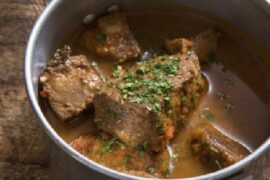
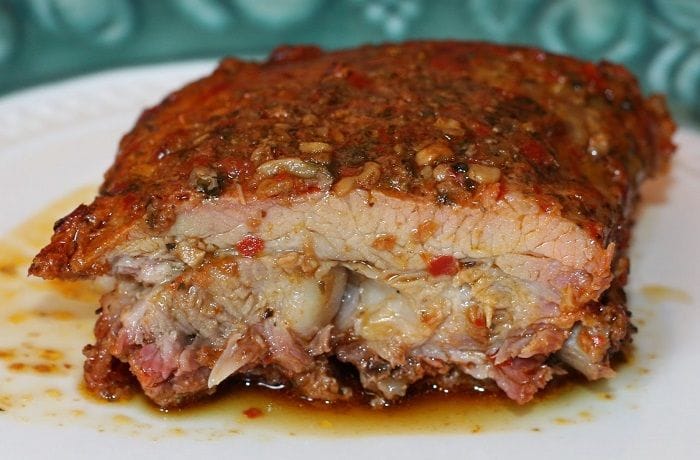
Chilean baked pork ribs (costillar de cerdo al horno) are a 2 kg rack marinated overnight in garlic, apple cider vinegar, oregano, and merkén, then oven-roasted with white wine and beef broth for 60 minutes. Each serving provides approximately 350 calories.
A classic Chilean Sunday dish, the overnight marinade is the key step — it tenderizes the meat and carries the flavor deep into the rack before it goes into the oven.
How to Make Chilean Baked Pork Ribs?
The Chilean approach to baked ribs relies on a vinegar-based marinade (aliño con vinagre) with garlic, oregano, and merkén — a technique inherited from Andalusian Spanish cooking, adapted with the native Chilean smoked chili spice. The ribs go into the oven covered in foil to steam and tenderize, then uncovered with the wine and broth added to build a pan sauce and achieve browning in the final 20 minutes.
Nutritional Information
Each serving of Chilean baked pork ribs contains approximately 350 calories, 5 g of carbohydrates, 20 g of fats, 35 g of proteins, 0 g of fiber, 2 g of sugars, and 450 mg of sodium.
Homemade Baked Pork Rib Recipe
Prep Time: 12 hours (overnight marinade)
Cook Time: 60 minutes
Servings: 6
Ingredients
- 2 kg pork ribs
- 250 ml beef broth
- 250 ml white wine
- 8 potatoes, cooked with skin
- 6 garlic cloves
- 5 tablespoons apple cider vinegar
- 2 tablespoons dried oregano
- Merkén (Chilean smoked chili paste or powder)
- Vegetable oil
- Salt
- Pepper
Instructions
- In a medium bowl, combine the crushed garlic, apple cider vinegar, vegetable oil, oregano, merkén, salt, and pepper. Mix until you have a uniform paste.
- Place the pork ribs in a glass or ceramic dish. Rub the marinade thoroughly over every surface, making sure all sides are coated. Cover with plastic wrap and refrigerate for at least 12 hours.
- Preheat the oven to 200°C (392°F) for at least 10 minutes.
- Transfer the marinated ribs to an ovenproof dish. Brush the surface with oil, cover tightly with aluminum foil, and bake for 40 minutes.
- Remove the foil. Pour the white wine and beef broth into the dish around the ribs. Return to the oven uncovered and cook for a further 20 minutes, or until the surface is browned and the meat pulls away from the bone. Remove from the oven and rest for 5 minutes before cutting into 4 to 6 portions.
- In a medium skillet, sauté the halved cooked potatoes with salt and pepper until lightly golden. Serve alongside the ribs, with the pan juices drizzled over.
Additional Tips
Marinate for the full 12 hours — the overnight rest is the difference
The vinegar in the marinade begins to break down the surface proteins of the meat within the first hour, but the garlic and oregano flavors need the full 12 hours to penetrate beyond the surface layer. Ribs marinated for less than 6 hours taste seasoned on the outside but bland at the bone. If pressed for time, score the rack between the bones with a knife before applying the marinade — this allows the aliño to reach deeper in a shorter time.
Cover tightly with foil for the first 40 minutes to trap steam
The foil creates a sealed environment that steams the ribs from the inside, breaking down the collagen in the connective tissue and making the meat tender before any browning occurs. A loose or unsealed foil cover defeats this purpose — press the edges firmly against the dish. The wine and broth are added only after the foil comes off, at which point the oven heat concentrates them into a pan sauce while the surface caramelizes.
Rest the rack for 5 minutes before cutting
Cutting immediately after removing the ribs from the oven causes the interior juices to run onto the cutting board rather than redistributing through the meat. A 5-minute rest at room temperature is enough — cover loosely with the foil you removed during baking to retain heat. The internal temperature will continue to rise by 2 to 3°C during this rest, finishing any remaining cooking without drying the meat.
| Ingredient | Substitution and result |
|---|---|
| Apple cider vinegar | White wine vinegar — slightly less sweet; same acidity and tenderizing effect |
| Beef broth | Chicken broth or pork broth — lighter body; same moisture function in the roasting dish |
| White wine | Dry apple cider or additional broth — alcohol-free option; cider adds a subtle sweetness |
| Merkén | Smoked paprika + pinch of cayenne — closest substitute outside Chile; lacks merkén’s coriander note |
| Dried oregano | Fresh thyme + dried marjoram — slightly more aromatic; same herbaceous role in the marinade |
Frequently Asked Questions (FAQs)
1. How do I know when the pork ribs are fully cooked?
The clearest sign is that the meat has visibly pulled back from the bone ends by at least 1 cm and the surface is deeply browned. A meat thermometer inserted between the bones (not touching bone) should read at least 70°C (160°F). If you lift the rack with tongs and it bends easily at the center, the collagen has broken down sufficiently and the ribs are ready. If the rack holds rigid, return it to the oven for 10 more minutes.
2. Can I cook the ribs without marinating overnight?
Yes, but the result will be noticeably less flavorful and tender. A minimum of 2 hours at room temperature is needed for any meaningful penetration of the marinade. If you score the meat between the bones before applying the aliño and let it rest for 3 to 4 hours in the refrigerator, you can get a reasonable result in less time. The 12-hour overnight marinade remains the recommended approach for the authentic Chilean texture.
3. What is merkén and where can I find it?
Merkén is a traditional Mapuche spice blend made from dried and smoked red goat’s horn chili (ají cacho de cabra), toasted coriander seeds, and salt. It has a distinctive smoky, mildly spicy flavor with a warm, earthy aroma unlike any other chili spice. In Chile it is sold widely in supermarkets; internationally it is available in Latin American specialty shops and online. The closest substitutes are smoked paprika plus a pinch of cayenne, though they lack merkén’s coriander note.
4. What side dishes pair best with Chilean baked pork ribs?
The classic pairing is rustic sautéed potatoes cooked with their skin on, as the recipe includes. Chilean ensalada chilena (sliced tomato, white onion, and cilantro with olive oil) provides freshness that cuts through the richness of the ribs. Rice with a side of pebre (Chilean fresh salsa of tomato, cilantro, garlic, and chili) is another common combination. For a festive presentation, serve alongside a light Chilean red wine such as Carménère or Pinot Noir.
What Is Chilean Costillar de Cerdo?
Costillar de cerdo al horno is one of the signature dishes of Chilean home cooking — a full pork rib rack marinated in a vinegar-based aliño and roasted until the meat falls from the bone. Unlike the American low-and-slow BBQ tradition, which emphasizes smoke and a dry rub crust, the Chilean approach produces a juicier result with a built-in pan sauce from the wine and broth added during roasting. The dish feeds six from a single 2 kg rack, which made it practical for the large family tables of Chilean Sunday meals and national celebrations.
History of Baked Pork Ribs in Chile
Pork was introduced to Chile by Spanish colonizers in the 16th century and became one of the most accessible proteins across Chilean rural and urban kitchens. The costillar al horno tradition developed as a way to maximize the value of the rib rack — a cut that yields multiple portions with a high ratio of flavor to cost. The vinegar marinade technique reflects Andalusian Spanish cooking brought by early settlers, combined with indigenous merkén, which replaced European smoked paprika as the spice of choice in Chilean households. Today, costillar al horno is firmly associated with Chilean Sunday family meals and with the Fiestas Patrias celebrations of 18 de septiembre, where it is a staple of fondas and family asados.
Benefits of Pork
Pork ribs provide a high concentration of complete protein — approximately 35 g per serving — along with thiamine (vitamin B1), which supports carbohydrate metabolism and is found in greater concentrations in pork than in most other meats. Pork also supplies zinc and selenium, which support immune function, and phosphorus for bone development. The fat content of ribs is higher than leaner pork cuts, but a significant portion is oleic acid (the same monounsaturated fat found in olive oil). With approximately 2.4 g of saturated fat per 100 g of raw meat, pork ribs are moderate in saturated fat relative to their caloric density.
Did you know?
Pork ribs are cut from the rib cage and preserve the alternating bone-and-meat structure of the rack, which is why they are often eaten by hand rather than with cutlery. In Chile, the full rack (costillar entero) is the standard for home roasting, while individual ribs (costillas separadas) are more common for grilling at an asado. The term “costillar” refers specifically to the full rack, not to individual ribs.