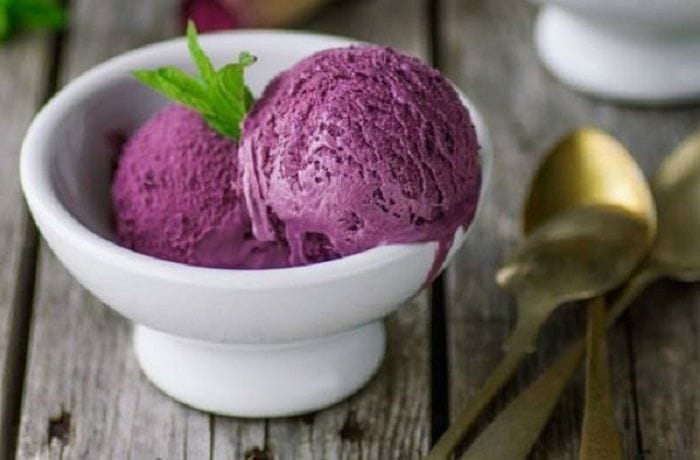
A delicious and innovative recipe for red wine ice cream, very simple to make, where you can use the grape variety of your choice in any available format.
Nutrition Facts
Each serving of red wine ice cream contains approximately 380 kcal, 5 g of protein, 22 g of total fats, 30 g of carbohydrates, 28 g of sugars, 175 mg of cholesterol, and 50 mg of sodium.
How to Make Red Wine Ice Cream
This recipe is designed to use an ice cream maker to complete the process, but it can also be made by hand.
Prep Time: 40 minutes
Cook Time: 40 minutes
Servings: 6
Ingredients
- 750 ml of Chilean red wine
- 300 ml of heavy cream
- 250 ml of whole milk
- 150 g of sugar
- 4 egg yolks
- 1 cinnamon stick

Instructions
- Pour the Chilean red wine into a large saucepan, add the cinnamon stick, and bring it to a boil over medium heat for about 40 to 50 minutes until the liquid has reduced to about 125 ml (a little more than half a cup). Cool it and place it in the freezer.

- In a medium-sized saucepan, heat the milk and heavy cream over low heat without bringing it to a boil. Set aside. In a medium bowl, whisk the egg yolks until smooth and gradually add the sugar; continue whisking until you obtain a uniform mixture, and set aside.

- Add the mixture of milk and cream, stirring until it thickens slightly without boiling, ideally monitoring the temperature until it reaches about 80°C (176°F). Turn off the heat and let it cool completely. Add the reserved wine reduction from the freezer and mix everything very well until fully incorporated.

- Using an ice cream maker, follow the specific instructions for your model and process for 30 minutes. Remove and store in the freezer until ready to serve. For a manual process, place the mixture in a plastic container and freeze for 45 minutes, remove from the cold, stir the mixture until it becomes creamy, and freeze again. Repeat this process about 5 times and finally freeze overnight before serving.
Expert Secrets for “Premium” Wine Ice Cream
- Concentration of Anthocyanins and Esters: Reducing 750 ml of wine down to just 125 ml isn’t just about flavor. This process removes excess water and most of the ethanol, which is crucial because alcohol acts as an antifreeze. If the alcohol content is too high, the mixture will never reach the firm, scoopable consistency required for ice cream.
- The Custard Critical Point: When heating the yolks with the milk and sugar, it is vital to reach exactly 80°C (176°F). At this temperature, the egg proteins begin to denature and trap the liquid, creating a thick, stable base. Exceeding this temperature will cause the yolks to scramble, ruining the texture and taste.
- Hydrodynamics of Manual Churning: If you don’t have a machine, the process of stirring and freezing 5 times every 45 minutes is vital for breaking down ice crystals. This mechanical agitation incorporates air (overrun) and ensures the crystals remain microscopic, which the palate perceives as “creamy” rather than “icy.”
- Lactic and Tannic Synergy: The heavy cream (300 ml) and whole milk (250 ml) provide the necessary fat to soften the red wine’s tannins. Milk fat coats the taste buds, allowing the wine’s fruity notes to shine while preventing the astringency of the red wine from becoming overwhelming.
Frequently Asked Questions (FAQ)
1. Does the ice cream contain alcohol after cooking?
Almost all the alcohol evaporates during the 40 to 50 minutes of reduction. What remains is the “soul” of the wine: its aromas, deep color, and residual sugars. It is generally safe for most, but it retains the intense, sophisticated flavor of the red wine.
2. Which Chilean grape variety gives the best result?
For a bold, powerful flavor, we recommend a Cabernet Sauvignon or a Syrah. If you prefer something silkier and more spiced, a Chilean Carmenere is the ideal choice, as its notes of red berries and black pepper pair beautifully with the cinnamon stick.
3. Why did my ice cream turn out very hard in the freezer?
Since this is artisanal and lacks industrial stabilizers, it can harden more than store-bought versions. The secret is to take it out 10 minutes before serving to allow the temperature to rise slightly, restoring its smooth, scoopable texture.
4. Can I use skim milk?
It is not recommended. The fat in the whole milk and heavy cream is what allows the mixture to trap air and build structure. Using skim milk will result in a brittle, icy sorbet-like texture instead of a rich, creamy ice cream.
Chilean Wine History
Chilean wine has a rich history dating back to Spanish colonization in the 16th century, with its vineyards producing diverse and renowned wines enjoyed worldwide today.

Did You Know?
The invention of ice cream dates back to ancient China, about 4,000 years ago, where it was made from rice, spices, compacted ice, milk, and cream. It was reserved for the wealthy classes of the time due to the difficulty of obtaining and preserving the ingredients.