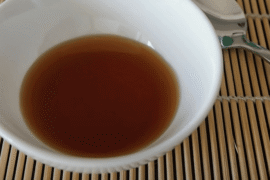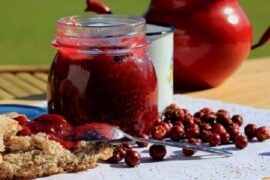

Chilean quince jam (dulce de membrillo) is a firm, sliceable fruit paste made from 2 kg of quinces cooked down with sugar until the mixture sets solid — 80 minutes of cooking plus 24 hours of refrigeration to firm up. Each serving provides approximately 400 calories.
Denser than a spread and firmer than a jelly, this preserve is sliced rather than spooned and is classically paired with fresh white cheese, crusty bread, or served alongside savory dishes.
How to Make Quince Jam?
The high natural pectin content of the quince fruit is what makes this jam set firm enough to slice without any added pectin or gelatin. The process has two stages: a 30-minute boil to soften the quinces, followed by a 20 to 25-minute reduction of the puree with sugar until the mixture pulls cleanly away from the bottom of the pot. The 1:1 ratio of quince pulp to sugar is measured by weight after the quinces are cooked and pureed — not before.
Nutritional Information
Each serving of Chilean quince jam contains approximately 400 calories, 98 g of carbohydrates, 0 g of fats, 1 g of proteins, 3 g of fiber, 94 g of sugars, and 5 mg of sodium.
Homemade Quince Jam Recipe
Prep Time: 30 minutes
Cook Time: 50 minutes
Setting Time: 24 hours (refrigerated)
Servings: 8
Ingredients
- 2 kg quinces
- Sugar (equal weight to the cooked quince pulp obtained — approximately 1.5 kg)
- 2 tablespoons lemon juice
- 1 cinnamon stick

Instructions
- Wash the quinces thoroughly. Peel with a sharp knife or fruit peeler, cut into quarters, and remove and discard the core and seeds.
- Place the quince pieces in a medium pot, cover with cold water, add the lemon juice and cinnamon stick. Cook over medium heat for about 30 minutes until the quinces are completely soft. Remove from heat and discard the cinnamon stick.
- While still hot, pass the quinces through a sieve or blend with an immersion blender until you have a smooth, uniform puree. Weigh the puree obtained and measure an equal weight of granulated sugar.
- In a large, heavy-bottomed pot (copper is ideal), combine the quince puree and the sugar. Cook over low heat for 20 to 25 minutes, stirring constantly with a wooden spoon. The jam is ready when it pulls cleanly away from the bottom of the pot when you drag the spoon across — the mixture should not flow back together.
- While still hot, pour into clean, dry molds (disposable aluminum, silicone, or glass). Allow to cool completely at room temperature, cover with aluminum foil, and refrigerate for 24 hours until firm and sliceable.
- Unmold and serve sliced, accompanied by fresh white cheese, bread, or as a component of dessert plates and cheese boards.
Additional Tips
A copper pot is ideal — any heavy-bottomed pot also works
Copper conducts heat more evenly than stainless steel or aluminum, which is why it is traditionally recommended for jam-making — it prevents hot spots that cause the sugar to burn on the bottom of the pot before the rest of the mixture has reduced. If you do not have a copper pot, use the heaviest stainless steel or enameled cast iron pot available. Stir more frequently if using a thinner pot. Avoid uncoated aluminum, which can react with the acidity of the quince and lemon juice and impart a metallic taste.
Weigh the pulp after cooking — the sugar ratio is by weight, not volume
The recipe calls for sugar equal in weight to the cooked quince pulp, not equal in volume. A cup of quince puree and a cup of sugar are not the same weight — the puree is significantly heavier. Two kilograms of raw quince yield approximately 1.2 to 1.5 kg of cooked pulp after peeling, coring, and boiling (losses vary by quince variety and ripeness). Weigh the pulp after pureeing and before adding it to the pot with the sugar. Using too little sugar results in a jam that does not set firm enough to slice.
The doneness test: drag the spoon and watch if the jam flows back
The visual test for doneness is more reliable than timing. Drag a wooden spoon across the bottom of the pot: if the path left by the spoon closes back slowly, the jam needs more time. If the path stays open and the jam on either side does not flow together, the mixture has reached the correct concentration and is ready to pour into molds. Over-cooking beyond this point produces a grainy, crystallized texture once cooled. The jam will appear very thick at this stage — it firms further as it cools and refrigerates.
| Ingredient | Substitution and result |
|---|---|
| Quince | Apple or firm pear — lower natural pectin; result is softer and less sliceable; add an extra tablespoon of lemon juice per kg to compensate |
| Granulated white sugar | Raw cane sugar (azúcar rubia) — slightly darker color and mild caramel note in the finished jam |
| Cinnamon stick | Vanilla bean or star anise — vanilla is the most neutral substitute; star anise adds a licorice note popular in some regional variations |
| Lemon juice | Orange juice — less acidity; adds a mild citrus sweetness; use same quantity |
Frequently Asked Questions (FAQs)
1. What is the difference between quince jam and quince paste?
In practice, they are the same preparation — the name varies by country and by the final texture achieved. “Quince paste” (or membrillo in Spanish) implies a firm, sliceable block; “quince jam” implies a softer, spreadable consistency. The Chilean dulce de membrillo is firmly in the paste category: it sets hard enough to be sliced, plated, and eaten in pieces rather than spread with a knife. The firmness comes entirely from the high natural pectin content of the quince and the reduction of the puree with sugar — no gelatin or commercial pectin is needed.
2. Why does quince turn pink or red when cooked?
Raw quince flesh is pale yellow-green. During prolonged cooking with sugar, the natural tannins and phenolic compounds in the quince undergo oxidation and react with the sugar at high temperatures, producing red and pink pigments (anthocyanins and leucoanthocyanidins). The longer the cooking time and the higher the sugar concentration, the deeper the color — from pale amber for lightly cooked versions to a deep ruby red for longer reductions. This color change is entirely natural and is one of the characteristic visual markers of a properly made dulce de membrillo.
3. How long does homemade quince jam last?
The high sugar content of dulce de membrillo acts as a natural preservative. Properly set and refrigerated in a covered container, it keeps for 2 to 3 months. At room temperature in a cool, dry place (below 18°C), it keeps for 4 to 6 weeks if unmolded and wrapped in parchment paper or aluminum foil. Signs of spoilage include surface mold, off aromas, or a very soft, wet texture that indicates fermentation. Freezing is possible: wrap in plastic and freeze for up to 6 months; thaw in the refrigerator.
4. What goes best with quince jam?
The classic pairing in Chilean and broader Latin American cuisine is queso fresco (fresh white cheese) — the mild, slightly salty cheese balances the intense sweetness of the membrillo. Manchego cheese is the classic Spanish pairing. Beyond cheese, quince jam is excellent on toasted bread with butter, as a glaze for roasted pork or duck, layered in tarts and pastries (alfajores, tartaletas), or as a component of a dessert plate alongside nuts and dried fruit.
What Is Dulce de Membrillo?
Dulce de membrillo is a fruit paste made exclusively from quince (Cydonia oblonga), a golden, hard, astringent fruit that is inedible raw but transforms into a fragrant, sweet, deeply flavored preserve when cooked with sugar. Unlike most jams, dulce de membrillo does not require added pectin — the quince naturally contains one of the highest pectin concentrations of any fruit, which causes the cooked pulp to set firm. The result is a sliceable block with a translucent, ruby-red color, a floral quince aroma, and a dense, slightly grainy texture that distinguishes it from smooth jellies and spreadable jams.
History of Quince Jam in Chile
Quince preserves have a recorded history stretching back to ancient Greece and Rome, where a honey-quince preparation called melimelum was documented by Pliny the Elder. The sugar-based dulce de membrillo tradition arrived in Latin America directly from Moorish Spain, where sugar-fruit preserves were a hallmark of Andalusian cuisine. Spanish colonizers brought the quince tree (Cydonia oblonga) to Chile in the 16th century; the trees adapted exceptionally well to the Mediterranean climate of the Chilean central valley (Maule, O’Higgins, Metropolitana regions). For much of Chilean history, autumn quince-jam making was a standard household activity tied to the harvest season (March to May), with the finished dulce stored as a winter pantry staple. Today it is produced commercially and remains a widely available product in Chilean supermarkets, though homemade versions are prized for their deeper color and more intense flavor.
Did you know?
Sugar acts as a natural preservative by binding the water molecules in the fruit, preventing the growth of bacteria and mold — a principle known as “water activity reduction.” Dulce de membrillo’s high sugar concentration (roughly equal weight to the quince pulp) gives it one of the lowest water activities of any fruit preserve, which is why it keeps for months without refrigeration when properly sealed. The quince was also the original fruit of the ancient Greek myth of the golden apple of discord — believed by some historians to have been a quince rather than an apple, given the fruit’s golden color and Mediterranean origin.