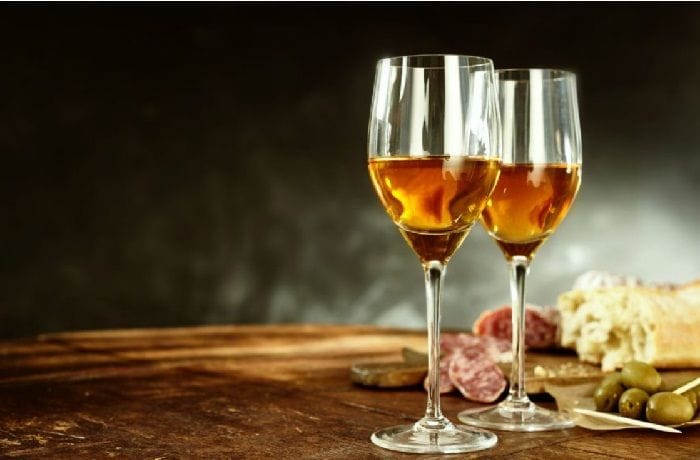
Chilean Pajarete is a traditional sweet fortified wine from the Atacama and Coquimbo regions — recreated at home in 10 minutes using red wine, white wine, Pisco, and brown sugar. This recipe reproduces the cinnamon-and-raisin flavor of the appellation-controlled original, which can only be produced from Moscatel de Austria, Moscatel de Alejandría, and País grapes.
Nutrition Facts
Each serving of Chilean Pajarete contains approximately 300 kcal, 28 g of carbohydrates (all from sugars), 0 g of fat, 0.5 g of protein, and 10 mg of sodium. (*)
(*) Estimated values based on a standard 150 ml (5 oz) serving.
How to Make a Pajarete Cocktail
This Pajarete recipe is a cocktail that seeks to recreate its naturally sweet flavor with moderate alcoholic intensity, slightly viscous texture, its intensity of aromas, and its pale cinnamon color based on white and red wine, brown sugar, and grape brandy.
Preparation: 10 minutes
Cooking: 10 minutes
Servings: 4 people
Chilean Pajarete recipe
Ingredients
- 250 ml of Chilean red wine
- 250 ml of Chilean white wine
- 100 ml of Chilean Pisco
- 100 g of brown sugar

Instructions
- In a medium saucepan, combine the Chilean wines and add the brown sugar, heat over medium heat and stir until dissolved, bring to a boil, and turn off the heat. Cool to room temperature.
- Once the wine and brown sugar mixture is cool, add the grape brandy and stir with a spoon until homogeneous.
- Serve the Chilean Pajarete immediately, in small glasses, alone or accompanied, for example, with some green olives, brown sugar alfajores, or fried beef empanadas.
Expert Tips for the Perfect Pajarete
The Wine Choice Matters
To mimic the original Moscatel grapes used in Chile, use a white wine with floral notes (like a Chilean Sauvignon Blanc or Torrontés) and a fruity, low-tannin red (like a Pinot Noir or a light Merlot). Avoid heavy, oaked reds, as they will make the cocktail taste bitter when heated with sugar.
The Velo Effect
For an even more authentic texture, add a tablespoon of honey along with the brown sugar. This increases the viscosity (the “tears” on the glass), which is a hallmark of the sun-ripened Pajarete from the Atacama Desert.
Traditional Pajarete vs. This Homemade Version
| Feature | Traditional Pajarete (DOC) | This Homemade Version |
|---|---|---|
| Origin | Atacama and Coquimbo regions | Made anywhere |
| Grapes | Moscatel de Alejandría, Moscatel de Austria, País | Any red + white wine |
| Color | Amber to golden brown | Pale cinnamon |
| Production time | Months (fermentation + aging) | 10 minutes |
| Serving temperature | Chilled or room temperature | Chilled or room temperature |
| Shelf life | Years (fortified) | Up to 2 weeks (refrigerated) |
Frequently Asked Questions (FAQ)
What does Pajarete taste like?
It is a luscious, velvety dessert drink. It tastes like a cross between a Spanish sherry and a late-harvest wine, featuring deep notes of raisins, cinnamon, and honey, with a clean kick from the Chilean pisco.
Is Pajarete a wine or a cocktail?
Technically, “Pajarete” is a traditional Chilean wine fermented from sun-dried grapes. However, because the authentic DO wine is hard to find outside of Chile, this cocktail recipe is the traditional way Chilean families “recreate” that iconic flavor at home using wine and Pisco.
Can I substitute Pisco?
While Chilean Pisco is essential for the authentic “Huasco Valley” flavor, you can substitute it with a high-quality Grappa or a clear un-aged Brandy if Pisco is unavailable in your local liquor store.
Should it be served hot or cold?
Pajarete is best served chilled or at room temperature as a digestif after a heavy meal. In Chile, it is often enjoyed alongside savory appetizers to balance its intense sweetness.
How long does this homemade version last?
Because of the high alcohol content (thanks to the Pisco) and the sugar, you can store this mixture in a sealed glass bottle in the refrigerator for up to 2 weeks. The flavors actually “marry” and improve after 24 hours of resting.
Pajarete History
Pajarete is a wine that originally came with the Jesuits, who introduced it to the country in the 17th century and managed to develop it in the northern zone thanks to the climate conditions and fertility of the lands.
Did you know?
Chile ranks fourth in wine exports worldwide, standing out as one of the main producers and exporters of this beverage.