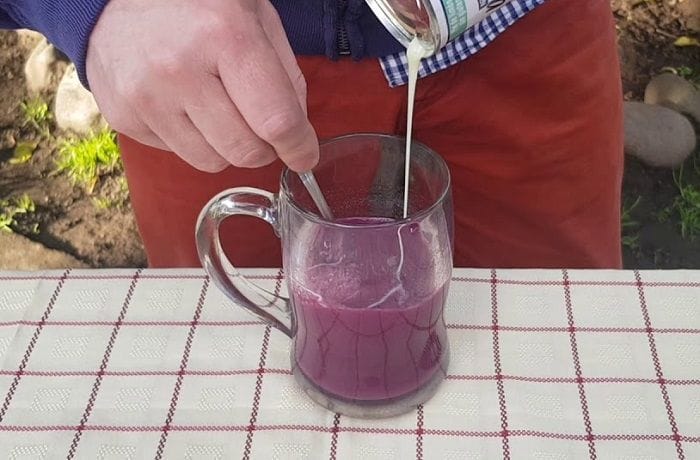
The Chilean Pink Panther (Pantera Rosa) is a three-ingredient cocktail — condensed milk blended with Chilean red wine and ice — ready in 5 minutes. Each serving provides approximately 450 calories.
One of Chile’s most recognized popular drinks, the Pink Panther was a staple of Santiago’s working-class bars in the 1980s and remains a reference point for Chilean popular culture.
How to Make Pink Panther?
The traditional version is hand-stirred directly in the serving glass — wine first, then condensed milk added gradually while stirring. The blender version, which produces a more uniform violet-pink color and a colder, frothier texture, is the modern standard. Both are valid; the stirred version is the original “Ferroviario” style from the 1950s.
Nutritional Information
Each serving of Chilean Pink Panther cocktail contains approximately 450 calories, 56 g of carbohydrates, 9 g of fats, 8 g of proteins, 0 g of fiber, 54 g of sugars, and 150 mg of sodium.
Homemade Pink Panther Recipe
Prep Time: 5 minutes
Servings: 4
Ingredients
- 1 can condensed milk (397 g)
- 500 ml Chilean red wine
- Ice

Instructions
- In a blender, add the condensed milk, 500 ml of red wine, and ice to taste.
- Blend at medium speed for 10 to 15 seconds until the mixture turns a uniform violet-pink color.
- Without a blender: in a large glass or jug, pour in the wine first, then add the condensed milk gradually while stirring with a spoon. Taste and adjust the ratio of wine to milk to your preference.
- Serve immediately in cold glasses, or refrigerate until ready to serve.
Additional Tips
Use a full-bodied Chilean red wine for the best color and flavor
The pink-to-violet color comes from the red wine’s pigments reacting with the condensed milk’s proteins. Full-bodied reds — Carménère, Cabernet Sauvignon, Syrah — produce a deeper, more vivid color and a more complex flavor. Very light reds or rosés result in a paler, less distinctive drink. Chilean varieties are the traditional choice and carry enough structure to balance the sweetness of the condensed milk.
Start the blender at low speed to avoid splashing
Cold condensed milk and wine create a dense mixture that can splash if the blender is started at high speed. Begin at low speed for 3 to 4 seconds, then increase to medium for the remaining 10 seconds. Do not over-blend — 15 seconds total is enough. Over-blending incorporates too much air and produces a foamy texture rather than the smooth, creamy consistency the cocktail is known for.
Chill the glasses and serve ice-cold
The Pink Panther warms quickly because of the sugar content in the condensed milk. Place the glasses in the freezer for 10 minutes before serving. If serving a large group, pour the finished cocktail into a pitcher and keep it in the refrigerator. Add a few ice cubes to the pitcher — or use frozen wine cubes to avoid diluting the flavor as they melt.
| Ingredient | Substitution and result |
|---|---|
| Chilean red wine | Malbec or Merlot — similar full-bodied profile; avoid very tannic or oak-heavy wines |
| Condensed milk | Sweetened condensed coconut milk — dairy-free option; slightly tropical note in the flavor |
| Ice cubes | Frozen wine cubes — prevents dilution as they melt; makes the cocktail more intense |
| Red wine (color) | Rosé wine — produces a lighter pink color and a less sweet, more acidic drink |
Frequently Asked Questions (FAQs)
1. What wine is best for the Pink Panther?
A full-bodied Chilean red is the traditional choice. Carménère is the most distinctly Chilean option and produces a deep violet-pink color with earthy, spiced notes. Cabernet Sauvignon works equally well. Avoid very light reds or wines with heavy oak influence — the condensed milk already provides sweetness and body, and a robust wine provides the necessary contrast.
2. Can I make the Pink Panther without a blender?
Yes — this is actually the original method. Pour the wine into a glass or large jug, then slowly add the condensed milk while stirring continuously with a long spoon. The result is a marbled, slightly streaky drink rather than the uniform violet color of the blended version. Stir until the condensed milk is fully dissolved. Taste as you go — some prefer a higher wine-to-milk ratio for a less sweet result.
3. Does the Pink Panther contain alcohol?
Yes. The recipe uses 500 ml of standard red wine (~12–14% ABV) across 4 servings, which places each serving at approximately 1.5 standard drink units. The sweetness of the condensed milk masks the alcohol taste significantly, which can make the cocktail feel lighter than it is. This is one reason it became known as a deceptively accessible drink in Chilean popular culture.
4. How long does the Pink Panther keep in the refrigerator?
Up to 24 hours, covered, in the refrigerator. The condensed milk stabilizes the mixture and prevents it from separating quickly. Stir or shake briefly before serving if it has been sitting for more than a couple of hours. It should not be kept longer than 24 hours because the wine’s flavor begins to flatten and the milk proteins start to break down.
What Is the Pink Panther Cocktail?
The Pink Panther (Pantera Rosa) is a Chilean cocktail made by combining condensed milk and red wine — two products that have been part of Chilean daily life since the 19th century. It is one of the simplest cocktails in Chilean popular cuisine: three ingredients, no specialized equipment required, and less than five minutes of preparation. The drink is known by several names — Pantera Rosa, Juanito Rosado, chupilca de leche, and, in its oldest form, Ferroviario — each reflecting the social context of the era and neighborhood where it was consumed.
History of the Pink Panther in Chile
The cocktail’s oldest known name is “Ferroviario” — a reference to the railway workers of southern Chile who popularized the drink in the 1950s. The combination of cheap red wine and sweetened condensed milk was an economical option in a region where sugar and fresh dairy were not always readily available. The drink spread north to Santiago during the following decades, becoming a fixture of the bars and fondas of Mapocho, Independencia, Recoleta, and Vivaceta — working-class neighborhoods where it was sold under the names “chupilca de leche” and “juanito rosado.” The name “Pantera Rosa” emerged in the 1970s and 1980s, likely inspired by the animated Pink Panther films, and became the dominant commercial name. By the 1990s, the cocktail began to fade from bars as the market shifted toward imported spirits and commercial cocktails, but it retained a strong cultural presence as a reference to Chilean popular identity.
Did you know?
The Pink Panther has close relatives in other Spanish-speaking countries. In Spain, there is a similar version called “ponche de leche condensada” that includes cinnamon powder and vanilla essence. In Argentina, a blended variant with strawberries is known as “batido de vino y leche condensada.” The core formula — condensed milk and wine — reflects how colonial-era sweetened condensed milk, commercialized across Latin America by Nestlé from the late 19th century, was adapted into local drinking culture in distinct ways across the region.