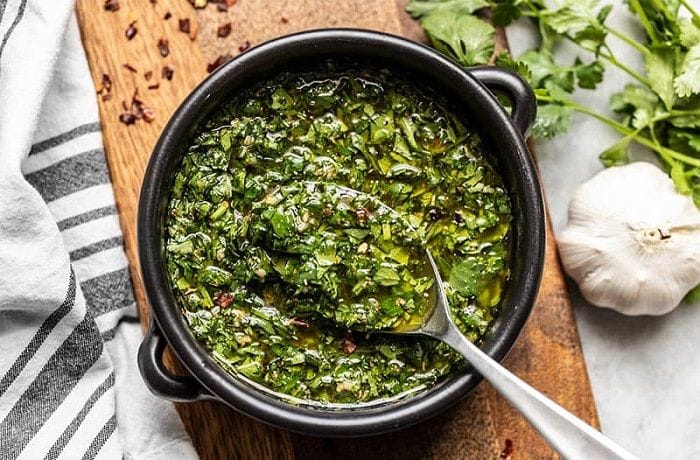
Chilean chimichurri is a no-cook herb sauce made with hand-chopped parsley, cilantro, spring onions, merkén, olive oil, and apple cider vinegar — mixed in 10 minutes and rested for 60 minutes before serving.
A quick and easy recipe for chimichurri, a typical dressing in Argentina, Chile, Uruguay, Paraguay, and Mexico, usually spicy and used to accompany barbecues, skewers, or choripanes or to marinate poultry or fish.
Nutrition Facts
Each serving of chimichurri sauce contains approximately 150 kcal, 20 g of carbohydrates, 7 g of fats, 1 g of protein, 10 g of sugars, and 5 mg of sodium.
How to Make Chimichurri
Chimichurri is a sauce used as a dressing in barbecues and skewers, giving them an extra depth of flavor to your preparations, with a mixture made mainly with extra virgin olive oil, apple cider vinegar, and lemon juice, to which spring onions, garlic, and a spicy touch of merkén are added.
Prep Time: 60 minutes
Servings: 6
Ingredients
- 150 ml extra virgin olive oil
- 100 ml apple cider vinegar
- 15 ml lemon juice
- 2 spring onions
- 2 tablespoons oregano
- 1 green chili pepper
- 1 teaspoon of merkén
- 1 garlic clove
- ½ cup chopped cilantro
- ½ cup chopped parsley
- Sea salt
- Pepper

Instructions
- Chop the spring onions, green chili pepper, and garlic into small cubes and reserve in a medium bowl. Add the cilantro and parsley, and mix everything with a wooden spoon to integrate. Incorporate the apple cider vinegar, olive oil, and lemon juice.
- Stir to integrate aromas and flavors, add the merkén, and season to taste with salt and pepper; adjust consistency with a little more water if necessary; and let it rest refrigerated for about 60 minutes. Serve the chimichurri in the same dish to accompany bread, sopaipillas, or grilled meats.
Secrets for a “Pitmaster” Level Chimichurri
Use a knife, never a blender
Never use a blender or food processor. High-speed blades heat and oxidize the parsley and cilantro, turning them bitter and dark. Hand-chopping into millimetric cubes preserves the essential oils and creates the rustic texture that grips the meat.
Hydrate dry herbs in vinegar first
Before adding the oil, mix the dry oregano with the apple cider vinegar and a splash of warm water. This blooms the herbs, preventing them from tasting like dry straw and ensuring their flavor is fully integrated into the liquid base.
Balance the triple acid
While traditional versions rely only on vinegar, the Chilean style uses both apple cider vinegar and fresh lemon juice. The lemon provides a high, citrusy note that brightens the sauce, while the vinegar offers a deep, fermented tang that tenderizes the meat during marination.
The osmotic resting period
A chimichurri must rest for at least 60 minutes before serving. During this time, the salt draws out the moisture from the spring onions and chili, allowing the oil to become a flavored carrier for the garlic and herbs.
| Dish | Best use of chimichurri |
|---|---|
| Grilled beef (asado) | Drizzle at the table, or use as a 1-hour marinade before grilling |
| Choripán | Spread on the bread cut-side down before adding the sausage |
| Chicken skewers | Marinate 2 hours before grilling — the acid tenderizes the meat |
| Salmon or white fish | Light drizzle only after cooking — do not marinate fish |
| Bread or hallullas | Dipping sauce — serve in a small bowl at the table |
| Roasted vegetables | Toss immediately after roasting for a fresh herb coating |
Frequently Asked Questions (FAQs)
1. How long does homemade chimichurri stay fresh?
When stored in an airtight glass jar in the refrigerator, it can last for up to 2 weeks. The oil and vinegar act as natural preservatives, though the fresh cilantro may lose some of its vibrant green color after the first 3 days.
2. What is the difference between Chilean and Argentine chimichurri?
Argentine chimichurri is typically simpler, focusing on parsley, garlic, and red pepper flakes. The Chilean version is more complex, often incorporating cilantro, spring onions, and the iconic merkén (smoked chili pepper), making it more aromatic and smokier.
3. Can I use this as a marinade instead of a dressing?
Absolutely. It is an excellent marinade for poultry, fish, or flank steak. The acidity in the vinegar helps break down tough fibers, while the oil ensures the meat stays juicy under the high heat of the grill.
4. How can I make it less spicy?
The heat comes from the green chili pepper and the merkén. To keep the flavor without the burn, remove the seeds and veins from the chili before chopping, or substitute the merkén with a mild smoked paprika.
5. Why is my oil solidifying in the fridge?
Extra virgin olive oil naturally solidifies at cold temperatures. Simply take the jar out of the refrigerator 20 minutes before serving, or run it under warm water for a few seconds to return it to its liquid state.
Origin of the Name “Chimichurri”
The most famous story about the origin of chimichurri is associated with the Irish immigrant James (Jimmy) McCurry, who, longing to enjoy Worcestershire sauce, a popular condiment in the UK, decided to make it with local ingredients, which, from his name, ended up being known as “chimichurri.”
Did You Know?
Another equally widespread story tells that the sauce arrived in the late 19th century with Basque immigrants, as the word “chimichurri” would derive from the Basque “tximitxurri,” which means “mixture” or “mix.”