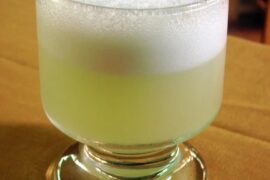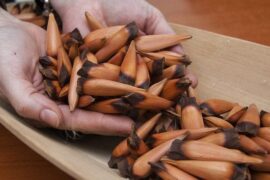
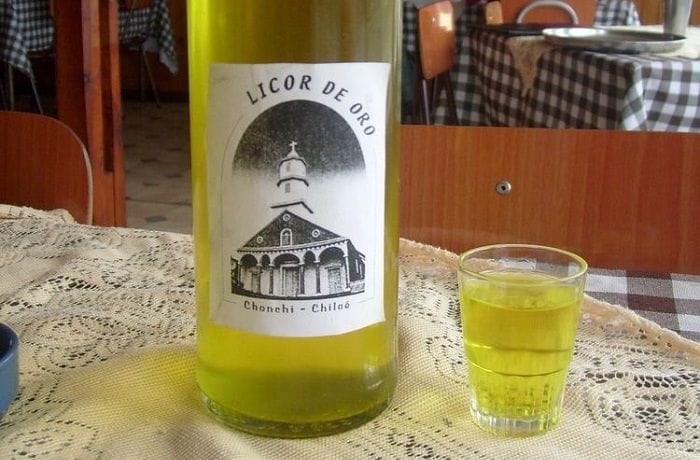
Gold liquor is an alcoholic beverage primarily made from whey, brandy, and saffron. It is considered the typical liquor of Chonchi, as only a few residents of that locality still produce it in Chiloé, in southern Chile.
Nutrition Facts
Each serving of Chiloé Gold Liquor (approx. 30 ml / 1 oz) contains approximately 120 kcal, 0 g of protein, 0 g of fat, 15 g of carbohydrates, 15 g of sugars, 0 mg of cholesterol, and 2 mg of sodium.
(*) Estimated values may vary depending on the precision of the filtration and final sugar concentration.
How to Make Chiloé Gold Liquor
The original recipe is believed to have been developed from the influence of Dutch settlers and Spanish Jesuits who arrived on Chiloé Island from the mid-17th century.
Prep Time: 8 days
Servings: 12 people
Ingredients
- 1 liter of raw whole milk
- 1 liter of warm boiled water
- 1 liter of 90% alcohol
- 1 kg granulated sugar
- 10 cloves
- 2 vanilla pods
- 2 lemons
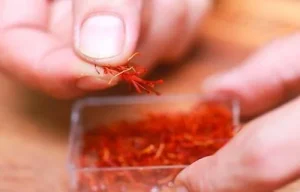
- A pinch of saffron

Instructions
- In a large glass container, place the alcohol, milk, sugar, cloves, vanilla, lemon (zest and juice), and saffron, stirring gently until everything is well integrated. The milk will curdle, separating the whey and the protein content due to the action of the acid.
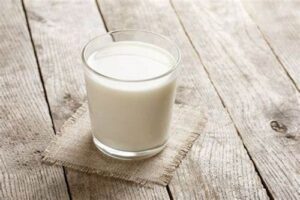
- Macerate the mixture for 10 days, stirring with a wooden spoon once every 24 hours for about 5 minutes.
- Strain with filter paper, drop by drop, directly into clean and sanitized transparent glass bottles. Close tightly and store in a cool, dry place. Serve the gold liquor as an aperitif or digestif in small glasses.
Keys for a Perfect Gold Liquor
- The Curdling Process: Do not be alarmed when the milk clumps immediately; this is the goal. The citric acid from the lemon and the 90% alcohol act on the milk proteins (casein), causing them to precipitate. This “clears” the liquid, leaving behind a transparent whey that carries all the flavor without the cloudiness of milk.
- Maceration Stirring: Consistency is key during the 10-day maceration. Stirring for 5 minutes every 24 hours ensures that the sugar dissolves completely and that the saffron and spices fully infuse the alcohol-whey mixture.
- The Saffron Substitution: Historically, this liquor used actual gold shavings. Saffron is used today not just for flavor but as a technical substitute to achieve that specific golden-yellow color that gives the liquor its name.
- Patience in Filtration: Straining through filter paper is a “drop by drop” process that requires patience. To achieve a professional, crystal-clear finish, do not squeeze the filter; let gravity do the work to ensure no milk solids pass into the final bottle.
Frequently Asked Questions (FAQ)
1. Can I use commercial brandy instead of 90% alcohol?
Traditional recipes often use high-proof Aguardiente (Chilean grape spirit). If you use a lower-proof brandy (40%), the curdling process might be less efficient, and the final liquor will be significantly weaker.
2. Why does the recipe use “raw” milk?
In Chiloé, raw whole milk is preferred for its higher fat and protein content, which creates a richer mouthfeel in the final whey. If using pasteurized milk, ensure it is whole milk; skim milk will not yield the same results.
3. How long does Licor de Oro last?
Thanks to the high alcohol and sugar content, which act as natural preservatives, a well-sealed bottle can last for years in a cool, dark place. In fact, many locals believe the flavor rounds out and improves after a few months of bottling.
4. What is the role of the lemon zest?
The zest provides the essential oils that give the liquor its bright, aromatic top notes, while the juice provides the acidity necessary to curdle the milk.
5. Why is it called the “Liquor of Chonchi”?
While made throughout Chiloé, Chonchi has turned the production of Licor de Oro into a local craft identity, being one of the few places where traditional families still produce it for sale and festivals.
History of Chilean Gold Liquor
The popular belief at the end of the 16th century, when alchemy was in full swing, was that gold possessed multiple healing properties, and it was during this time that a Dutch doctor allegedly invented a new concoction made from shavings of the precious metal.
The new drink quickly gained recognition throughout Europe, and from there, it is said to have reached America through the hands of religious figures and sailors from the Old World, who visited and often settled in the city of Castro in the 17th century.
Thus, new culinary traditions began to gradually merge, mainly because the Huilliche people historically had already developed multiple liquors from the fermentation of grains and fruits.
Did You Know?
Legend has it that while immigrants may have shared the original recipe for making liquor from gold shavings with very few locals, it was due to the lack of availability of the metal and its extremely high value that saffron began to be used to give the liquor that characteristic golden-yellow color.