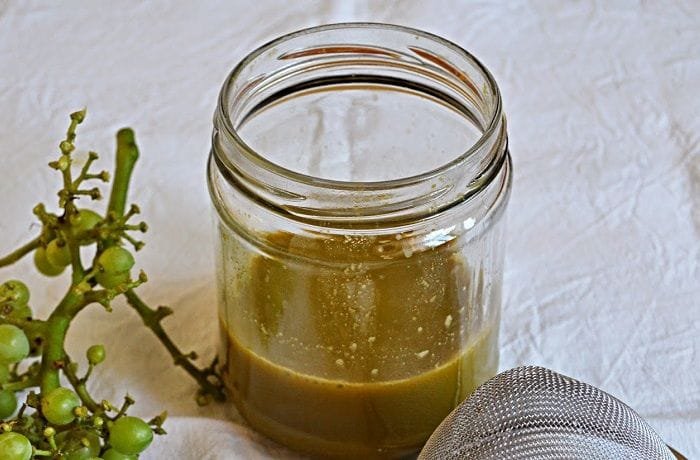
Chilean agraz, or green grape verjuice, is the tart juice pressed from unripe grapes, strained and used as a dressing instead of lemon or vinegar. It takes 10 minutes to prepare, needs no cooking, and serves 6.
It is a heritage dressing that has survived almost unnoticed in the rural dry coastal lands and the countryside of central Chile, and it brings a clean, fruity acidity to bean salads and pebre.
How to Make Agraz from Green Grapes?
Unripe grape bunches are picked, washed, and crushed in a bowl to release their juice without breaking the seeds, which would add bitterness. The juice is strained, diluted with a little water if it is too sour, and used fresh.
Nutritional Information
Each serving of agraz contains approximately 55 kcal, 1 g of protein, 0 g of fat, 0 mg of cholesterol, 14 g of carbohydrates, 6 g of sugars, 0 g of fiber, and 1 mg of sodium. These values are estimates and may vary depending on ingredients and portion sizes.
Homemade Chilean Agraz Recipe
Preparation: 10 minutes
Servings: 6
Ingredients
- 1 kg of unripe green grapes (about 5 bunches)
- 100 ml of purified water

Instructions
- Cut 5 well formed bunches of grapes that have not yet ripened and wash them in cold water. In a large bowl, crush them to extract the juice, taking care not to break the seeds, since they add an unwanted bitterness.
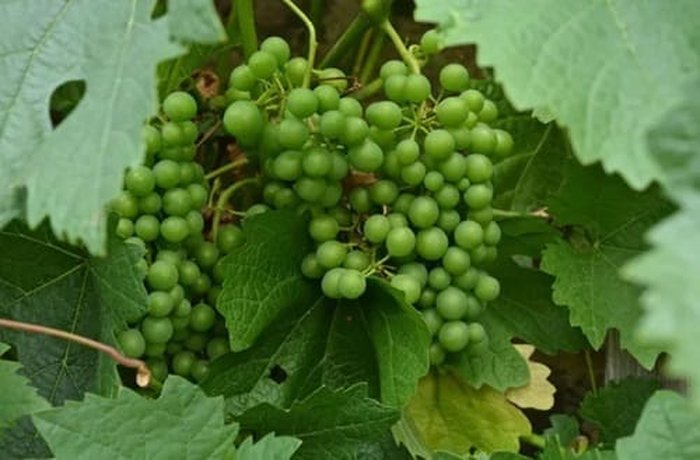
- Strain the juice and store it in a clean container. Taste and add a little purified water if you want to soften the acidity. Use the agraz right away as a dressing for salads or pebre.
Additional Tips
Pasteurize to keep it longer
Heat the strained juice to about 70°C (158°F) for 5 minutes without boiling, bottle it hot, and seal tightly.
Use it as a marinade
Its high acidity makes agraz an excellent tenderizer. Use it as a marinade base for pork or poultry before roasting, with a more complex flavor than lemon or vinegar.
Freeze it in cubes
Agraz freezes very well. Freeze it in ice cube trays so you can use single portions in sauces, stews, or dressings.
| Original ingredient | Substitute | Ratio | Flavor note |
|---|---|---|---|
| Agraz | Lemon juice | 1:1 | Sharper, citrusy |
| Agraz | Apple cider vinegar | ½ the amount | Stronger, fermented |
| Table grapes | Unripe wine grapes | 1:1 | More acidic and aromatic |
| Fresh agraz | Pasteurized agraz | 1:1 | Keeps longer |
Frequently Asked Questions (FAQs)
1. What is the difference between agraz and grape vinegar?
Agraz is simply the unfermented juice of unripe grapes, with a fresh, fruity acidity. Grape vinegar comes from the double fermentation, alcoholic and acetic, of ripe grape must, which produces acetic acid.
2. How is agraz used in Chilean cooking today?
Traditionally it dressed salads and pebre, and today it is valued as a substitute for lemon or vinegar. It is excellent for deglazing pans, in homemade mustards, and in refreshing drinks.
3. Which grapes are best for agraz?
Any unripe grape works, but green wine grapes such as Cabernet Sauvignon or Carmenère usually give a more intense acidity and a more complex aroma than table grapes.
4. Is agraz suitable for low sugar diets?
Yes. Because it is made from unripe grapes, it has much less sugar than ripe grape juice, which makes it a good sour seasoning for people watching their carbohydrates.
How to Use Agraz
Agraz is an excellent dressing for bean salads, such as porotos with onion, and for pebre. According to traditional cooks it does not pair as well with lettuce, and it shines most with legumes and hearty country dishes.
History of Agraz
Agraz, known in English as verjuice, dates back to ancient Rome, and in medieval Europe it was one of the favorite sour seasonings before lemons became widespread. The word comes from the Spanish agrio, meaning sour.

Did You Know?
In the Chilean countryside, agraz was traditionally enjoyed during the trillas, the wheat threshing harvests, where the grapes were crushed with a glass directly over a sieve.
How to adapt this recipe to a vegan or vegetarian version?
How to adapt this recipe to a gluten-free version?
How to adapt this recipe to a keto (ketogenic) version?
Recommended
- Chilean Bean and Onion Salad Recipe
- Homemade Chilean Pebre Recipe
- Chilean Grape Chicha from Curacaví Recipe
- Chilean Lleuque Jam Recipe