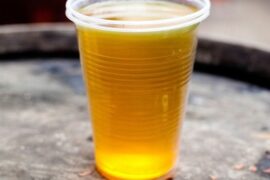
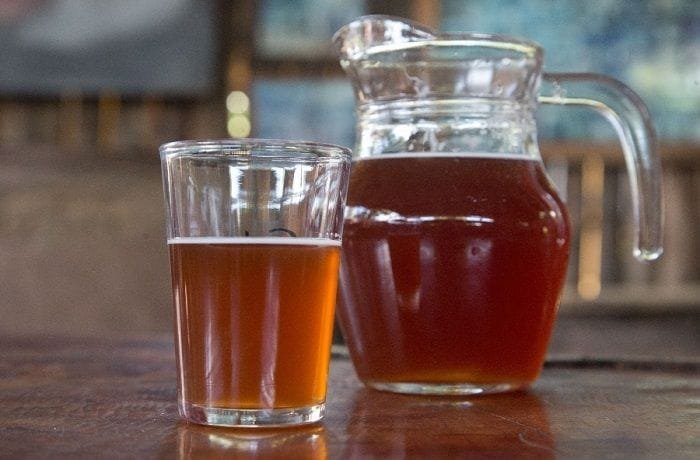
Chicha de uva de Curacaví is a naturally fermented grape drink made with 5 kg of destemmed pink or País grapes, pressed and strained, bottled with a loose cork, and left to ferment in a cool, dark place for 3 to 4 days. It is served with a little sugar or toasted flour to taste, and it is the official drink poured for the presidential toast every September 19th in Chile.
The whole process is hands-off once the grapes are pressed, needing only about an hour of active work before the wild yeasts on the grape skins take over.
Nutritional Information
Each serving of chicha de uva contains approximately 120 kcal, 1 g of protein, 0 g of fat, 0 mg of cholesterol, 28 g of carbohydrates (26 g of sugars), and 5 mg of sodium. (*)
(*) Values may vary depending on ingredients and portion sizes.
How to Make Chilean Chicha de Uva?
Chicha de uva comes together through the natural fermentation of freshly harvested grape juice, and when it’s time to drink it, a little sugar or toasted flour can be stirred in to taste.
Prep time: 60 minutes
Fermentation: 48 hours
Servings: 12 people
Ingredients
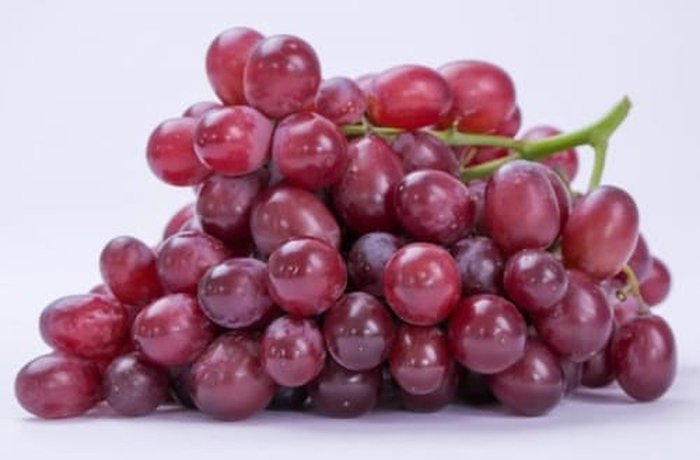
- 5 kg pink grapes
- Sugar, to taste
- Toasted flour, to taste

Instructions
- Destem the grapes, wash them, and pick out any damaged fruit or debris. Press with a fruit press or process in an electric juicer, then strain through a fine mesh sieve, pressing with a spoon to squeeze out all the grape juice, and set aside in a large container. Pour the juice into clean, dry, clear glass bottles.
- Cap the bottles loosely with a cork so the fermentation gas can escape. Store in a cool, dark place for 3 to 4 days, then serve with optional sugar and/or toasted flour stirred into a glass pitcher. Ferment for 5 to 6 days at the very most, before it turns too acidic or becomes vinegar.
Additional Tips
Why Use Ungrefrigerated Grapes for Chicha?
Fermentation is carried out by wild yeasts living on the grape skins. Prior refrigeration drastically reduces this population of microorganisms, slowing down or preventing natural fermentation. Use grapes harvested or bought without cold chain handling to guarantee an active, authentic fermentation.
Why Stir the Juice Once a Day During Fermentation?
Gently stirring oxygenates the liquid in a controlled way, which evens out the fermentation and keeps compacted sediment layers or mold spots from forming on the surface. Once a day is enough, over-oxygenating can turn the alcohol into acetic acid and turn the chicha into vinegar.
How Do You Keep Chicha de Uva From Turning Too Sour?
The safe fermentation limit is 5 to 6 days. Taste it daily starting on day two, once the balance between fruity sweetness and light acidity feels right, refrigerate the bottles to slow fermentation down. In the fridge, chicha holds its best point for up to 3 more days before acidity takes over.
| Substitution | Use instead of | Effect |
|---|---|---|
| Muscat or table grapes | País or pink grapes | Sweeter, more floral result |
| Loosely capped plastic bottles | Glass bottles with loose cork | Works, but harder to see clarity change |
| Brown sugar | White sugar to taste | Deeper, molasses like sweetness |
| 3 days fermentation | 3 to 4 days fermentation | Milder, less tangy result |
Frequently Asked Questions (FAQs)
1. What kind of grape is recommended?
Pink or dark grapes, such as the País variety, are ideal for their high natural sugar content and low cost. In Curacaví, pesticide-free criollo grapes are preferred to allow a more authentic fermentation with natural yeasts.
2. How do I know when it has reached the right point of fermentation?
The perfect moment is when small, steady bubbles appear on the surface, around 2 to 3 days of fermentation. Taste it daily until you find a balance between fruity sweetness and light acidity. If it smells like vinegar, it has fermented too long.
3. Why use clear glass bottles?
Glass lets you visually track color and cloudiness during fermentation, and it doesn’t react chemically the way some plastics can. The transparency helps you spot impurities or unusual fermentation through color changes.
4. Can I speed up the fermentation?
Keeping the bottles somewhere slightly warmer speeds it up, but it also raises the risk of over-fermenting into vinegar. It’s safer to stick to the 3 to 4 day window in a cool, dark spot and taste daily rather than rushing it with heat.
5. Is chicha de uva alcoholic?
Yes, but only mildly. The short, wild fermentation produces roughly 2 to 5% alcohol, far below wine, which is part of why it is traditionally served to a broad range of ages during Fiestas Patrias celebrations in Chile.
What Is Chicha de Uva?
Chicha de uva is a lightly fermented grape drink from Chile’s Central Valley, made without any added commercial yeast, relying entirely on the wild yeasts naturally present on the grape skins.
History of Chicha de Uva in Chile
Chicha de uva de Curacaví has deep roots in traditional Chilean culture, and today it is best known for its role in the official toast during the Parada Militar, the military parade the President of Chile leads every September 19th at Parque O’Higgins in Santiago.

Did You Know?
Curacaví, a small town in Chile’s Central Valley, has been producing artisanal chicha de uva for generations, and the drink is closely tied to the country’s Fiestas Patrias, Chile’s biggest national holiday celebrating independence.