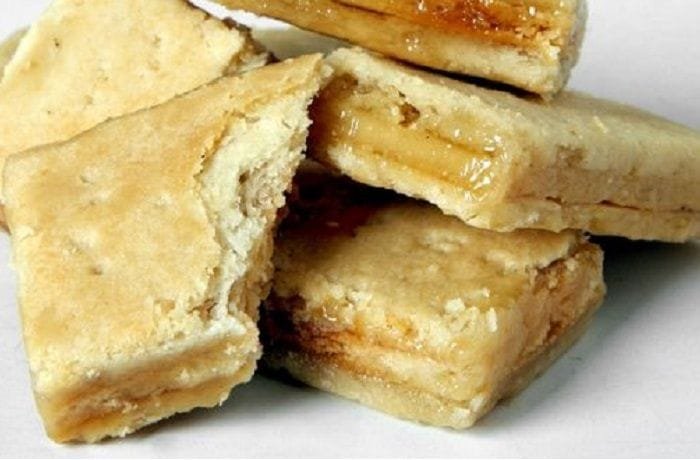
Chumbeque is a traditional sweet from northern Chile built from thin, crisp sheets of lard-based dough layered and soaked in a fig-leaf, cinnamon, and lemon syrup, then pressed and rested until the layers bind into a firm, sliceable block.
Its recipe carries multicultural roots that blend Chinese pastry tradition with local ingredients, and the Iquique style is known for its firm texture and long shelf life compared to other regional versions.
How to Make Chilean Chumbeque?
Chumbeque starts as a simple dough of flour, lard, and baking soda baked into thin sheets, which are then bathed in a homemade fig-and-cinnamon syrup and pressed into layers.
Nutritional Information
Each serving of chumbeque contains approximately 335 kcal, 53 g of carbohydrates, 12 g of fat, 3 g of protein, 1 g of fiber, and 30 g of sugars, and 80 mg of sodium. (*)
(*) Values may vary depending on ingredients and portion sizes.
Homemade Chumbeque Recipe
Prep time: 30 minutes
Cook time: 30 minutes
Servings: 12 people
Ingredients
For the dough
- 1 kg wheat flour
- 375 g lard
- 25 g baking soda
- 250 ml warm water
- Yellow food coloring (optional)
For the syrup
- 500 g white sugar
- 1 lemon
- 1 3/4 cups cold water
- 1 cinnamon stick
- 2 fig leaves
Instructions
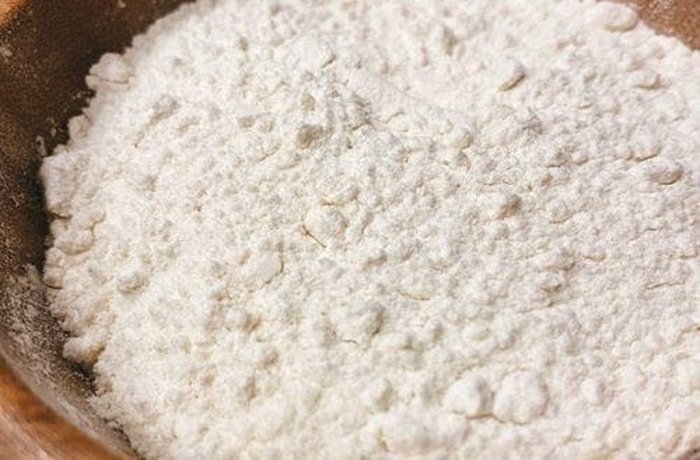
- Preheat the oven to 180°C (356°F) for about 10 minutes. Melt the lard in a pan over low heat and set aside. Place the flour on a work surface and, using your hands, mix in the melted lard, the warm water with the dissolved food coloring, and the baking soda until you get a soft, smooth dough.
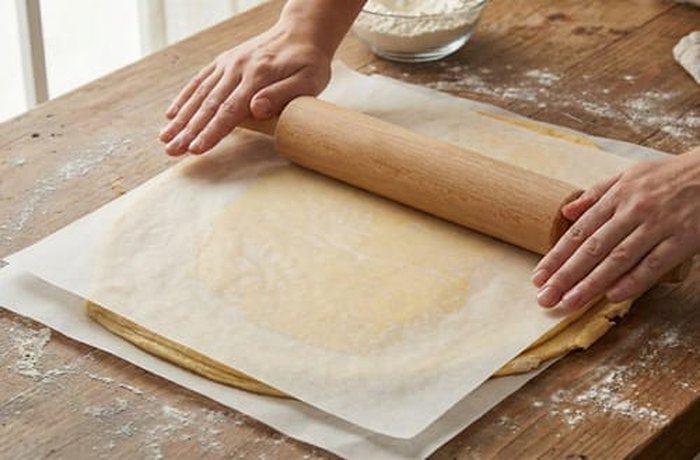
- Divide the still-warm dough into 3 equal parts. For a perfect roll, cut two sheets of parchment paper and place the dough between them; roll out with a rolling pin to an ideal thickness of about 3 mm. Trim the edges so they’re even and transfer the sheet, still on its parchment, to a baking tray.
- Bake the trays in the preheated oven for about 20 minutes, or until lightly golden. While the dough bakes, combine the sugar, lemon juice, and 1 3/4 cups of cold water in a small pot, bring to a boil over medium heat, stirring until the sugar dissolves.
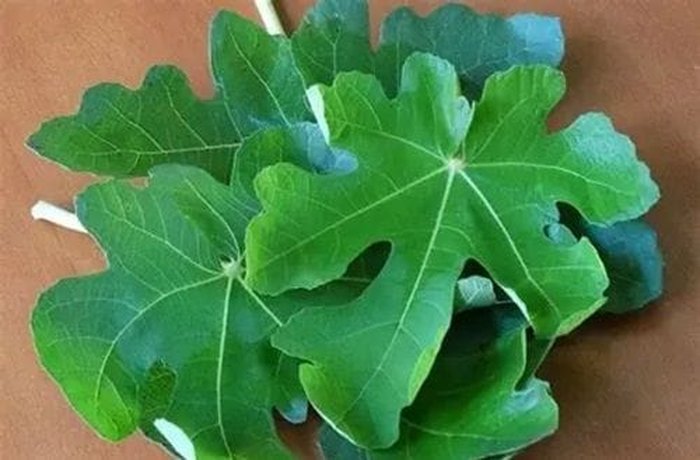
- Lower the heat and cook over medium-low until the syrup thickens slightly, add the cinnamon stick and fig leaves, remove from heat, and keep warm. Once the dough sheets are ready, remove them from the oven and brush them with the lemon syrup, stacking into 3 layers. Let rest and cool completely (at least 4 to 6 hours), then cut into small rectangles.
Additional Tips
Check the Syrup for the Soft-Ball Stage
The syrup should reach the “soft-ball stage”: drop a bit into a glass of cold water and touch the ball that forms. If it’s soft and pliable when pressed, it’s ready. If it dissolves, it needs more cooking. If it hardens like brittle candy, you’ve overcooked it and the chumbeque will be too hard and difficult to cut.
Roll the Dough to an Even 3 mm
Place the dough between two sheets of parchment paper and roll evenly with the pin, working from the center outward. To guarantee an even thickness, place two 3 mm-thick spacers, like chopsticks or plastic rulers, on either side of the dough; the rolling pin will rest on them and won’t go thinner. Uneven sheets bake at different rates and end up with raw spots.
Cut It Into Clean Rectangles Without Cracking
Wait the full 4 to 6 hour rest so the syrup soaks through and glues the layers together. Before cutting, heat the knife in very hot water or over a flame for a few seconds and dry it with a clean cloth. Cut with a firm, continuous motion, without sawing. Reheat the knife between cuts for clean results.
| Substitution | Use instead of | Effect |
|---|---|---|
| Vegetable shortening | Lard | Plant-based dough |
| Mango or passion fruit pulp (part of the water) | Plain syrup | Fruity, modern variation |
| Orange zest | Fig leaves | Different aromatic profile |
| Half quantities | Full 1 kg batch | Smaller, family-sized batch (about 10 pieces) |
Frequently Asked Questions (FAQs)
1. Can I make chumbeque just for family-sized portions?
This recipe is already sized for a homemade 1 kg-of-flour batch, ideal for sharing with family. For an even smaller batch, halve all the ingredients (500 g of flour) for about 10 pieces.
2. What do the fig leaves do in this recipe?
The fig leaves are what give the syrup its authentic, traditional character; without them, the syrup would simply taste like melted sugar, losing the depth that makes Iquique-style chumbeque special.
3. Does chumbeque need refrigeration?
No, it doesn’t need to be refrigerated, since its ingredients let it keep well at room temperature in an airtight container.
4. How is Chilean chumbeque different from the Peruvian version?
Iquique-style chumbeque is crispier, with pale layers, and uses lard. Peruvian chumbeque, very traditional in Piura, tends to be softer, has a deep orange color, and is usually made with oil.
5. How long does chumbeque keep before spoiling?
Thanks to its high sugar content and the way the dough is baked, if you store it in an airtight container in a cool, dry place, it can keep in perfect condition for 2 to 3 months.
What Is Chumbeque?
Chumbeque is a layered, syrup-soaked pastry from Chile’s Norte Grande, built from thin sheets of lard-based dough bathed in a fig, cinnamon, and lemon syrup and pressed together until firm enough to slice into small, chewy-crisp rectangles.
History of Chumbeque in Chile
Chumbeque’s history reflects the identity of Chile’s Norte Grande. Its roots trace back to immigrants from areas like Lambayeque and Piura in Peru, who brought the base of this pastry tradition with them. Once settled in northern Chile, the original recipe went through a process of cultural adaptation, becoming deeply woven into daily life in the region. The current Iquique recipe is credited to Arturo Mejía Koo, grandson of a Cantonese couple who arrived at the port in the early 20th century and fused Chinese pastry tradition with local ingredients.
Did You Know?
Although the original Iquique recipe uses lemon and orange syrup, modern versions of chumbeque made with mango, guava, or passion fruit exist today, made by replacing part of the syrup’s water with the pulp of the chosen fruit.
How to adapt this recipe to a vegan or vegetarian version?
How to adapt this recipe to a gluten-free version?
How to adapt this recipe to a keto (ketogenic) version?
Recommended
- Chilean Honey Cookies
- Chilean Marble Cake
- Chilean Tres Leches Cake
- Chilean Chocman Manjar Chocolate Bar