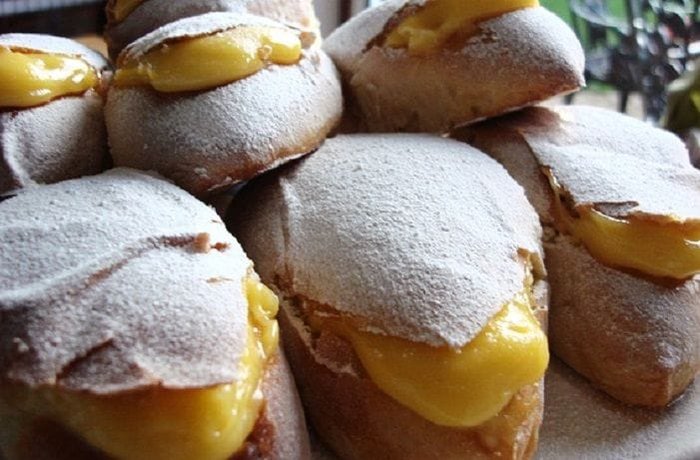
Conejitos rellenos are a traditional Chilean sweet bread, a classic after-school treat filled with pastry cream or manjar (dulce de leche). They take about an hour of hands-on prep plus 30 minutes of baking, and the result is a soft, pillowy bun with a rich, creamy center.
The name “conejitos” (little rabbits) comes from the elongated shape the dough takes on when baked, a local twist on a recipe brought to southern Chile by 19th-century German immigrants.
How to Make Conejitos Rellenos?
A classic of classics, making conejitos with pastry cream is one of those things that takes us straight back to childhood — it does require some effort, but the payoff is fully worth it.
Nutritional Information
Each serving of conejitos with pastry cream contains approximately 440 kcal, 10 g of protein, 18 g of fat (10 g of saturated fat), 110 mg of cholesterol, 62 g of carbohydrates, 35 g of sugars, and 150 mg of sodium. These values are estimates and may vary depending on ingredients and portion sizes.
Homemade Chilean Conejitos Recipe
Preparation: 60 minutes
Cooking: 30 minutes
Servings: 6 people
Ingredients
1. Conejitos Dough
- 480 g (17 oz) of flour
- 200 ml (6.8 fl oz) of milk
- 60 g (2.1 oz) of sugar
- 40 g (1.4 oz) of butter
- 7 g (0.25 oz) of instant yeast
- 3 eggs
- 1 pinch of salt
2. Pastry Cream
- 1 can of condensed milk
- 400 ml (13.5 fl oz) of water
- 30 g (1 oz) of cornstarch
- 3 egg yolks
- 1 vanilla bean
- 1 cup of manjar (dulce de leche)
Instructions
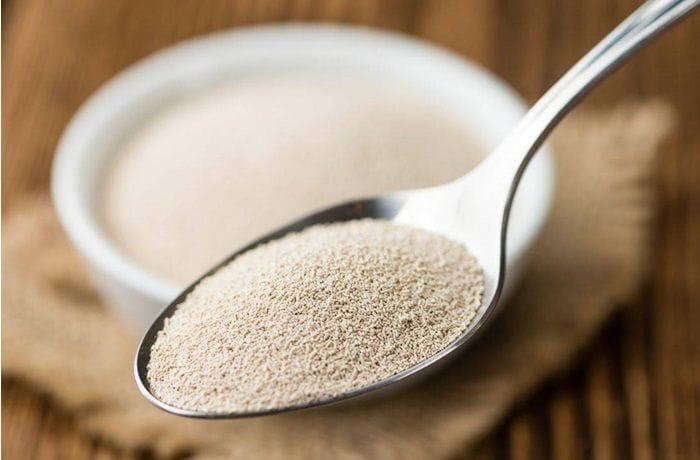
- Dissolve the yeast in warm milk, add 1 tablespoon of sugar and 1 of flour, stir until dissolved, and let rest at room temperature until it doubles in volume. In a large bowl, sift the flour and make a well in the center.
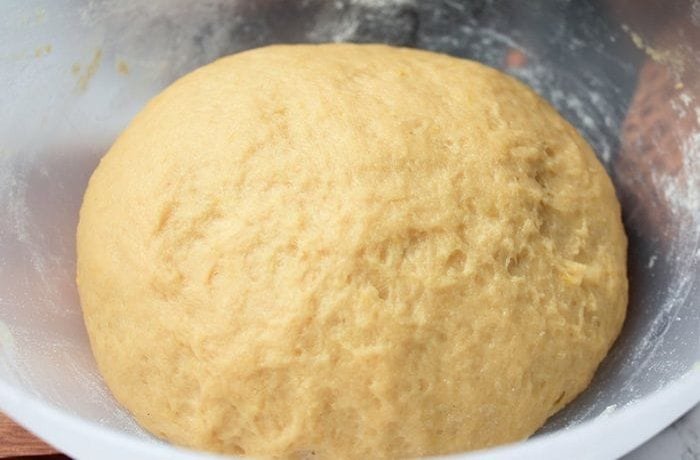
- Add the room-temperature butter, the yeast and milk mixture, the eggs, the remaining sugar, a pinch of salt, and work with your hands or a wooden spoon until you get a smooth-textured dough. Let it rest for 10 minutes.
- Divide the dough and shape it into balls about 5 centimeters (2 inches) in diameter, arrange them on a buttered baking sheet, gently flatten each one with your hand, and let rest for another 30 minutes.
- Preheat the oven to 180°C (356°F). In a small bowl, mix 1 egg with 3 tablespoons of milk and brush the surface of each bun, then bake in the preheated oven for 30 minutes. Remove, let cool, and set aside.
- In a pot over medium heat, add the condensed milk and water, stir until dissolved, add the split vanilla bean, and stir for 2 more minutes. Set half of the mixture aside in a medium bowl and whisk in the cornstarch and egg yolks until fully combined.
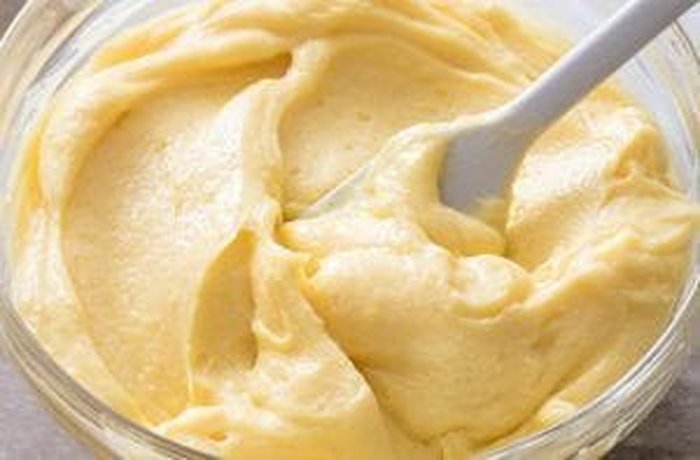
- Return the mixture to the pot, straining it through a fine sieve, lower the heat, and keep whisking constantly until it forms a smooth cream. Cook for 1 more minute, remove from heat, cool, and set aside.
How to Assemble the Conejitos?
Make a diagonal cut in each bun and fill with the pastry cream piped from a pastry bag. Serve the filled conejitos cold and fresh, optionally dusted with powdered sugar.
Additional Tips
Keep the milk lukewarm when activating yeast
When dissolving the yeast in milk, make sure it is lukewarm (around 40°C / 104°F). If the milk is too hot, it can kill the yeast and prevent the dough from rising properly.
Store them in an airtight container
Store the filled conejitos in an airtight container in the refrigerator. They stay fresh for up to 2 days, though they are most delicious freshly made.
Freeze the dough, not the filling
If you want to prep ahead, freeze only the unfilled baked buns, wrapped tightly, and fill them fresh after thawing and reheating for the best texture.
| Original ingredient | Substitute | Ratio | Flavor note |
|---|---|---|---|
| Instant yeast | Fresh yeast | 7 g : 20 g | Needs longer proofing time |
| Pastry cream | Manjar (dulce de leche) | 1:1 | Sweeter, denser filling |
| Whole milk | Lactose-free milk | 1:1 | No noticeable difference |
| Vanilla bean | Vanilla extract | 1 bean : 1 tsp | Slightly less aromatic |
Frequently Asked Questions (FAQs)
1. What if my pastry cream has lumps?
If you see lumps after cooking it, strain it immediately through a fine sieve while it is still hot, or give it a quick blitz with an immersion blender. This will break up the cornstarch clumps and restore its silky texture.
2. Can I use fresh yeast instead of instant yeast?
For every 7 g of instant yeast, use 20 g of fresh yeast. Dissolve it in warm milk with sugar and flour, but let it rest until it foams (about 10 to 15 minutes), since fresh yeast needs more time to activate.
3. Can the baked buns be frozen?
Yes, but freeze only the unfilled buns, wrapped in aluminum foil and inside an airtight bag. Thaw at room temperature and reheat in the oven at 160°C (320°F) for 5 minutes before filling.
4. Can I fill them with manjar instead?
Absolutely! While pastry cream is the standard filling, manjar (dulce de leche) is the favorite for many. Make sure to use a thicker, spreadable manjar so it does not run out the sides.
What Are Conejitos?
Conejitos are soft, yeasted Chilean sweet buns, split open and filled with pastry cream or manjar, named “little rabbits” for their characteristic elongated shape. They are a beloved bakery staple, especially popular as an after-school snack.
History of Conejitos in Chile
The history of conejitos in Chile is deeply tied to 19th-century German immigration to the south of the country. While the settlers brought with them the technique of yeasted dough and the Berliner Pfannkuchen (which would give rise to the Chilean “berlín”), the conejito was born as a local variant with its distinctive elongated shape.
Did You Know?
Pastry cream is believed to have originated in the 17th century, and some experts credit its invention to François Massialot, a chef born in Limoges, who used a mixture of milk, eggs, sugar, and wheat flour to create one of the most popular preparations in world pastry-making.
How to adapt this recipe to a vegan or vegetarian version?
How to adapt this recipe to a gluten-free version?
How to adapt this recipe to a keto (ketogenic) version?
Recommended
- Chilean Berlines Rellenos Recipe
- Chilean Honey Cookies Recipe
- Chilean Princes Cookies Recipe
- Chilean Manjarate Recipe