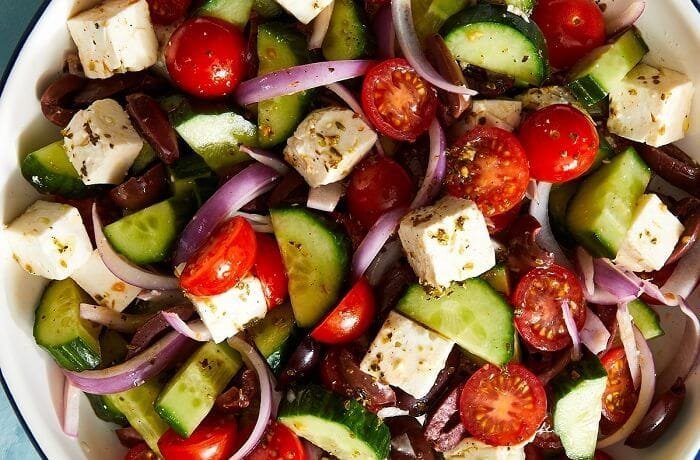
Traditional Greek salad is a fresh mix of cucumber, cherry tomatoes, and red onion with cubes of feta cheese and black olives, seasoned with oregano, sea salt, black pepper, and extra virgin olive oil. It takes 15 minutes of preparation, needs no cooking, and serves 4.
A refreshing recipe for spring or hot days that works as an appetizer, a side dish, or a light main course, and is quick and very healthy.
How to Make Greek Salad?
The base is cucumber, tomato, and red onion, joined by feta and black olives, which give the salad its unmistakable character. The onion is soaked in cold water to soften it, everything is tossed gently with olive oil, and newer versions add a spoonful of yogurt just before serving.
Nutritional Information
Each serving of Greek salad contains approximately 250 kcal, 10 g of carbohydrates, 18 g of fat, 8 g of protein, 5 g of fiber, 4 g of sugars, 25 mg of cholesterol, and 600 mg of sodium. These values are estimates and may vary depending on ingredients and portion sizes.
Traditional Greek Salad Recipe
Preparation: 15 minutes
Servings: 4
Ingredients
- 200 g of feta cheese
- 200 g of cherry tomatoes
- 50 g of black olives
- 2 large cucumbers
- 1 red onion
- 1 tablespoon of oregano
- 2 tablespoons of extra virgin olive oil
- Wine vinegar (optional)
- Greek yogurt (optional)
- Sea salt
- Black pepper

Instructions
- Peel the cucumbers and cut them into small pieces, and halve the cherry tomatoes. Slice the onion into thin strips and soak it in cold water to mellow it. Cut the feta into cubes and place it in a bowl, then add the cucumber, tomato, drained onion, black olives, and oregano, and season with salt and pepper to taste.
- Drizzle with the olive oil and toss gently to bring the flavors together. Serve the Greek salad immediately, adding a splash of wine vinegar or a spoonful of yogurt just before serving if you like.
Additional Tips
Quality is everything
This is a very simple salad, so the quality of each ingredient decides the result.
Use Kalamata olives
Traditionally the olives are Kalamata, a dark Greek variety with a purple tint and an intense flavor that suits this salad perfectly.
Choose the right olive oil
Use cold pressed extra virgin olive oil, ideally Greek or Mediterranean, for its intense flavor and low acidity.
| Original ingredient | Substitute | Ratio | Flavor note |
|---|---|---|---|
| Feta cheese | Fresh goat cheese | 200 g | Milder, creamier |
| Black olives | Kalamata olives | 50 g | Traditional choice |
| Cherry tomatoes | Ripe tomatoes in wedges | 2 medium | Juicier |
| Wine vinegar | Lemon juice | 1 tablespoon | Fresher acidity |
Frequently Asked Questions (FAQs)
1. What are the original ingredients of Greek salad?
The base is cucumber, tomato, and red onion with feta and black olives, which give it its characteristic flavor. It is dressed with oregano, sea salt, pepper, and olive oil. Kalamata olives are traditional, and yogurt is a more recent variation.
2. Why is the onion soaked in cold water?
To soften its flavor. The thinly sliced red onion rests in cold water while you cut the rest of the ingredients and loses part of its raw bite. Drain it well before mixing so the salad does not turn watery.
3. Can Greek salad be made ahead?
It is best served as soon as it is mixed, so the cucumber and tomato stay firm. Add vinegar or yogurt just before serving. You can cut the ingredients ahead and keep them separate until it is time to assemble.
4. How is Greek salad served?
As an appetizer, a side dish, or a light main course. It takes about 15 minutes for 4 people and is perfect for hot days. For a creamier, more filling salad, add natural or Greek yogurt just before serving.
Benefits of Kalamata Olives
These olives provide healthy monounsaturated fats, antioxidants such as vitamin E, and phenolic compounds associated with heart health.
The Mediterranean Diet
The Mediterranean diet supports cardiovascular health thanks to its healthy fats, fruit, vegetables, and fish, and is associated with a lower risk of chronic diseases such as type 2 diabetes.

Did You Know?
Greek yogurt is made by straining off part of the whey, which leaves a thicker product with more protein and fewer carbohydrates than regular yogurt.
How to adapt this recipe to a vegan or vegetarian version?
How to adapt this recipe to a gluten-free version?
How to adapt this recipe to a keto (ketogenic) version?
Recommended
- Chilean Raw Swiss Chard Salad Recipe
- Cold Pasta Salad Recipe
- Easy Lentil Salad Recipe
- Chilean Neapolitan Empanadas Recipe