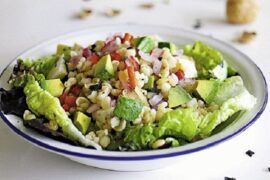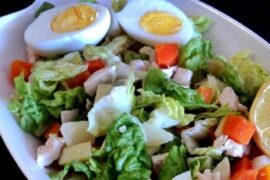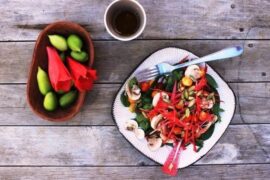
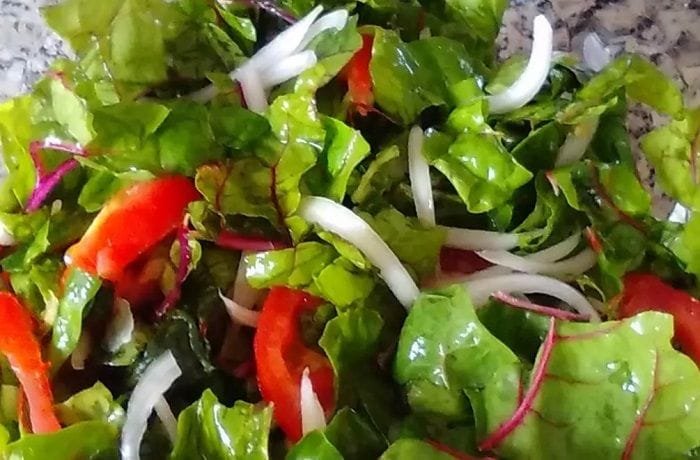
Chilean ensalada de acelgas crudas is a fresh salad of finely sliced raw Swiss chard leaves with tomato and red onion, dressed with lemon juice, olive oil, and apple cider vinegar. It takes 15 minutes to prepare, needs no cooking, and serves 4 people.
It is a light, natural side for almost any meal, full of nutrients and an excellent source of fiber.
How to Make Chilean Raw Swiss Chard Salad?
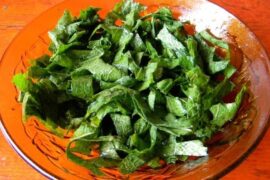
The secret is using very fresh vegetables, washing the leaves carefully, and removing the white stems so the tender green part is all you eat. The leaves are rolled and sliced into thin ribbons, tossed with tomato and onion, and dressed just before serving.
Nutritional Information
Each serving of raw Swiss chard salad contains approximately 80 kcal, 2 g of protein, 4 g of total fat, 9 g of available carbohydrates, 2 g of sugars, and 150 mg of sodium. These values are estimates and may vary depending on ingredients and portion sizes.
Homemade Chilean Ensalada de Acelgas Crudas Recipe
Preparation: 15 minutes
Servings: 4 people
Ingredients
- 1 bunch of Swiss chard
- 1 tomato, chopped
- 1 lemon
- 1/2 red onion
- Apple cider vinegar
- Olive oil
- Fine salt
- Black pepper
Instructions
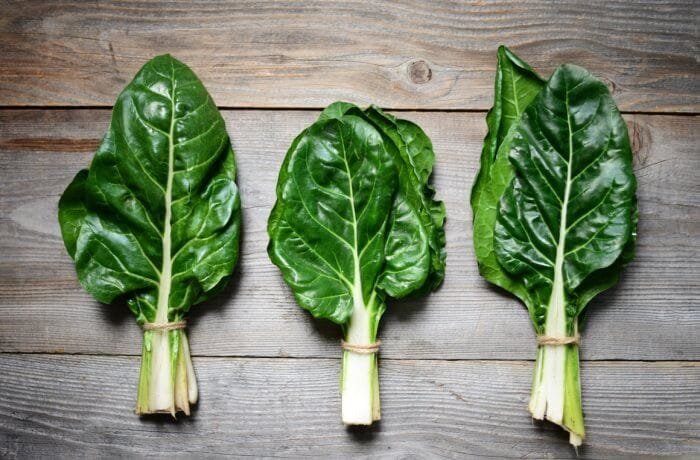
- Wash the chard leaves very well, drain them on paper towels, and remove the white stems. Roll the leaves up and slice them into thin ribbons. In a salad bowl, combine the chard, the chopped tomato, and the onion cut into thin strips, and set aside.
- In a medium bowl, mix the lemon juice, a drizzle of olive oil, a splash of apple cider vinegar, and salt and pepper to taste until combined. Pour the dressing over the vegetables, toss, check the seasoning, and serve immediately.
Additional Tips
Choose bright, healthy leaves
When buying chard, check that the leaves are healthy and a bright shade of green. That color is a reliable sign of freshness and quality, and dull or yellowing leaves will taste bitter raw.
Slice them thin
Raw chard is firmer than lettuce. Cutting it into fine ribbons, the chiffonade technique, makes it tender to eat and lets the dressing coat every piece.
Dress at the last minute
Lemon and vinegar start to soften the leaves as soon as they touch them. Add the dressing right before serving to keep the salad crisp.
| Original ingredient | Substitute | Ratio | Flavor note |
|---|---|---|---|
| Swiss chard | Baby spinach | 1:1 | Softer, milder |
| Red onion | Scallion | 1/2 onion : 2 scallions | Gentler bite |
| Apple cider vinegar | Red wine vinegar | 1:1 | Sharper |
| Lemon juice | Lime juice | 1:1 | More aromatic |
Frequently Asked Questions (FAQs)
1. Is it safe to eat raw Swiss chard?
Yes, as long as the leaves are washed thoroughly to remove any soil or pesticide residue. Young, tender leaves are the best for eating raw in salads.
2. Can I include the stems in the salad?
Yes. The stems are tougher and more fibrous, so cut them into thin strips or blanch them briefly if you want to include them without spoiling the texture.
3. How long does the salad keep once made?
It is best eaten right away. Once dressed it can be refrigerated for up to 6 hours, although the leaves will start to wilt.
What Is Swiss Chard?
Swiss chard, acelga in Spanish, is a leafy green with large glossy leaves and thick white or colored stems. It is rich in vitamins and minerals, with a notably high content of vitamin K, which supports blood clotting and bone health, and folate, which is essential during pregnancy.
Swiss Chard in Chilean Cooking
Chard is one of the most common vegetables in Chilean markets and home gardens. It is usually cooked, in tortillas de acelga, guisos, and pasteles, so eating it raw in a simple lemon dressed salad is a lighter way to enjoy it as a side for grilled meat or fish.

Did You Know?
Swiss chard belongs to the amaranth family and is a close relative of beetroot, which is why both its green leaves and its stems are edible and used in a variety of dishes around the world.
How to adapt this recipe to a vegan or vegetarian version?
How to adapt this recipe to a gluten-free version?
How to adapt this recipe to a keto (ketogenic) version?
Recommended
- Chilean Swiss Chard Omelette Recipe
- Chilean Swiss Chard Stew Recipe
- Chilean Potato Salad Recipe
- Chilean Nalca and Diguenes Salad Recipe