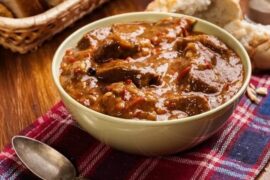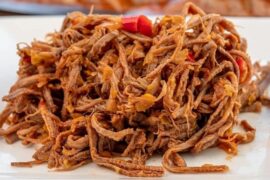
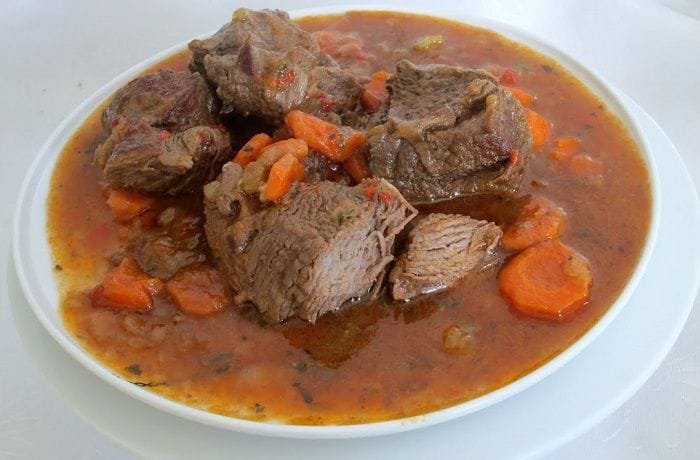
Chilean carne al jugo is a traditional beef stew in which affordable cuts are seared and then cooked slowly with onion, garlic, carrot, vinegar, tomato sauce, and spices until the meat falls apart with a fork. It takes 30 minutes of preparation plus 2 hours and 30 minutes of cooking and serves 4 people.
It is part of the everyday home cooking Chileans grow up with, and it is almost always served with a plate of white rice to soak up its juice.
How to Make Chilean Carne al Jugo?
You sear pieces of inexpensive beef, sauté onion and garlic in the same pot, and then braise the meat with water, vinegar, oregano, cumin, aji de color, and carrots over very low heat. Tomato sauce goes in for the last half hour, and the stew is ready when the meat keeps its shape but can be cut with just a fork.
Nutritional Information
Each serving of carne al jugo contains approximately 450 kcal, 10 g of carbohydrates, 25 g of total fat, 45 g of protein, 3 g of fiber, 5 g of sugars, 120 mg of cholesterol, and 750 mg of sodium. These values are estimates and may vary depending on ingredients and portion sizes.
Homemade Chilean Carne al Jugo Recipe
Preparation: 30 minutes
Cooking: 2 hours 30 minutes
Servings: 4 people
Ingredients
- 1 kg (2.2 lb) of stewing beef
- 250 ml (8.5 fl oz) of water
- 200 ml (7 fl oz) of tomato sauce
- 4 tablespoons of vinegar
- 2 tablespoons of oil
- 2 carrots, sliced into rounds
- 2 garlic cloves, minced
- 1 onion, thinly sliced
- 1 tablespoon of oregano
- 1/4 teaspoon of ground cumin
- 1 teaspoon of aji de color (Chilean paprika seasoning)
- 5 black peppercorns
- White wine (optional)
- Fine salt
- Ground black pepper

Instructions
- Trim the excess fat from the beef, pat it dry with paper towels, cut it into pieces, and season with salt and pepper to taste. In a large pot, heat a splash of oil over high heat, add the meat, lower the heat, and sear it evenly for 4 to 5 minutes per side. Set aside on a platter with its juices.
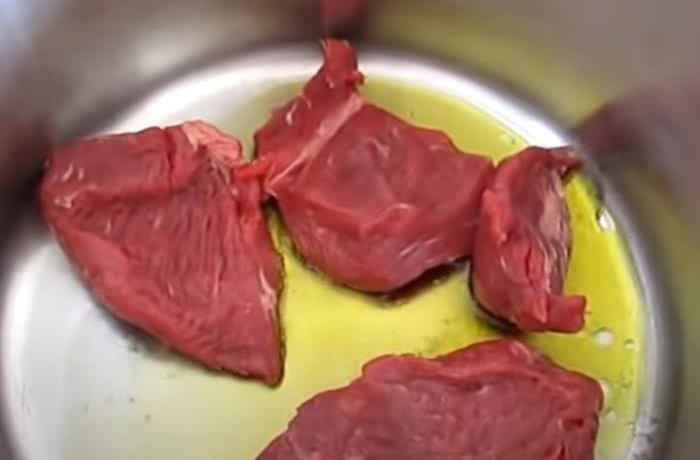
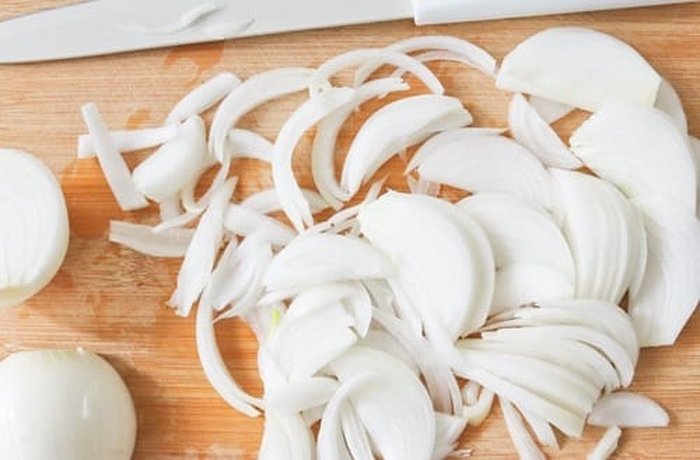
- In the same pot, add a little more oil and sauté the onion for about 5 minutes, stirring with a wooden spoon until it turns translucent. Add the minced garlic and cook for one more minute, then return the meat and its juices to the pot.
- Add the oregano, cumin, and aji de color. Pour in the water, the vinegar, and a little white wine if you like, add the peppercorns and the carrot rounds, and stir. Add more water if needed to cover the meat and bring to a boil over medium high heat.
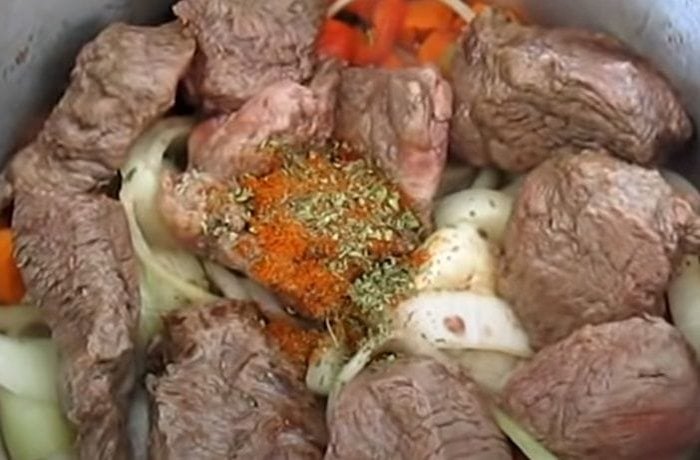
- Cover and cook over very low heat for about 90 minutes, then add the tomato sauce and cook for about 30 minutes more, until the meat is soft enough to pull apart easily with a fork. Serve immediately with spicy mashed potatoes, fluffy white rice, or French fries.
Additional Tips
Aim for fork tender, not shredded
Whatever cut and pot you use, the stew is ready when the meat still holds its shape but can be cut easily with just a fork. Past that point it starts to fall apart into the sauce.
Pressure cooker version
After adding all the ingredients and covering with water, close the pressure cooker and heat it on high until it starts releasing steam. Then lower the heat to the minimum and cook for 60 minutes, adding the tomato sauce at the end.
Dry the meat before searing
Patting the beef dry lets it brown instead of steam. That browned crust is what gives the jugo, the cooking juice, its deep color and flavor.
| Original ingredient | Substitute | Ratio | Flavor note |
|---|---|---|---|
| Vinegar | Dry white wine | 4 tbsp : 100 ml | Softer, rounder acidity |
| Water | Beef stock | 1:1 | Richer sauce |
| Tomato sauce | Crushed canned tomatoes | 1:1 | Fresher, chunkier |
| Aji de color | Sweet paprika | 1:1 | Milder |
Frequently Asked Questions (FAQs)
1. Which beef cuts are best for carne al jugo?
Affordable, fibrous cuts are ideal because they soften with slow cooking. The most recommended Chilean cuts are huachalomo (chuck), sobrecostilla (chuck rib), tapapecho (brisket), and asado carnicero.
2. Can I make this recipe with chicken or pork?
Yes, the same slow braising technique works with other meats. Chicken needs much less cooking time, and for pork you can use cuts such as shoulder or ribs.
3. How do I make the sauce thicker?
Mash a few carrot slices from the stew and stir them back in. You can also dissolve a teaspoon of cornstarch in cold water at the end of cooking and stir it in until the sauce thickens.
4. Can carne al jugo be frozen?
Yes. Once cool, store it in an airtight container and freeze it for up to 3 months. Reheat it over low heat, adding a little water if needed to keep the sauce loose.
What Is Carne al Jugo?
Carne al jugo literally means meat in its juice. The name refers to the sauce formed by the meat’s own juices together with the vinegar, water, and tomato, rather than to a thickened gravy, which is why it is served over rice or mashed potatoes to catch every drop.
History of Carne al Jugo in Chile
Slow braised beef has long been a way for Chilean households to make the most of cheaper cuts. Carne al jugo became a staple of home kitchens and of the menu del dia in small neighborhood restaurants, where it is still one of the most requested weekday lunches.
Did You Know?
Carne al jugo is a traditional dish in almost every Latin American country, prepared with different variations and local ingredients, from the Mexican carne en su jugo to the Chilean version with vinegar and oregano.
How to adapt this recipe to a vegan or vegetarian version?
How to adapt this recipe to a gluten-free version?
How to adapt this recipe to a keto (ketogenic) version?
Recommended
- Chilean Tapapecho al Horno Recipe
- Chilean Pollo Ganso a la Olla Recipe
- Chilean Grilled Huachalomo Recipe
- Chilean French Fries in Lard Recipe