Versión en Español: Receta de huachalomo a la parrilla
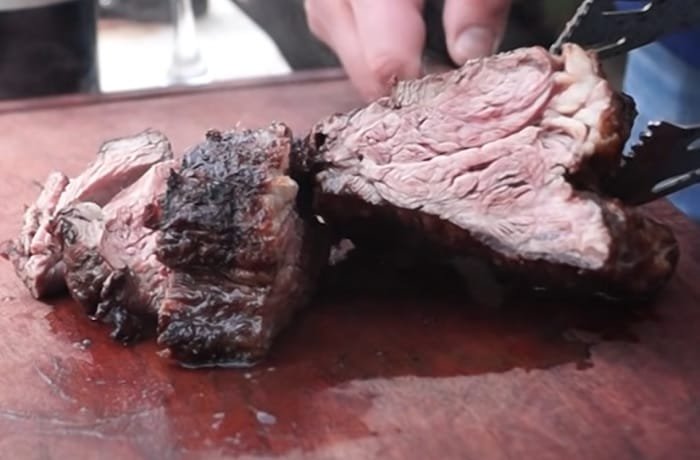
Grilled huachalomo is cooked first over high heat — hand test: 6 to 7 seconds — for 60 seconds per side to sear, then moved to medium heat for 30 minutes per side. The ideal internal temperature is 57°C: pink, juicy, and tender. It is the most affordable Chilean beef cut with flavor and tenderness comparable to ribeye.
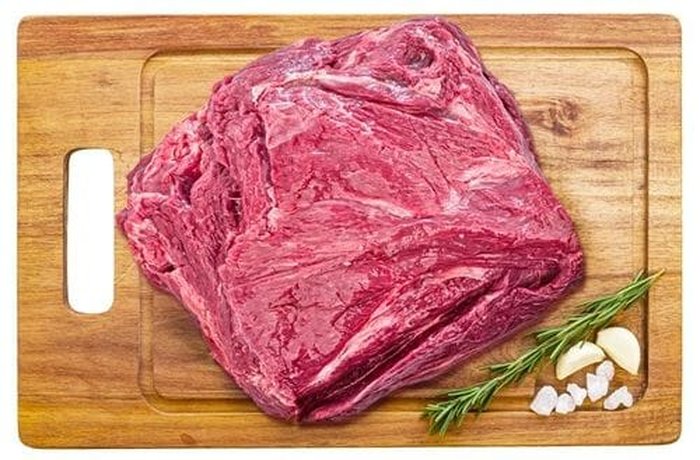
Huachalomo is a rectangular cut with high fat infiltration, the muscle located between the chuck and the loin, covered by a generous external fat cap. That fat renders slowly over the coals and bastes the meat from the outside, which is why this cut punches far above its price. This recipe serves 4 people and takes about 80 minutes from fire to table.
Nutritional Information
Each serving of grilled huachalomo contains approximately 950 kcal, 120 g of protein, 42 g of total fat (18 g saturated), 300 mg of cholesterol, 0 g of carbohydrates, 0 g of sugars, and 150 mg of sodium. Values are estimates and vary with exact portion size and fat trimming.
How to Grill Chilean Huachalomo?
This cut is particularly tender, covered by an abundant fat layer similar to ribeye but at a fraction of the price. Proper two-zone fire management — high heat for the sear, medium heat for the cook — is what separates a dry huachalomo from a perfect one.
Prep Time: 20 minutes
Cook Time: 60 minutes
Servings: 4 people
Ingredients
- 2 kg huachalomo (chuck eye or ribeye cap), whole piece
- Coarse grilling salt (sal gruesa de parrilla)
- Red wine (for serving)

Instructions
- Remove the meat from its packaging and let it rest at room temperature until it returns to its natural deep red color — this oxygenation step improves browning. Prepare the grill for high heat: hold your hand 10 cm above the grate — if you can only hold it for 6 to 7 seconds, the heat is right. Place the huachalomo directly on the grate and sear for 60 seconds per side, rotating with tongs to sear all faces. Season the seared sides with coarse grilling salt immediately after each flip.
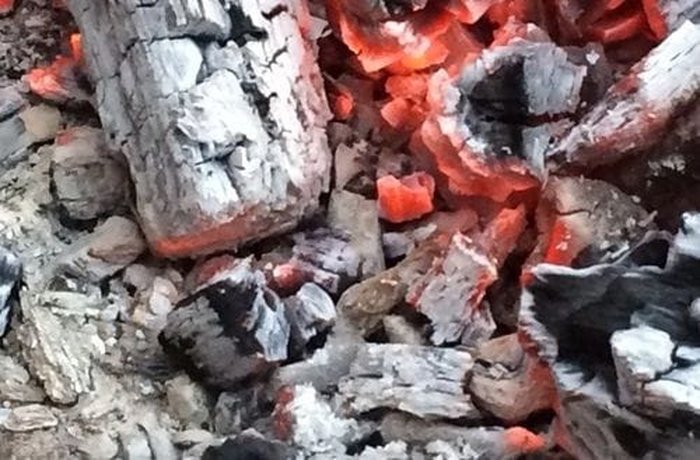
- Move the seared meat to the cooler edge of the grill, where the heat is medium (your hand holds for 8 to 9 seconds). Cook for 30 minutes without disturbing, then flip and cook for another 20 to 30 minutes, until the meat feels springy when pressed — it should push back immediately after your finger lifts.
- Transfer the meat to a clean cutting board and rest for at least 5 minutes — do not skip this step. Slice against the grain with a sharp knife, check for the pink, juicy center that signals medium doneness, and serve immediately alongside a Chilean Cabernet Sauvignon or Carménère.
Expert Grilling Tips
What Temperature Should the Grill Be Before Adding the Huachalomo?
The grill should reach between 200 and 230°C before the meat goes on. Without a thermometer, use the hand test: hold your palm 10 cm above the grate. If you can only hold it for 6 to 7 seconds, the heat is high and ready for searing. An infrared thermometer gives you the exact reading without any contact.
Why Is Resting the Meat Before Cutting So Important?
When pulled off the fire, the internal juices concentrate in the center of the cut. Resting for 5 to 10 minutes on a cutting board allows those juices to redistribute evenly throughout the meat. Cutting immediately can cause you to lose up to 40% of the juices, leaving a noticeably drier steak on the plate.
When Should You Salt the Huachalomo?
Salt the huachalomo immediately after searing each side — never before placing it on the grill. Salt draws surface moisture out through osmosis: applied before searing, it prevents the formation of the golden crust and dries the exterior before the Maillard reaction can occur.
Ingredient Notes and Substitutions
| Original Ingredient | Notes / Substitution |
|---|---|
| Huachalomo (2 kg) | Chuck eye steak or ribeye cap are the closest equivalents outside Chile |
| Coarse grilling salt | Kosher salt or fleur de sel — avoid fine salt, which dissolves too quickly |
| Red wine (Cabernet Sauvignon) | Carménère, Malbec, or any full-bodied dry red wine |
Frequently Asked Questions (FAQs)
How do I know when huachalomo is perfectly cooked?
Press the meat with your finger: if it offers resistance but immediately springs back, it is at medium doneness (57°C). For greater accuracy, use a meat thermometer: 52°C for rare, 57°C for medium, 63°C for medium-well, 71°C+ for well done.
Why is resting the meat before cutting important?
When you pull the meat off the grill, its internal juices concentrate in the center. Resting for 5 to 10 minutes on a cutting board allows the juices to redistribute evenly throughout the cut. Cutting immediately can cause you to lose up to 40% of those juices, leaving the meat noticeably drier on the plate.
What sides go best with grilled huachalomo?
In Chile, grilled huachalomo is traditionally served with pebre (fresh herb and chili sauce), boiled or fried potatoes, and Chilean salad (tomato and onion). A glass of Chilean Cabernet Sauvignon or Carménère is the classic pairing.
How do I store and reheat leftover huachalomo?
Store leftovers in an airtight container in the refrigerator for up to 3 days. To reheat, slice the meat and sear quickly in a very hot pan for 1 to 2 minutes, or steam for 2 to 3 minutes. Avoid the microwave — it makes the meat tough and dry.
What cut of beef is huachalomo and what can I substitute it with?
Huachalomo is the muscle between the chuck and the loin, covered by a thick fat cap. Outside Chile it is comparable to a chuck eye steak or a ribeye cap. Chuck eye steak is the most accessible substitute and behaves similarly on the grill.
Huachalomo Doneness Chart
| Doneness | Internal Temp | Touch Test | Appearance When Cut |
|---|---|---|---|
| Rare (bleu) | 52°C (125°F) | Very soft, almost no resistance | Deep red throughout |
| Medium | 57°C (135°F) | Firm but yields when pressed | Uniform pink |
| Medium-well | 63°C (145°F) | More resistant, less juicy | Pink only in the center |
| Well done | 71°C+ (160°F+) | Hard, no visible juice | Uniform gray |
Benefits of Beef
Beef is an excellent source of complete protein, providing all essential amino acids needed for tissue repair and regeneration. It is rich in heme iron — the most bioavailable form — which supports red blood cell production and helps maintain cellular oxygenation. Beef also provides zinc for immune function, vitamin B12 for nervous system health, and creatine for muscle energy.
What Cut of Beef Is Huachalomo?
In Chile, huachalomo is a rectangular cut with high fat infiltration — the muscle that sits between the loin and the head of the animal. It is anatomically equivalent to the chuck eye or the spinalis dorsi (ribeye cap) in other butchery traditions. The abundant external fat cap renders over the coals and continuously bastes the meat during cooking, which is why this economical cut delivers flavor and juiciness far above its price point.