Versión en Español: Receta de brochetas de salmón chileno: Deliciosa alternativa de anticuchos de mar
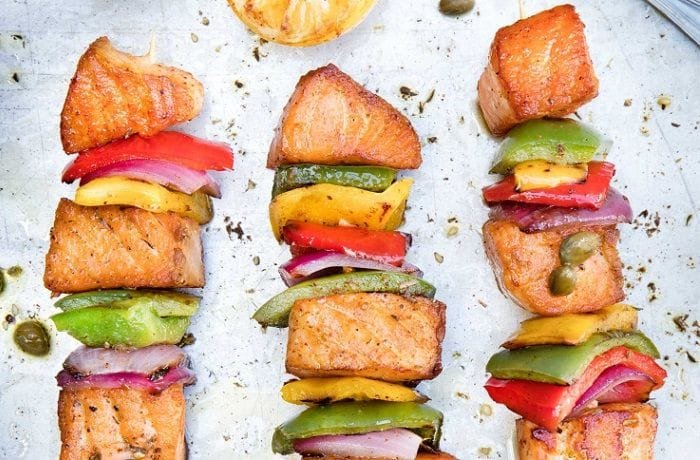
Chilean salmon skewers (brochetas de salmón) are made with 500 g of skinless salmon cut into 3 cm cubes, threaded alternately with tri-color bell peppers and red onion onto pre-soaked wooden skewers, seasoned with lemon juice, salt, and pepper, and pan-fried in olive oil for approximately 2 minutes per side until golden. Total time is 25 minutes. The result is a quick, vibrant seafood dish that works equally well as an appetizer or a light main course, finished with capers scattered around the platter for acidity and contrast. Serves 4 people.
Chile is the world’s second largest salmon producer after Norway, and Chilean Atlantic salmon is prized for its high fat content, vivid color, and firm texture — qualities that make it particularly well-suited to high-heat cooking on skewers, where surface browning and interior juiciness need to coexist in a very short cooking window. The brocheta format, borrowed from French culinary terminology (from brochette, meaning “skewered”), is common in Chilean coastal cooking as a way to prepare fresh fish quickly without elaborate technique. Serves 4 people.
How to Make Chilean Salmon Skewers?
The two critical steps are cube size and skewer preparation. Uniform 3 cm cubes ensure even cooking across all pieces; soaked wooden skewers resist burning on the hot pan surface. Bell pepper and onion pieces placed at both ends of each skewer act as mechanical stoppers that prevent the salmon from rotating or sliding during cooking. The entire process from cutting to plating takes 25 minutes.
Nutritional Information
Each serving contains approximately 250 kcal, 25 g of protein, 15 g of total fat (2 g saturated), 60 mg of cholesterol, 5 g of carbohydrates, 1 g of sugars, and 200 mg of sodium. Chilean salmon is one of the richest dietary sources of omega-3 fatty acids (EPA and DHA), which support cardiovascular health and reduce inflammation. It is also high in vitamin D, vitamin B12, and selenium.
Homemade Chilean Salmon Skewers Recipe
Prep Time: 20 minutes
Cook Time: 5 minutes
Servings: 4 people
Ingredients
- 500 g skinless salmon fillet
- 2 red onions, cut into 3 cm squares
- ½ red bell pepper, cut into 3 cm squares
- ½ green bell pepper, cut into 3 cm squares
- ½ yellow bell pepper, cut into 3 cm squares
- 3 tablespoons capers, to serve
- 2 tablespoons fresh lemon juice
- Extra virgin olive oil
- Fine sea salt and black pepper to taste
- Wooden skewers
Instructions
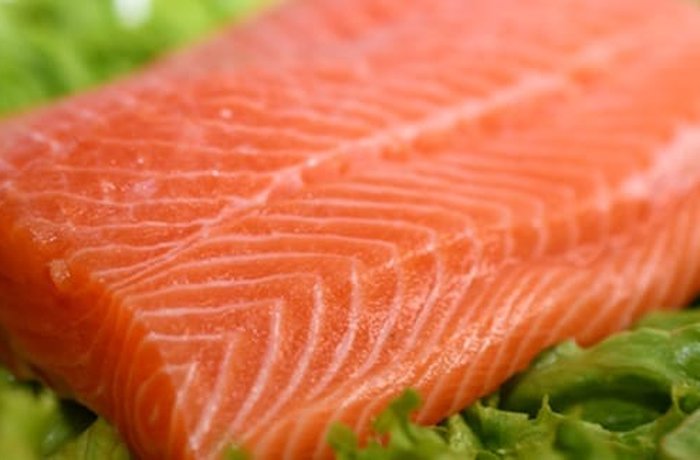
- Submerge the wooden skewers in cold water and soak for at least 10 minutes — this prevents them from burning on the hot pan surface. Meanwhile, cut the salmon into uniform 3 cm cubes. Place in a bowl, drizzle with lemon juice, season with salt and pepper, toss gently to coat, and set aside.
- Wash the bell peppers and red onion and cut into 3 cm squares, roughly the same size as the salmon cubes. Season with salt and pepper and set aside. Drain the soaked skewers.
- Thread the skewers by alternating pieces of salmon, onion, and bell pepper. Use at least one piece of bell pepper or onion at each end of the skewer as a firm stopper to keep the salmon cubes from sliding off during cooking. Each skewer should hold 3 to 4 salmon cubes.
- Heat a drizzle of olive oil in a large pan or griddle over medium heat. Add the skewers in a single layer without overcrowding — cook in batches if necessary. Brown each side for approximately 2 minutes, turning to color all sides evenly. Total cooking time is 5 to 6 minutes. Transfer to a wide serving platter, scatter the capers around the skewers, and serve immediately.
(*) Recipes are provided as a reference and should be adjusted according to available ingredients and equipment. We recommend testing and modifying recipes to suit your preparation style and personal preferences.
The finished skewers have a golden-brown crust on the outside and a moist, tender interior — salmon is done when it flakes easily at the thickest point and is no longer translucent at the center. The capers add a sharp, briny counterpoint to the rich salmon fat. Serve immediately: salmon skewers hold their texture for only a few minutes after leaving the pan before the residual heat continues cooking the fish and drying it out.
Additional Tips
Cut Uniform 3 cm Cubes for Even Cooking
Cube size is the most important technical variable in this recipe. Cubes smaller than 3 cm break apart when pierced by the skewer and crumble during cooking. Cubes larger than 3 cm are too heavy and rotate under their own weight, making it difficult to brown all sides evenly. A ruler or a 3 cm guide line on the cutting board makes consistent sizing straightforward.
Use Vegetables as End Stoppers on Every Skewer
A piece of bell pepper or red onion positioned at both ends of each skewer acts as a mechanical stopper that keeps the salmon pieces locked in place during cooking. Without these stoppers, salmon cubes slide toward the tip and bunch together unevenly, resulting in inconsistent cooking — the outer pieces overcooked while the inner ones are underdone.
Pat the Salmon Dry Before Seasoning
Whether using fresh or thawed frozen salmon, pat each cube thoroughly dry with paper towels before adding the lemon juice, salt, and pepper. Surface moisture turns to steam on contact with the hot pan and prevents the browning reaction (Maillard reaction) that gives skewers their characteristic crust. Dry salmon cubes brown in 2 minutes; wet cubes steam and turn gray.
| Original Ingredient | Substitute | Notes |
|---|---|---|
| Chilean salmon | Swordfish, tuna, or sea bass | Must be a firm-fleshed fish — delicate fillets like sole or tilapia fall apart on skewers |
| Tri-color bell peppers | Zucchini, cherry tomatoes, or mushrooms | Cherry tomatoes burst during cooking and release juice that bastes the salmon |
| Capers | Pickled green olives or lemon zest | Less briny than capers but maintains the acid contrast needed to balance the salmon fat |
| Olive oil (pan) | Avocado oil | Avocado oil has a higher smoke point (270°C vs 190°C for olive oil) and is better for very high heat |
Frequently Asked Questions (FAQs)
How do I prevent the salmon from sliding off the skewer?
Cut the salmon into uniform 3 cm cubes — cubes smaller than this break apart, while larger ones rotate under their own weight. Always position a piece of bell pepper or onion as a firm stopper at both ends of each skewer to anchor the salmon pieces in place during cooking.
Can Chilean salmon skewers be cooked in an air fryer?
Yes. Preheat the air fryer to 200°C (390°F) and cook for 6 to 8 minutes, turning the skewers halfway through. The result is surprisingly crispy on the outside and juicy inside — a faster alternative to pan-frying that requires less oil. Use metal skewers in the air fryer to avoid any risk from wooden skewers in a very hot enclosed space.
Can I use frozen salmon for this recipe?
Yes, but thaw slowly in the refrigerator overnight rather than at room temperature or under running water. Before cutting and seasoning, pat the salmon cubes very dry with paper towels — excess moisture from thawing prevents proper browning and causes the fish to steam instead of sear in the pan.
Why are capers recommended with salmon skewers?
Capers provide a sharp burst of acidity and saltiness that cuts through the natural richness and fat of the salmon. This is a classic pairing in European fish cookery — the same logic behind smoked salmon with capers and cream cheese — that balances the palate and prevents the dish from feeling heavy.
Can I marinate the salmon before threading the skewers?
Yes, but keep the marinade brief — 15 to 30 minutes maximum. Salmon has delicate muscle fibers that begin to break down if left too long in an acidic marinade containing lemon juice or vinegar. A simple marinade of olive oil, lemon zest, crushed garlic, and fresh dill adds flavor without compromising the texture.
What Are Chilean Salmon Skewers?
Brochetas de salmón are salmon skewers — alternating cubes of fresh salmon and colorful vegetables threaded onto wooden sticks and cooked quickly on a hot pan or griddle. In Chile, they are described as a seafood version of the anticucho, the South American tradition of threading marinated meat onto skewers for fast, high-heat cooking. The dish uses Chilean Atlantic salmon (Salmo salar), farmed primarily in the cold, oxygen-rich waters of the Los Lagos and Aysén regions, which produce fish with distinctively high fat content and deep orange color.
History of Salmon in Chilean Cuisine
Salmon is not native to Chilean waters — it was introduced through aquaculture programs beginning in the 1970s, when the Chilean government partnered with Norwegian companies to assess whether the cold, clean fjords of Patagonia could support Atlantic salmon farming. By the 1990s Chile had become a major global exporter, and by the 2000s Chilean salmon was available in supermarkets nationwide at accessible prices, integrating into everyday Chilean cooking in ways that beef and chicken had traditionally dominated. Today Chile is the world’s second largest salmon producer after Norway, exporting primarily to the United States, Japan, and Brazil. Salmon skewers emerged as a popular home recipe in the 2000s as fresh salmon became widely affordable across the country.
Did You Know?
The word brocheta in Spanish gastronomy comes from the French brochette, which literally means “skewered” — derived from broche, a spit or spike used for roasting. The French term entered Spanish culinary vocabulary in the 19th century and is now used throughout Latin America to describe any food threaded onto a skewer for cooking. In Chile, the term coexists with anticucho (from Quechua, referring specifically to marinated meat skewers) and pincho (from Spanish, used more commonly in the north of Chile and in the bar-snack context borrowed from Spain).