
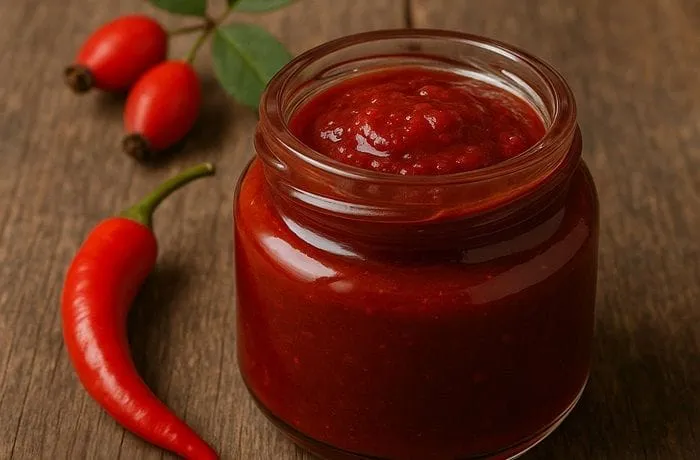
This Chilean spicy rosehip sauce is a sweet-and-tangy Patagonian condiment made from fresh rosehips, aji cacho de cabra chili, apple cider vinegar, and sugar. Ready in 40 minutes, it pairs beautifully with fried seafood, grilled fish, and crispy appetizers.
The sauce comes together in five straightforward steps: cook the rosehips until soft, sterilize the jars, blend the pulp with the chili and vinegar, reduce the mixture to a thick ribbon consistency, and seal for storage. The result is a vibrant, rust-colored sauce with a heat level you control.
How to Make Chilean Spicy Rosehip Sauce?
The secret to a smooth, seed-free sauce is a thorough straining of the cooked rosehips through a fine-mesh sieve before blending. Rosehip seeds and the fine hairs inside the fruit cause irritation if left in — this step is not optional.
Use dried aji cacho de cabra for a deeper, more concentrated heat than the fresh version. Start with half a chili without seeds and taste before adding more. The vinegar and sugar are the balancing agents: adjust them at the end, not the beginning.
Nutritional Information
Per serving (1 tablespoon / 30 g): 65 kcal, 16 g carbohydrates, 14 g sugars, 0.2 g protein, 0.1 g fat, 2 mg sodium, 0 mg cholesterol. Rosehip is one of the richest plant sources of vitamin C, providing antioxidant benefits even after cooking.
Chilean Spicy Rosehip Sauce Recipe
Prep time: 10 minutes | Cook time: 30 minutes | Servings: 12
Ingredients
- 1 kg fresh rosehips (mosquetas)
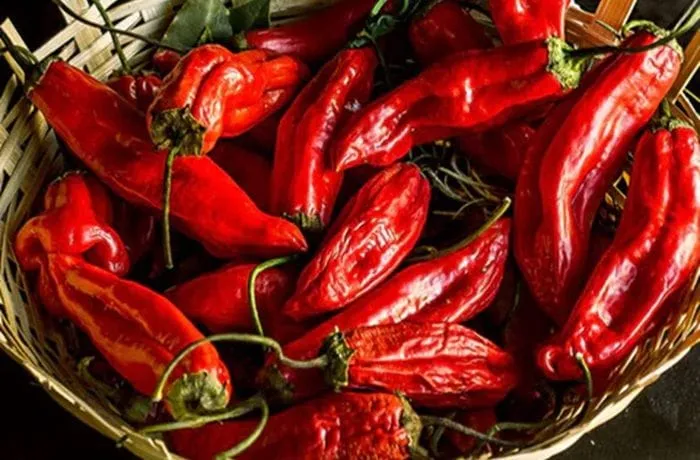
- 3 aji cacho de cabra chili peppers
- 60 ml apple cider vinegar
- 2 tablespoons sugar

Instructions
- Halve the rosehips with kitchen scissors and scrape out the seeds and fine inner hairs with a small spoon. Place in a large pot, cover with cold water (double the volume of the fruit), bring to a boil, reduce to low heat, and cook for 20 minutes, stirring every two minutes, until the mixture is soft and creamy. Pass through a fine-mesh sieve, pressing with a spoon to extract all the pulp.

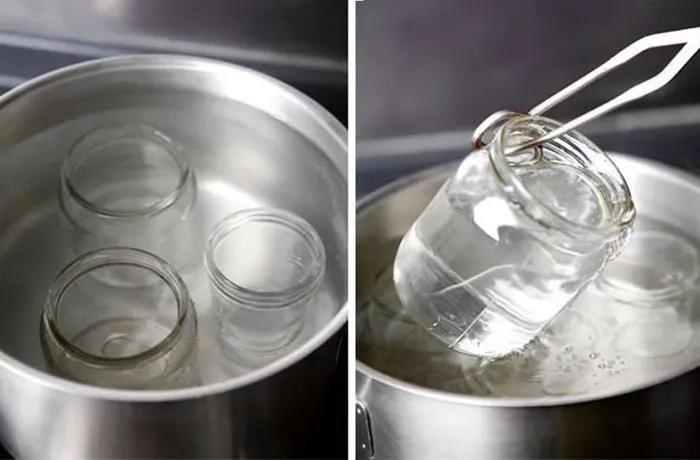
- Boil the glass jars and lids for 10 minutes and let them dry upside down on a clean towel. Wearing gloves, remove the stems, seeds, and veins from the chili peppers and dice into small cubes for even blending.
- In a blender jar, combine the strained rosehip pulp, the diced chili, apple cider vinegar, and sugar. Blend for 30 seconds or until the mixture is smooth, glossy, and uniform.
- Transfer the blended mixture to a small heavy-bottomed pot and cook over medium heat, stirring every 2 minutes to prevent sticking, until the sauce thickens to a ribbon consistency — when you drag a spoon across the bottom and the line holds (approximately 30 minutes).
- Taste and adjust: add a splash of vinegar if it needs more acidity or a teaspoon of sugar if too spicy. Turn off the heat, fill the warm jars, close tightly, and invert for 2 minutes for a home seal. Let cool completely before refrigerating.
Additional Tips
How to clean rosehips without getting irritated by the inner hairs?
Always wear gloves when handling raw rosehips. Use kitchen scissors to halve each fruit and a small teaspoon to scrape out the seeds and the fine silvery hairs that line the inner cavity. These hairs are the most common source of skin and throat irritation when making the sauce and must be fully removed before cooking. After cleaning, cook the rosehips in water at double their volume for 20 minutes, then strain through a fine-mesh sieve, pressing firmly to extract all the pulp.
How to adjust the heat level without losing the rosehip flavor?
Dried aji cacho de cabra is more intense than fresh. Start with half a chili without seeds and taste before adding more. For mild heat, use only the flesh. For medium heat, include the veins but not the seeds. For maximum heat, add the ground seeds as well. Sugar and vinegar balance the heat without masking the fruit: if the sauce is too spicy, stir in an extra half teaspoon of sugar and reheat briefly.
How to store Chilean rosehip sauce and how long does it keep?
Properly sealed in a sterilized glass jar, the sauce keeps in the refrigerator for up to 10 days. To extend shelf life to 3 to 4 weeks, cover the surface with a thin layer of neutral oil before sealing — the oil acts as an oxygen barrier and slows oxidation. To store for up to 6 months, freeze the sauce in ice cube trays, transfer the frozen cubes to a zip bag, and thaw only what you need.
Sauces and Condiments Comparison
| Sauce | Base fruit | Flavor profile | Best with |
|---|---|---|---|
| Spicy rosehip sauce | Rosehip | Sweet-tangy, spicy | Seafood, fried foods |
| Murtilla sauce | Murtilla (Ugni molinae) | Sweet, fruity | White meats, cheeses |
| Calafate jam | Calafate (Berberis) | Tart, intense | Game, lamb |
| Maqui sauce | Maqui (Aristotelia chilensis) | Sweet-tart | Desserts, pork |
Frequently Asked Questions (FAQs)
1. How long does homemade spicy rosehip sauce keep?
Stored in a sterilized glass jar in the refrigerator, the sauce keeps for up to 4 weeks when properly sealed with a vacuum lid. Frozen in ice cube trays, it keeps for up to 6 months.
2. Can I make the sauce milder or spicier?
Yes. To reduce heat, use half an aji cacho de cabra without seeds and add an extra teaspoon of sugar. To increase heat, include the seeds or add a second chili. Taste after blending and adjust before the final reduction.
3. Is apple cider vinegar essential in this recipe?
Apple cider vinegar is the best choice because its mild acidity complements the rosehip without overpowering it. It also acts as a natural preservative. You can reduce the quantity for a less tart sauce, but omitting it entirely shortens the shelf life significantly.
4. Can I substitute the aji cacho de cabra with another chili?
Yes. For mild heat, use red bell pepper or aji dulce. For similar intensity, substitute with ancho or guajillo chili. For stronger heat, use cayenne or habanero — reduce the quantity to a quarter of one chili to avoid overpowering the rosehip flavor.
5. Can I make this sauce without sugar?
You can reduce the sugar or omit it, but the sauce will be noticeably more tart and the shelf life will shorten. If you prefer a lower-sugar version, substitute with honey or agave syrup for a different but complementary sweetness.
What Is Chilean Spicy Rosehip Sauce?
Chilean spicy rosehip sauce is a sweet-and-tangy condiment made from the fruit of the Rosa eglanteria (also known as Rosa rubiginosa), a shrubby rose that naturalized throughout Chilean Patagonia after being introduced from Europe. Unlike rosehip jam, this preparation adds aji cacho de cabra chili and apple cider vinegar, creating a complex sauce with heat, acidity, and natural fruit sweetness in a single spoonful.
History of Rosehip Sauce in Chile
Rosa mosqueta arrived in Chilean Patagonia in the early twentieth century and quickly became a defining ingredient of the region’s food culture. Its fruit was first used for jams and medicinal infusions, valued for its exceptionally high vitamin C content. Over time, southern Chilean cooks adapted the fruit into savory-sweet sauces by pairing it with native dried chilis — particularly aji cacho de cabra — to create a condiment that bridges Patagonian foraging traditions with the spice traditions of central Chile.
Did You Know?
In southern Chilean tourist catalogs, rosa mosqueta is listed as an emblematic regional ingredient. Small-batch producers along the Route of the Parks (Ruta de los Parques) serve this sauce cold alongside croquettes and fried seafood, creating a temperature and texture contrast that has become a signature of contemporary Patagonian cuisine.