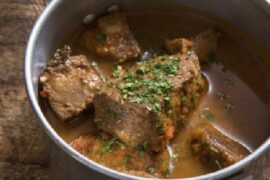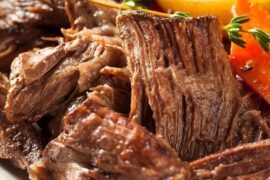
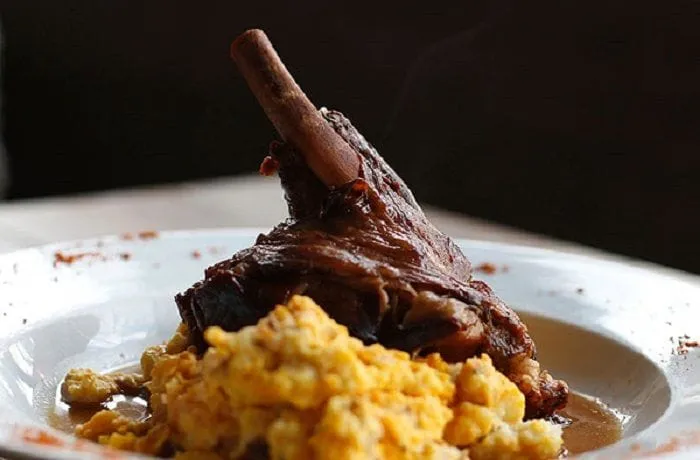
This Chilean roasted lamb shank is a slow-oven recipe built around a 48-hour merken marinade and 3 hours at 150°C. The long, low heat dissolves the connective tissue in the shank, producing meat that separates from the bone with a fork and a rich, gelatinous cooking jus.
Merken — the signature Mapuche smoked chili blend — is the defining seasoning here. Combined with garlic, black pepper, and salt, it forms a dry rub that penetrates the meat during the extended marinating time and caramelizes on the surface during roasting.
How to Make Chilean Roasted Lamb Shank?
The key to a properly tender lamb shank is time: 48 hours of marinating followed by 3 hours of covered roasting at a low temperature. Rushing either phase produces tough, dry meat.
Wrapping the shanks in aluminum foil during the first two and a half hours traps steam and keeps the meat moist. Remove the foil for the final 30 minutes to allow the surface to caramelize. Searing the shanks in a hot pan before roasting is optional but adds a deeper crust.
Nutritional Information
Per serving (approximately 500 g cooked shank with bone): 500 kcal, 45 g protein, 35 g total fat (15 g saturated), 100 mg cholesterol, 600 mg sodium, 0 g carbohydrates. Lamb shank is an excellent source of zinc, iron, and vitamin B12.
Chilean Roasted Lamb Shank Recipe
Prep time: 48 hours (marinating) | Cook time: 3 hours | Servings: 2
Ingredients
- 1.5 kg lamb shanks (garrones de cordero)
- 2 tablespoons merken (Mapuche smoked chili blend)
- 1 tablespoon ground garlic
- 1 teaspoon black pepper
- Fine salt to taste
Instructions
- Place the lamb shanks in a wide dish and season all over with merken, ground garlic, black pepper, and salt, distributing the spices evenly on all surfaces. Seal in a vacuum bag or cover tightly with plastic wrap and refrigerate for 48 hours.
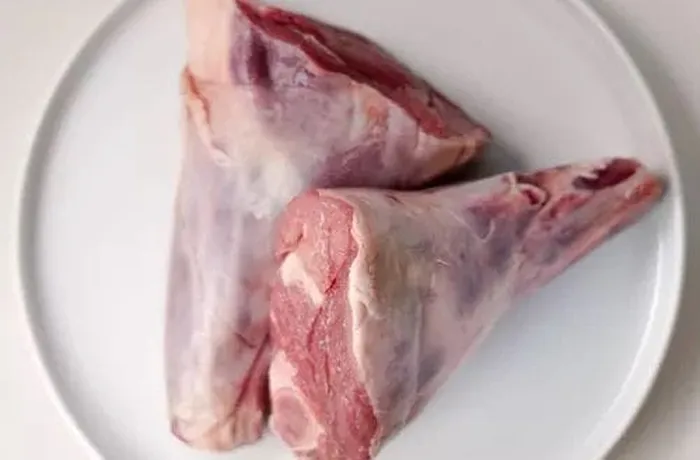
- Preheat the oven to 150°C (302°F) for at least 10 minutes. Remove the shanks from the bag and wrap each one individually in aluminum foil. Dissolve any remaining marinade in 500 ml of water and pour into a roasting pan. Place a rack over the pan and set the foil-wrapped shanks on the rack so they sit above the liquid.
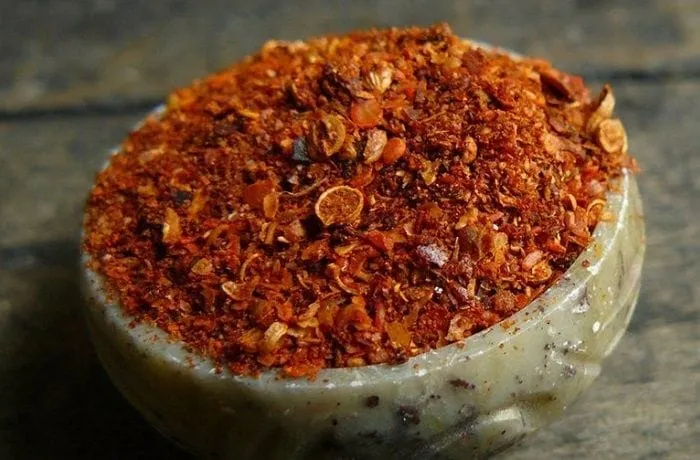
- Roast in the preheated oven for 3 hours. For the last 30 minutes, open the foil to allow the surface to caramelize. Remove from the oven and serve immediately alongside mashed potatoes, corn pastelera, or a green salad.
Additional Tips
How to get a better crust on the lamb shank?
Sear the marinated shanks in a very hot cast-iron or stainless steel pan with a small amount of oil for 2 to 3 minutes per side before wrapping in foil. This Maillard reaction creates a dark, flavorful crust that the oven alone cannot replicate. Pat the shanks dry with paper towels before searing so the surface browns rather than steams.
How to reduce fat without losing flavor?
Before marinating, trim the visible outer fat cap to about 3 to 5 mm — enough to baste the meat during cooking but not so much that it makes the jus greasy. After roasting, let the cooking liquid settle for 5 minutes and skim the fat from the surface with a spoon. Serve with light sides such as green salads or steamed vegetables to balance the richness of the shank.
Can I cook this ahead of time?
Yes. Roasted lamb shank reheats well. Let the cooked shanks cool completely, then refrigerate in their cooking jus for up to 3 days. To reheat, place in a covered baking dish with a splash of water or stock at 150°C for 30 minutes. The meat will be equally tender, sometimes more so after resting overnight.
Comparison: Lamb Cuts for Slow Roasting
| Cut | Connective tissue | Ideal method | Cook time |
|---|---|---|---|
| Shank (garrón) | High | Slow oven / braising | 2.5–3 hours |
| Shoulder (paleta) | Medium-high | Slow oven / rotisserie | 2–2.5 hours |
| Leg (pierna) | Low | Oven / grill | 1.5–2 hours |
| Chops (chuletas) | Low | Grill / pan | 8–12 minutes |
Frequently Asked Questions (FAQs)
1. What is the difference between a lamb shank and a leg of lamb?
The lamb shank (garrón) is the lower portion of the leg, close to the bone, with a higher concentration of connective tissue. This connective tissue breaks down into gelatin during long, slow cooking, giving the meat a deeply savory flavor and a silky texture. The leg is meatier and more tender from the start, suited to shorter roasting times.
2. Can I cook the lamb shank in a pressure cooker instead of the oven?
Yes. A pressure cooker reduces the cooking time to 45 to 60 minutes and produces very tender meat. However, the oven provides a more developed crust, deeper caramelization, and a more complex flavor from the slow, dry heat. If you use a pressure cooker, finish the shanks under the broiler for 5 minutes to restore the surface texture.
3. What side dishes pair best with Chilean roasted lamb shank?
The most traditional sides in Chile are mashed potatoes, oven-roasted potatoes, corn pastelera (pastelera de choclo), steamed white rice, or warm salads of legumes and root vegetables. The richness of the shank pairs especially well with starchy, neutral sides that absorb the cooking jus.
4. How long should I marinate the lamb shanks?
For maximum flavor penetration, marinate for 48 hours in the refrigerator. If time is short, a minimum of 4 hours produces a noticeable improvement over unseasoned meat. Vacuum sealing during the marinade accelerates absorption but is not required — a sealed bag or covered dish works well.
5. How do I know when the lamb shank is done?
The shank is fully cooked when the meat separates easily from the bone with a fork and reaches an internal temperature of at least 70°C (160°F). After 3 hours at 150°C with foil, the meat should be completely tender. A properly cooked shank will fall off the bone with minimal resistance.
What Is Chilean Roasted Lamb Shank?
Garrón de cordero al horno is a traditional Chilean slow-roasted lamb shank seasoned with merken — the Mapuche smoked chili and coriander seed blend — and cooked at low temperature for 3 hours. The term garrón refers specifically to the shank, the lower section of the lamb leg that contains the highest proportion of connective tissue and bone marrow, making it one of the most flavorful cuts for slow cooking.
Sheep and lamb have been raised in Chilean Patagonia and the central valleys for over a century, with lamb considered distinct from mature sheep (oveja) in flavor intensity and fat distribution. Lamb meat is lighter in color, milder in flavor, and lower in fat than mutton, making it the preferred choice for this preparation.
History of Lamb in Chilean Cuisine
Sheep farming in Chile began with Spanish colonial settlers in the sixteenth century and expanded significantly in the nineteenth century in Patagonia and Tierra del Fuego. Lamb became central to the diet of ranching families in the south, prepared as asado al palo (spit-roasted whole), in stews, and as slow-roasted shanks. The use of merken in lamb preparations reflects the Mapuche culinary tradition of smoking and drying chili peppers to create a seasoning blend that functions as both a rub and a preservative.
Did You Know?
Lamb is historically the oldest domesticated meat animal, raised by humans for over 9,000 years in the Middle East. It features prominently in religious celebrations across cultures — from the Jewish Passover lamb to the Christian Easter tradition — as a sacrificial and celebratory animal. In Chile, whole lamb roasted over an open fire (cordero al palo) remains the centerpiece of large family and community gatherings in the southern regions.