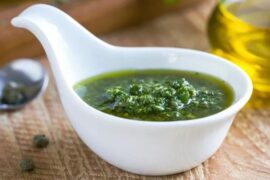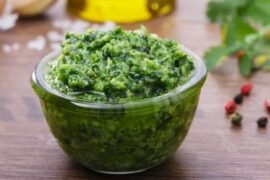
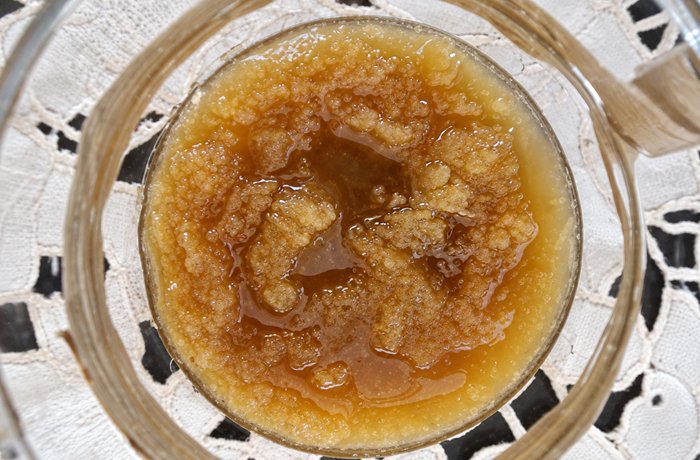
Chilean nalca jam, or mermelada de nalca, is a homemade preserve from southern Chile made by cooking peeled young nalca stalks with sugar, grated green apple and lemon juice until thick. It takes 30 minutes of prep plus 2 hours of macerating and about 1 hour of cooking, and makes 5 to 6 jars of 250 g (9 oz). The result is tart and fresh, a jam to spread on pan amasado, the Chilean country bread, or on toast, and to serve with fresh cheeses and milk desserts.
Nalca grows in damp ravines and along wet banks in southern Chile, and its stalks are sold at markets and roadside stands when the season arrives. Because of its look and the way it is used in the kitchen, it is often compared to rhubarb. The most common way to eat it is raw with salt, in salads or in nalca pebre, and the leaves are used to cover curanto. This jam keeps its tart flavor for the months when there is no fresh nalca, the same idea behind pickled nalca.
How to Make Nalca Jam?
Peeling the stalks well and macerating them with the sugar before cooking makes the nalca release its own juice, so the recipe needs very little water and the jam comes out more concentrated. The grated green apple adds pectin and helps the jam thicken without overcooking.
Nutritional Information
Each serving of Chilean nalca jam (1 heaping tablespoon, 20 g / 0.7 oz) contains approximately 44 kcal, 0.1 g of protein, 0 g of total fat (0 g of saturated fat), 0 mg of cholesterol, 11 g of carbohydrates, 10.5 g of sugars and 2 mg of sodium. These values are estimates and may vary depending on ingredients and portion sizes.
Homemade Nalca Jam Recipe
Preparation: 30 minutes plus 2 hours of macerating
Cooking: 1 hour
Servings: 5 to 6 jars of 250 g (9 oz)
Ingredients
- 1 kg (2.2 lb) peeled nalca stalks
- 700 g (3½ cups) sugar
- 1 large green apple
- Juice of 1 lemon
- 100 ml (scant ½ cup) water

Instructions
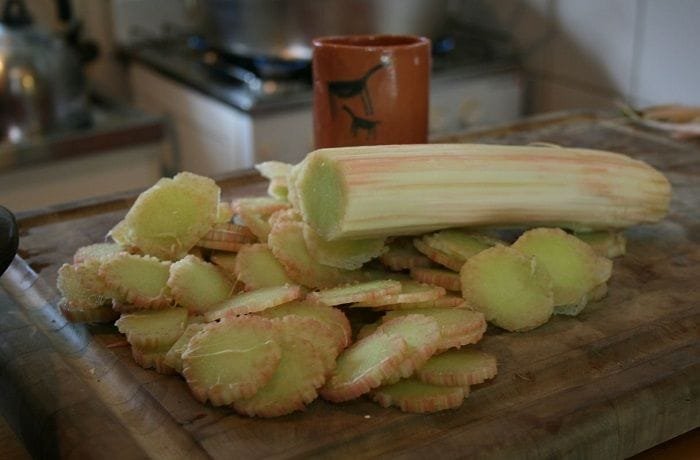
- Choose young, firm stalks with no spots. Wash them, cut off the base and the end where the leaf grows, and peel off the outer skin with a small knife or a vegetable peeler, pulling the strings from top to bottom. The skin has small, rough bumps, so wearing kitchen gloves is a good idea.
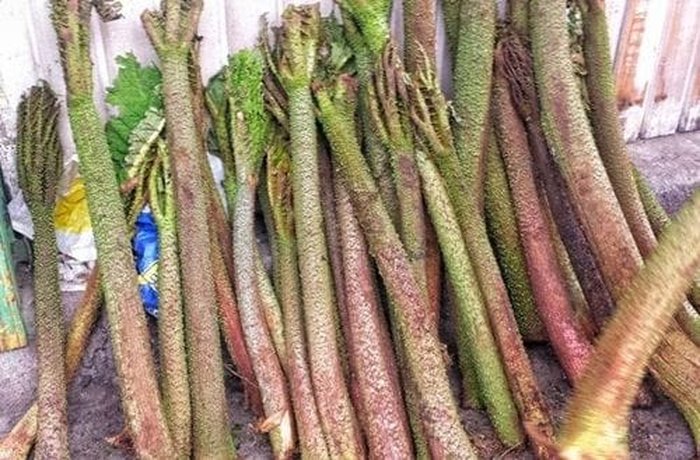
- Cut the peeled stalks into 1 cm (½ inch) slices or cubes and weigh out 1 kg (2.2 lb). Peel the apple, remove the core and grate it. Put the nalca and the apple in a heavy-bottomed pot, add the sugar and the lemon juice, stir and let macerate for 2 hours, until the nalca releases plenty of juice.
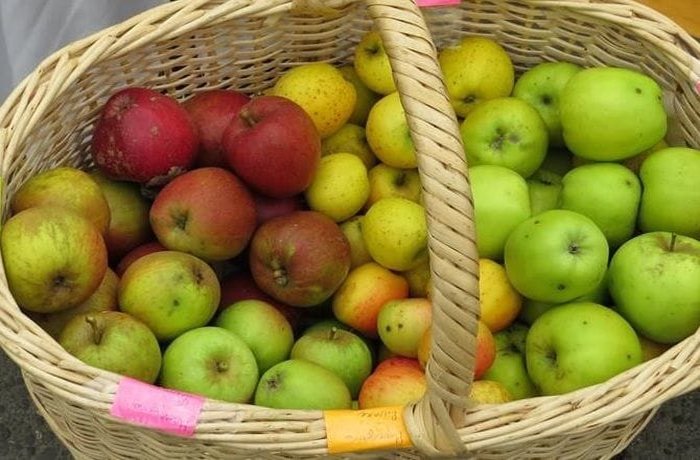
- Add the water and set the pot over medium heat, stirring with a wooden spoon until the sugar dissolves completely. When it boils, lower the heat to medium-low and keep a gentle, steady simmer for 40 to 50 minutes, stirring every few minutes so it does not stick and skimming off the foam that rises to the surface.
- Check the set with a cold plate. Put a teaspoon of jam on the plate, place it in the freezer for 2 minutes and push it with your finger. If it wrinkles and does not run, it is ready. If it is still runny, cook 5 more minutes and repeat the test. For a smoother texture, blend for a few seconds with an immersion blender before jarring.
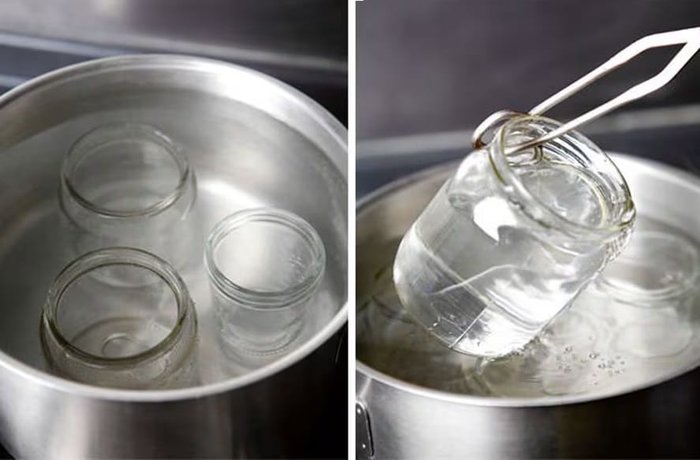
- Boil the jars and their lids for 10 minutes to sterilize them. Fill them with the jam while it is still hot, leaving 1 cm (½ inch) of headspace, wipe the rims with a clean cloth and close. Set the closed jars in a pot of boiling water that covers them by 2 to 3 cm (1 inch) and boil for 10 minutes. Remove them, let them cool to room temperature and store in a cool, dark place.
Additional Tips
How to Choose Nalca for Jam
Young stalks of medium thickness with taut skin have less fiber and break down better as they cook. Very thick stalks are usually tougher inside and leave strings in the jam. Before buying, taste a peeled piece, which should be tart and juicy, with no bitterness. If you buy the nalca a day ahead, keep it whole and unpeeled in the refrigerator, wrapped in paper.
Adjusting the Sugar Without Losing Shelf Life
The recipe uses 700 g of sugar per kilo of peeled nalca, a ratio that keeps the tart flavor and preserves the sealed jar well. You can lower it to 500 g, but the jam will be softer and is best kept in the refrigerator from the first day. Raising it to 1 kg gives a firmer texture and a sweeter flavor, closer to store-bought jams.
Combining Nalca with Other Fruit
The tartness of nalca pairs well with sweet summer fruit. Replacing 300 g of the nalca with strawberries or raspberries makes a reddish jam with a milder flavor, a good choice for anyone trying nalca for the first time. You can also add a piece of fresh ginger during cooking and remove it before jarring for a spicy touch.
Sugar ratios per kilo (2.2 lb) of peeled nalca and the result you get with each one.
| Sugar per kilo of nalca | Texture and flavor | How to store it |
|---|---|---|
| 500 g (2½ cups) | Softer and more tart | In the refrigerator from the first day |
| 700 g (3½ cups) | Spreadable, tart and sweet at the same time | Jar processed in a boiling water bath, in a cool, dark place; refrigerate once opened |
| 1 kg (5 cups) | Firm and sweeter | Jar processed in a boiling water bath, in a cool, dark place; refrigerate once opened |
Frequently Asked Questions (FAQs)
1. What Does Nalca Jam Taste Like?
It has a tart, fresh flavor with a mild vegetal background, and because of its look and use in the kitchen nalca is often compared to rhubarb. The sugar balances the tartness without hiding it, so it is less cloying than a peach or apricot jam. It goes very well with fresh cheeses, warm pan amasado and milk desserts.
2. When Is Nalca Season in Chile?
Nalca is generally harvested between late spring and summer, when the stalks are tender, although the timing changes with the area, the rain and the cold of each year. That is when it shows up at markets in the south. Out of season, jam and pickles are the way to keep eating it.
3. Do You Have to Peel Nalca to Make Jam?
Yes. The outer skin of the stalk is fibrous and rough, and if you do not remove it, it leaves tough strings in the jam. Peel it by pulling the fibers from top to bottom with a small knife or a vegetable peeler, the same way you would to eat it raw. What remains is the juicy, light green inner part.
4. How Long Does Homemade Nalca Jam Keep?
Packed hot into sterilized jars and processed for 10 minutes in a boiling water bath with the jars closed, it keeps for several months in a cool, dark place. Once a jar is opened, keep it in the refrigerator and eat it within about three weeks, always using a clean spoon. If mold or a fermented smell appears, throw out the whole jar.
What Is Nalca Jam?
Nalca jam is a southern Chilean preserve made from the peeled inner stalks of nalca, Gunnera tinctoria, a native plant with enormous leaves. The stalks are cut into small pieces, macerated with sugar, cooked with grated green apple and lemon juice, and packed hot into sterilized jars. The result is a spreadable jam that is tart and sweet at once, with a mild vegetal background, eaten on bread, on toast or with fresh cheese.
History of Nalca Jam in Chile
Nalca, scientific name Gunnera tinctoria, is a plant native to southern Chile and neighboring areas of Argentina. Its stalks have long been eaten raw with salt, and its enormous leaves are used to cover curanto while it cooks.
The jam follows the same logic as other homemade preserves from the south, such as those made with murta, calafate or rose hip, which put each season’s harvest to use so it lasts the rest of the year.
Did You Know?
Nalca leaves can grow more than a meter (over 3 feet) wide, which is why they are used to cover curanto and hold in the heat of the stones. Its scientific name, Gunnera tinctoria, means that dyes in Latin, and its root has traditionally been used as a black dye.
How to adapt this recipe to a vegan or vegetarian version?
How to adapt this recipe to a gluten-free version?
How to adapt this recipe to a keto (ketogenic) version?
Recommended
- Chilean nalca and digüeñes salad, the most traditional way to eat raw nalca
- Chilean pickled nalca to keep it all year round
- Chilean nalca pebre, a fresh southern salsa
- Homemade murta berry jam, another traditional preserve from southern Chile