
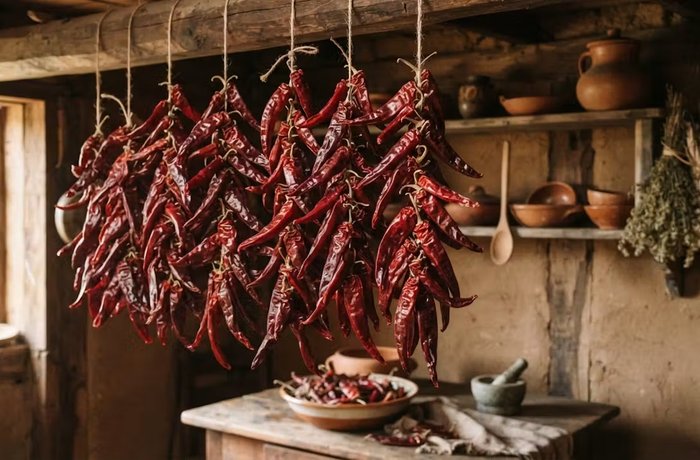
The CapsaNativa initiative uses capsaicin, the compound that makes chili peppers hot, to explore formulations for topical application. The project was born from a family experience and won best pitch at a university innovation event.
A family experience led Ariela Aravena, a Biotechnology Engineering student at Universidad de La Frontera (UFRO) in Chile to investigate the potential of a compound found in cacho de cabra chili to develop new alternatives for chronic pain.
Topical Formulations Based on Capsaicin
The initiative, called CapsaNativa, aims to develop topical formulations from capsaicin, the substance responsible for the burning sensation of chili peppers, which is also used in certain treatments to relieve pain. The project is still in development and seeks to turn this compound into a potential alternative applied to the skin.
The idea came about when the student looked for ways to help family members who were dealing with chronic pain. From that experience, she began to explore how biotechnology could help address a condition that affects the quality of life of those who live with it.
Early Laboratory Analyses
According to Aravena, the team has already carried out laboratory analyses related to capsaicin and the antioxidant components of the formulation. These results are part of the early stages of research and do not mean there is a finished product or one validated for clinical use.
Capsaicin has a history of medical use. A review of studies published in the Cochrane evidence database found that high-concentration patches can provide relief to some patients with certain types of chronic neuropathic pain. However, results vary depending on the condition and the quality of the available evidence, so they cannot be directly extrapolated to a formulation under development such as CapsaNativa.
Best Pitch at TET-Discover
The project was recognized as the best pitch at TET-Discover, an activity linked to the Technology Companies Workshop course at UFRO’s Faculty of Engineering and Sciences. The event allowed students to present their proposals to a jury and connect with players in the innovation ecosystem. The award included a prize of CLP 100,000.
As it moves forward, CapsaNativa seeks to explore the possibilities of a plant-based resource through biotechnological tools, with a concrete goal: finding new alternatives for managing chronic pain.
In the kitchen, cacho de cabra is the chili behind dishes such as fermented hot sauce and pickled chili peppers, and it is also the chili used to make merkén.

Frequently Asked Questions (FAQs)
What is CapsaNativa?
It is an initiative by Ariela Aravena, a Biotechnology Engineering student at Universidad de La Frontera (UFRO) in Chile, that aims to develop topical formulations from the capsaicin in cacho de cabra chili as an alternative for chronic pain.

What is capsaicin?
It is the compound responsible for the burning sensation of chili peppers. It is also used in certain treatments to relieve pain.
Is there already a CapsaNativa product?
No. The project is still in development. The team has carried out laboratory analyses of the capsaicin and the antioxidant components of the formulation, but these results do not mean there is a finished product or one validated for clinical use.
What recognition did the project receive?
It won best pitch at TET-Discover, an activity linked to the Technology Companies Workshop course at UFRO’s Faculty of Engineering and Sciences, with a prize of CLP 100,000.
Recommended
- Chilean Fermented Cacho de Cabra Hot Sauce Recipe
- Chilean Pickled Chili Peppers, Homemade Ají en Escabeche
- How to Make Chilean Green Chili Jam for White Cheeses
- A Native Chilean Tomatillo Reappears After More Than a Century