
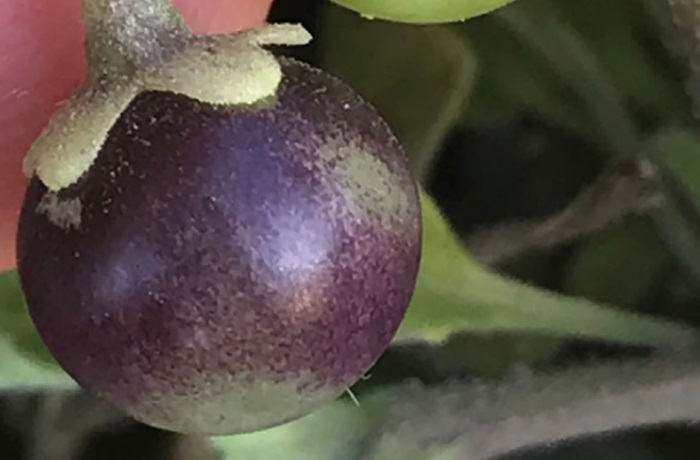
A botanical discovery of great significance has taken place in the Maule Region: the rediscovery of the native tomatillo Solanum sanfurgoi, a species that had remained hidden from the view of science for more than 130 years.
This event rekindles interest in Chilean biodiversity and highlights the importance of continuous research in the field of native flora.
Solanum sanfurgoi was first described in 1895 by the Chilean botanist Juan Ignacio Molina. However, over the years, this species was mistakenly cataloged as an Andean plant originating from Peru.
This historical confusion not only obscured its true identity but also led to its near-total disappearance from scientific knowledge for more than a century.
Recent investigations have corrected this error, confirming that the tomatillo is, in fact, a botanical treasure exclusively from Chile.

Importance of the Rediscovery
The reopening of the chapter on Solanum sanfurgoi is a significant event for the conservation of Chilean natural heritage.
The species had been considered extinct due to its long absence in scientific records and the lack of sightings in its natural habitat.
This rediscovery not only represents a victory for researchers and conservationists but also underscores the importance of protecting native species that face threats due to urbanization and climate change.
Implications for Biodiversity
Solanum sanfurgoi is not only a symbol of the rich Chilean biodiversity, but could also have significant implications in the agricultural field.
As a close relative of the common tomato, this native species could offer valuable genetic resources that could be used to improve crops and develop varieties more resistant to diseases and adverse climatic conditions. Future research could explore these possibilities, as well as its potential use in local gastronomy.
This finding highlights the imperative need to continue scientific research on native flora. Chilean biodiversity is vast, and much remains to be discovered and learned about its native species.
Collaboration between universities, scientific institutions, and local communities will be crucial to carry out studies that will not only rediscover forgotten species but also implement effective strategies for their conservation.