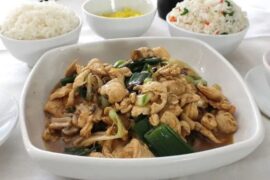
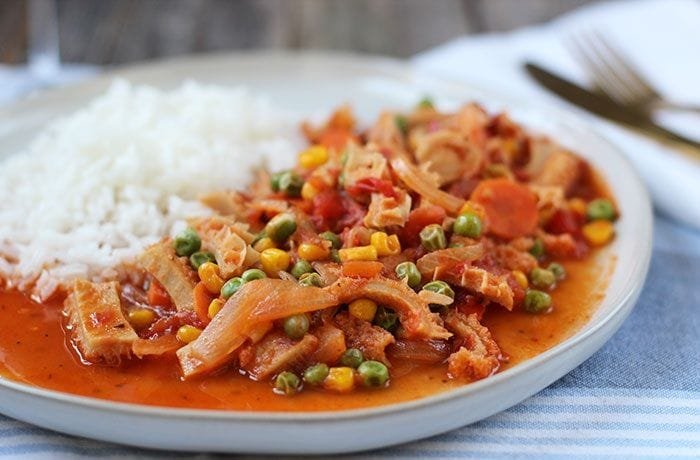
Chilean tripe and vegetable stew, “guatitas a la jardinera,” is a hearty and traditional countryside dish, an old-fashioned recipe made from beef tripe, unbeatable for sharing with family.
Tripe, or “guatitas,” is a very common ingredient across Latin American cooking, easy to prepare with simple ingredients as long as you follow the steps carefully for the best result.
How to Make Guatitas a la Jardinera?
Guatitas a la jardinera simmers pre-cooked beef tripe with a garden-style mix of vegetables in a light tomato sauce, thickened at the end with a touch of cornstarch.
Nutritional Information
Each serving of guatitas a la jardinera contains approximately 350 kcal, 20 g of protein, 10 g of fat (4 g saturated), 45 g of carbohydrates, 6 g of sugars, 60 mg of cholesterol, and 300 mg of sodium. (*)
(*) Values may vary depending on ingredients and portion sizes.
Homemade Guatitas a la Jardinera Recipe
Prep time: 30 minutes
Cook time: 80 minutes
Servings: 4 people
Ingredients
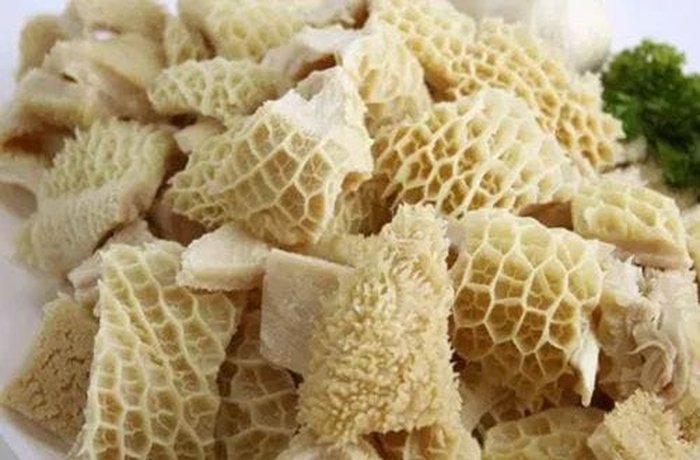
- 500 g beef tripe
- 150 g green peas
- 100 ml milk
- 1 teaspoon cornstarch
- 4 potatoes
- 4 tomatoes
- 1 medium onion
- 1 garlic clove
- 1 carrot
- 1/2 cup corn kernels
- 1/2 cup peas
- 1/2 cup green beans
- Oregano
- Fine salt
- Black pepper
Instructions
- Wash the tripe very well with warm water, scrub it, and rinse in cold water. Set aside in a pressure cooker, add the carrot, vegetables, a bit of salt and pepper, cover with cold water, and bring to a boil; lower the heat and cook for one hour. Let cool and cut into thin strips.
- In a medium pot, add the peas and cover with water, bring to a boil, and cook for about 15 minutes or until tender. If using frozen peas, cook for 5 to 6 minutes. Drain and set aside.
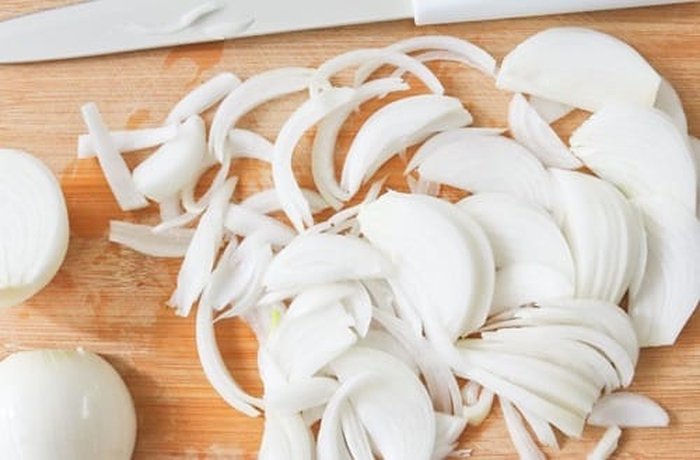
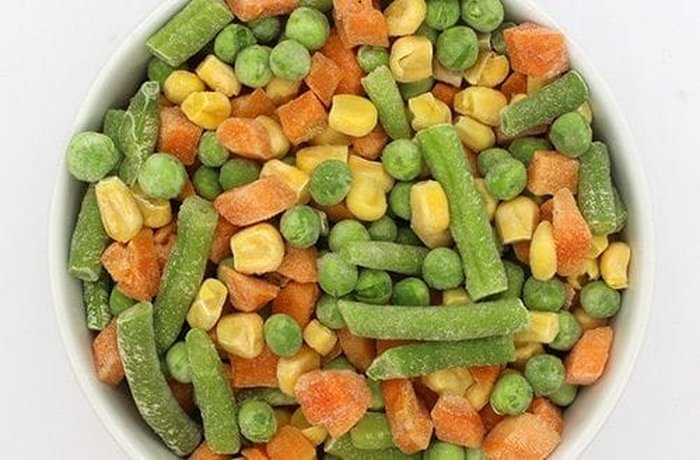
- In a large pot, add a splash of oil and saute the thinly sliced onion, the peeled and diced tomatoes, the mixed vegetables, the bell pepper, the crushed garlic clove, oregano, salt, and pepper to taste, stirring gently to combine.
- Add the tripe strips to the pot and cook covered over medium heat until the carrots are soft; add the cooked peas and thicken with a teaspoon of cornstarch dissolved in the milk.
- Peel, wash, and dice the potatoes and, in a large pan, fry them in hot oil at about 170°C (338°F) for about 5 minutes. Serve the guatitas a la jardinera in shallow bowls alongside the freshly fried potatoes and/or steamed white rice.
Additional Tips
Keep the Kitchen Ventilated
While cooking, it’s a good idea to keep the space well ventilated, since the smell can get strong; a few whole cloves and bay leaves in the cooking water help tame it.
Use Baking Soda to Speed Up Tenderizing
To help the tripe soften a bit faster, a teaspoon or two of baking soda is often added to the cooking water.
Watch for the Right Texture
The tripe is ready when a fork slides in easily without resistance and the texture is soft but firm. If it’s still chewy, it needs more cooking time.
| Substitution | Use instead of | Effect |
|---|---|---|
| Steamed rice | Fried potatoes | Lighter side dish |
| Frozen mixed vegetables | Fresh chopped vegetables | Faster prep, similar result |
| Roasted peanuts (Ecuadorian-style) | No added nuts | Nuttier, richer sauce |
| Pressure cooker (45 min) | Regular pot (1 hour) | Faster initial tripe cooking |
Frequently Asked Questions (FAQs)
1. What part of the cow is tripe?
Tripe comes from the cow’s stomach, specifically the reticulum or rumen. It’s an edible organ meat rich in collagen and protein.
2. How do I know it’s fully cooked?
It’s ready when a fork pierces it easily, without resistance, and the texture is soft but firm. If it’s still chewy, it needs more cooking.
3. Can I freeze cooked guatitas?
Yes, tripe cooked with vegetables freezes very well. Let it cool completely, store in individual portions, and freeze for up to 2 months. Reheat slowly over low heat.
4. What are the most common mistakes when making guatitas?
Not washing it properly, undercooking it, not draining excess water well, or under-seasoning. Skipping the resting time before serving is another common mistake.
Benefits of Eating Tripe
Tripe is rich in iron, zinc, phosphorus, and selenium, and also contains vitamins B12, niacin (B3), and riboflavin (B2), all essential for energy production and red blood cell formation.
Did You Know?
Guatitas a la jardinera is a dish of Spanish origin that, beyond Chile, is also very popular in Ecuador, where it’s known as “mondongo,” and one of its main features there is including peanuts in the preparation.
How to adapt this recipe to a vegan or vegetarian version?
How to adapt this recipe to a gluten-free version?
How to adapt this recipe to a keto (ketogenic) version?
Recommended
- Traditional Potito Sandwich
- Chilean Chupe de Guatitas
- Chilean Tripe Sandwich with Green Sauce
- Chilean Chunchules with Toasted Flour