
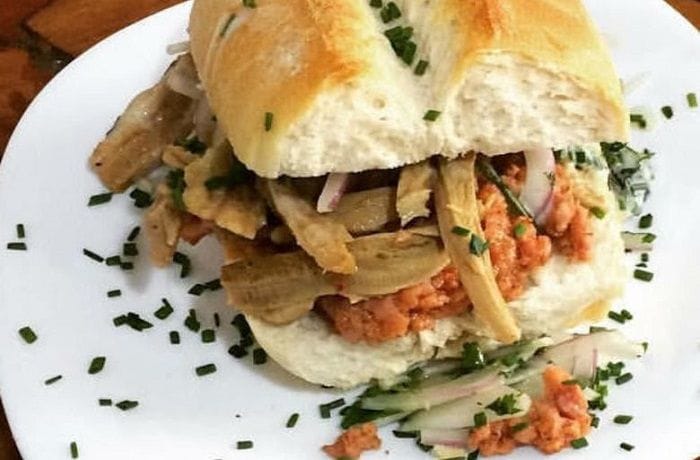
The Chilean potito sandwich — known as “sánguche’e potito” — is a classic street food from Santiago’s stadiums, made with slow-cooked tripe, beef intestine, and smoked sausage served on marraqueta bread with Chilean pebre. Preparation takes 90 minutes and yields 2 generous servings.
Nutritional Information
Each serving of Chilean potito sandwich contains approximately 400 kcal, 45 g of carbohydrates, 4 g of total sugars, 18 g of total fats, 20 g of proteins, 45 mg of cholesterol, and 650 mg of sodium. (*)
How to make Chilean Potito Sandwich?
The Potito sandwich is a traditional recipe prepared as a stew that mixes rectum meats, tripe, sausages, and onions, accompanied by Chilean pebre served on marraqueta bread.
Preparation: 30 minutes
Cooking: 60 minutes
Servings: 2 people
Ingredients
- 200 g of tripe
- 150 g thick intestine (beef or pork)
- 3 onions
- 3 garlic cloves
- 3 carrots
- 3 tablespoons oil
- 2 marraquetas
- 2 smoked sausages
- 1 teaspoon dried oregano
- ½ teaspoon ground cumin
- Merkén
- Salt
- Pepper

Preparation
- In a large pot, place the thick intestine, tripe, 2 quartered onions, 2 garlic cloves, and 2 chopped carrots, cover with cold water, bring to a boil over high heat, reduce heat, and cook over medium-low heat for about 40 minutes or until the meats are tender. Remove from water and cut into thin strips. Reserve the meat and broth separately.
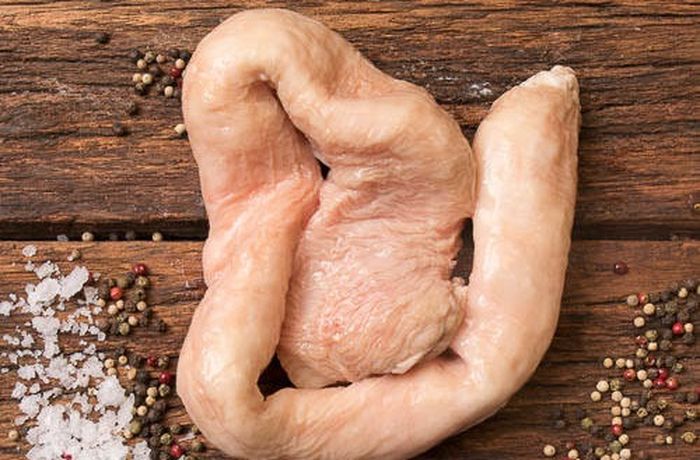
- In a medium pot, place the sausages and cover with cold water, boil over medium-high heat for 8 to 10 minutes. Drain and reserve.
- In a large skillet, heat the oil over medium heat and sauté a finely chopped onion, 1 chopped garlic, and 1 finely chopped or grated carrot for about 5 minutes, until cooked and soft.
- Add the reserved meats, season with salt and pepper to taste, and season with oregano, cumin, and Merkén, mix well, and add a little of the cooking broth from the meats if the mixture is too dry. Cook over low heat for about 10 minutes, occasionally stirring until the flavors are infused in the mixture. Adjust seasoning if necessary and distribute the reserved sausages on top to heat.
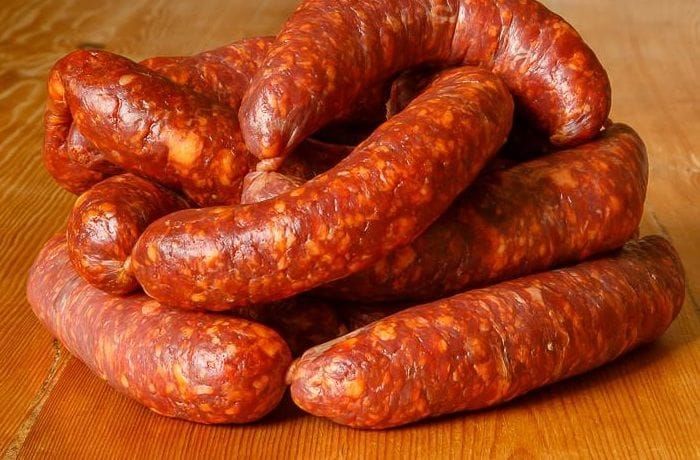
- Split the marraquetas and heat them on a toaster, on the bottom half, place the cooked meats with their juice and on top of them a sausage split in half, optionally cover the mixture with Chilean pebre and top with the other half of the marraqueta.

- Serve the Potito sandwich immediately, with the ingredients still warm and plenty of napkins available.
Why is it called a Potito sandwich?
The Crouching Eating Position
The designation “potito” comes from the position one must adopt when eating it. Being such a juicy sandwich, it is nearly impossible to consume vertically without staining clothes — you must lean forward so the drips fall toward the ground, essentially squatting and presenting your “potito” (backside) to the crowd.
A Santiago Stadium Tradition
The potito sandwich is inseparable from Chilean football culture. Vendors at Estadio Nacional and Estadio Monumental have served it for decades, making it one of the few dishes that belongs equally to everyday street food and to the ritual of watching a match.
One of Chile’s Four Urban Street Food Pillars
The sánguche’e potito is considered one of the four defining dishes of Chilean urban street cuisine, alongside the completo, the sopaipilla, and the oven-baked empanada.
Classic Chilean Urban Street Food – Comparison
| Street Food | Main Ingredients | Where to Find It | Best Served |
|---|---|---|---|
| Potito sandwich | Tripe, intestine, sausage, marraqueta | Football stadiums | Hot, with pebre |
| Completo italiano | Hot dog, avocado, tomato, mayo | Everywhere | Immediately after assembly |
| Sopaipilla | Fried pumpkin dough | Street stalls (rainy days) | Hot, with pebre or mustard |
| Empanada de pino | Beef, onion, egg, olives | Bakeries nationwide | Warm from the oven |
Frequently Asked Questions (FAQs)
1. What specific meats are used in this recipe?
The traditional version combines guatitas (beef tripe) and thick intestines (chunchules) cooked slowly and chopped into very thin strips, crowned with a split smoked longaniza sausage.
2. How do you reduce the strong aroma of the offal?
The secret lies in the first boil. Starting the meats in cold water alongside quartered onions, plenty of whole garlic cloves, and chopped carrots completely neutralizes the intense gamey notes of the offal, leaving a smooth, spiced flavor base.
3. What seasonings are absolutely indispensable?
The definitive Chilean touch comes from combining ground cumin, dried oregano, and a generous dose of smoky merkén. These spices balance beautifully with the natural fats of the offal and the sweetness of the sautéed onion.
4. Can I prepare the meat stew in advance?
Yes. In fact, the meat mixture concentrates its flavors beautifully if made a few hours ahead. When it’s time to assemble, reheat the skillet over low heat, add a splash of reserved broth to restore its juiciness, and place the sausages on top to heat through with the steam.
5. What is the best condiment to serve it with?
A classic, spoonable Chilean pebre (diced tomatoes, onions, cilantro, green chili, oil, and vinegar) is the ultimate companion. The acidity of the vinegar and the freshness of the cilantro cut through the richness of the meats and sausage perfectly.
Did you know?
The “sánguche de potito” is considered one of the four main dishes of Chilean urban cuisine, sharing honors with the completo, the sopaipilla, and the oven-baked empanada.