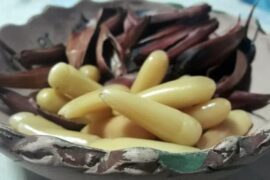
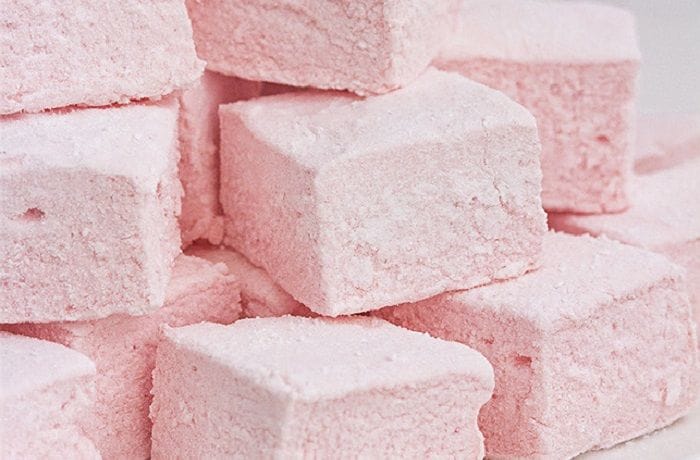
Chilean sustancias dulces are rectangular pieces of Italian meringue set with gelatin, coated in cornstarch and powdered sugar. The modern recipe uses cooked sugar syrup, stiffly whipped egg whites, and unflavored gelatin, and needs 2 hours of chilling. They’re the most iconic convent sweet from Chillán, known today as “cloud bonbons” or artisanal marshmallows.
They’re a soft, spongy treat now made from a sweetened, flavored Italian meringue, traditionally with vanilla essence, though you can use any flavoring you like.
How to Make Sustancias Dulces?
Sustancias dulces are a soft, spongy preparation, today made from a sweetened and flavored Italian meringue, generally with vanilla essence, but you can use any flavoring of your choice.
Nutritional Information
Each serving of sustancias dulces contains approximately 220 kcal, 0.5 g of protein, 55 g of carbohydrates, 0 g of fat, 54 g of sugars, 0 mg of cholesterol, and 10 mg of sodium. (*) Values may vary depending on the ingredients and portion sizes used.
Homemade Chilean Sustancias Dulces Recipe
Preparation: 15 minutes
Cooking: 10 minutes
Servings: 6 people
Ingredients
- 300 g (10.5 oz) white sugar
- 3 egg whites
- 40 g (1.4 oz) cornstarch
- 35 ml cold water
- 30 g (1 oz) powdered sugar
- 8 g (0.3 oz) unflavored gelatin
- Vanilla essence
- Strawberry flavoring
- Food coloring
Instructions
- In a medium bowl, add the unflavored gelatin and pour in the 35 ml of cold water, swirl gently to combine, let sit until fully hydrated, then stir to dissolve. In a medium pot, add 250 grams of the sugar and add water just until the sugar is covered, heat over high heat, bring to a boil, and monitor with a candy thermometer until it reaches 117°C (243°F) to form a soft-ball stage syrup.
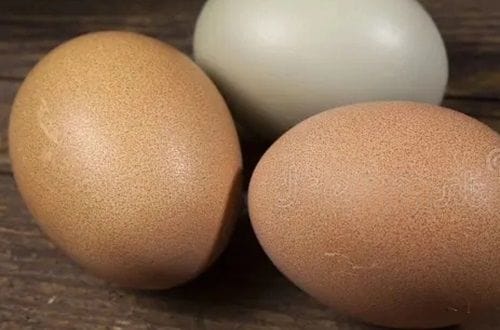
- In a large bowl, combine the egg whites at room temperature and gradually add 50 grams of sugar as you beat with a mixer on high speed until you form a stiff meringue. Carefully fold in the syrup little by little, without stopping beating; add the vanilla and food coloring, and keep mixing until you get a smooth, creamy blend.
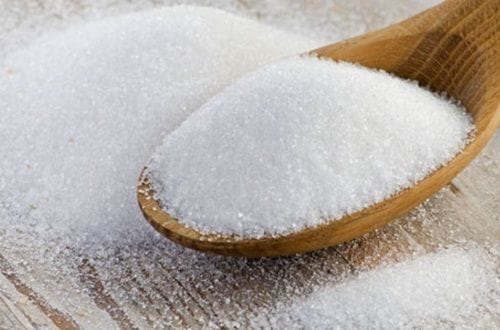
- Spread the meringue onto a greased tray lined with parchment paper, spread it out with a silicone spatula, and settle it with zigzag motions and light taps on the base of the table; cover with plastic wrap and refrigerate for at least 2 hours. In a medium bowl, combine the cornstarch and powdered sugar, mix until integrated, dust it over the meringue, and spread evenly with your fingers.
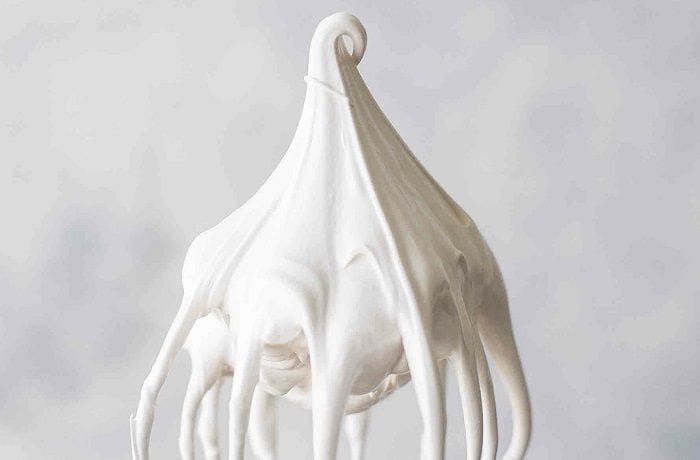
- Dust a bit of the mixture over a cutting board the size of the baking tray, flip the meringue over, and dust the other side just as evenly, coating it completely. Cut the meringue into rectangles to shape the sustancias, using a large knife dipped in hot water for a few seconds so it doesn’t stick to the meringue while slicing.
Additional Tips
Choose the Right Syrup Temperature
The syrup must reach exactly 117°C (243°F) for the soft-ball stage. Below that, the sustancias turn out too soft and won’t hold their shape. Above 120°C (248°F), the syrup hardens too much and the texture turns chewy. A candy thermometer saves you from both mistakes.
Add Flavor and Color in Layers
You can use any food essence — strawberry, raspberry, passion fruit, mint — in the same quantity as the vanilla. For different-colored layers, divide the meringue into portions before flavoring, spread them in layers on the tray, and chill between each layer so the colors don’t blend.
Use a Hot Knife for Clean Cuts
Dip the knife in hot water for 10-15 seconds before each cut and dry it off. The hot blade slices without dragging the meringue. You can also generously dust the cutting board with the cornstarch and powdered sugar mixture before unmolding to create a non-stick barrier across the whole surface.
| Original Ingredient | Substitute | Notes |
|---|---|---|
| Vanilla essence | Strawberry, raspberry, or passion fruit flavoring | Use the same quantity as the vanilla |
| Unflavored gelatin | Agar-agar | Use about half the amount; check package instructions for setting time |
| Food coloring | Natural fruit powder (beet, hibiscus) | Softer, more muted color, adjust to taste |
| Cornstarch + powdered sugar coating | Shredded coconut | Adds a different texture and flavor to the exterior |
Sustancias Dulces vs. Similar Sweets
| Type | Base | Texture | Characteristic Flavor |
|---|---|---|---|
| Modern sustancias | Unflavored gelatin + Italian meringue | Spongy, firm | Vanilla or strawberry |
| Convent sustancias (19th century) | Boiled bone collagen | Denser, more gelatinous | Cinnamon, lemon, sugar |
| Industrial marshmallow | Pork gelatin + glucose syrup | Very soft and elastic | Synthetic vanilla |
| Soft nougat | Egg white + cooked honey | Firm and chewy | Honey and nuts |
Frequently Asked Questions (FAQs)
1. Why is the modern recipe different from the original?
The original recipe from the nuns of Chillán was made from the “sustancia,” or collagen extracted from boiled beef or chicken bones. The modern recipe, by contrast, uses powdered unflavored gelatin, an ingredient that’s easier to find and handle, allowing for a quicker, more accessible home preparation.
2. What do I do if my syrup gets too hard?
If the syrup goes past 117°C (243°F), it will likely turn too hard. If that happens, you can add a tablespoon of water and gently reheat it, stirring until it returns to a liquid, flowing consistency. Using a candy thermometer is crucial to avoid this problem.
3. How should sustancias be stored so they don’t stick together?
Once cut, the pieces should be fully coated in a mixture of cornstarch and powdered sugar. Store them in an airtight container at room temperature, in a cool, dry place, to keep humidity from making them sticky.
4. Why are they called “sustancias”?
The name comes from the “sustancia,” or natural gelatin, that was extracted from animal bones by boiling them for a long time in the original recipe. This gelatin was the base of the preparation, giving it its characteristic texture.
History and Origin of Chilean Sustancias
For decades, the nuns of the Monastery of the Perpetual Adoration of the Blessed Sacrament, located in Chillán, made their famous sustancias dulces that brought fame to the city, from a recipe brought from Spain, likely of Turkish influence, which they learned at the Sacramentine convent in Santiago.
Chillán’s sustancias were made using beef kneecaps, which were boiled and left to rest for several days to extract all the “sustancia,” meaning the collagen turned into natural gelatin, which was then strained or filtered until reaching a spongy result flavored with cinnamon, lemon, and a bit of sugar.
Sustancias Made from Chicken Bones
The oldest recorded recipe for Chilean sustancias appears in the old cookbook “La Hermanita Hormiga: Tratado de arte culinario” by Marta Brunet, published in 1931, which was made with chicken bones.
A fat, cut-up hen, one large drumstick bone, one hip bone, and one marrow-rich spine bone are boiled until the meat turns into a kind of jelly. It’s then passed through a sieve and left until the next day, when it’s skimmed of fat and weighed. For each pound of jelly, 12 ounces of sugar, a teaspoon of anise, a scraping of nutmeg, and a vanilla stick are added. It’s brought to a boil over moderate heat and, once it reaches the right point — seen when the bottom of the pot shows through as you stir — it’s removed and stirred continuously until completely cold and turned white. It’s then spread on a marble table and, once the paste has aired out, cut into long, narrow strips or biscuit shapes.
Did You Know?
Gelatin is one of the most versatile compounds in the world, a pure, natural protein derived from collagen, widely used in food production, pharmaceuticals, nutraceuticals, photography, and a range of other applications for nearly two centuries.