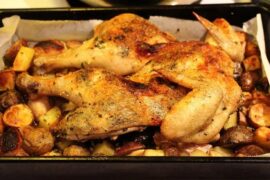
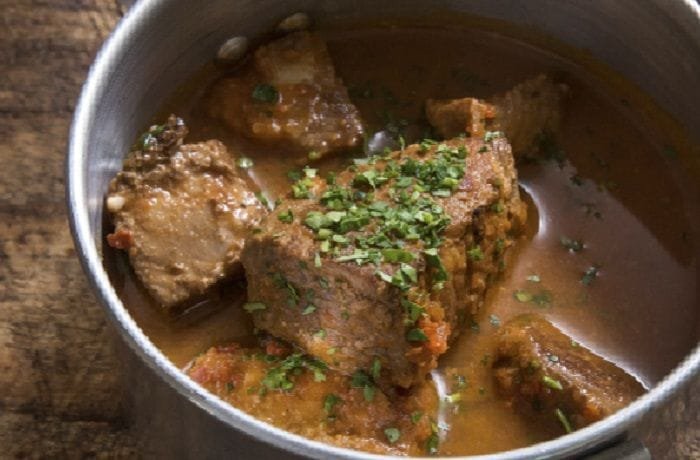
Cabrito a la olla, or cabrito a la cacerola, is a heritage dish of Chile’s Coquimbo Region, deeply rooted in the Limarí, Elqui, and Choapa valleys, where it is served at countryside lunches and local festivities. It is served piping hot in clay dishes, prized for its notably low fat content compared to other meats and for its deep, rustic flavor typical of Chile’s semi-arid north.
Nutritional Information
Each serving of cabrito contains approximately 550 kcal, 45 g of carbohydrates, 28 g of fat, 25 g of protein, 6 g of fiber, 3 g of sugars, 95 mg of cholesterol, and 350 mg of sodium. (*)
(*) Values may vary depending on ingredients and portion sizes.
How to Make Cabrito a la Olla?
When preparing cabrito a la olla, marinating the meat in the spice blend is key to the final result, since it gives the meat (bone-in shoulder, loin, or leg) much deeper flavor during cooking.
Prep time: 150 minutes
Cook time: 50 minutes
Servings: 6 people
Ingredients
- 1 ½ kg (3.3 lb) goat meat
- 1 ½ kg (3.3 lb) new potatoes
- 120 g (4.2 oz) butter
- 90 ml (3 oz) oil
- 3 scallions, chopped
- 3 garlic cloves, chopped
- 2 sprigs fresh thyme
- 2 tablespoons parsley
- Fine salt
- Black pepper
Instructions
- Cut the goat into 6 pieces of about 250 g (9 oz) each and season with salt, pepper, parsley, and garlic to taste. Set aside for 2 hours. In a basin of water, scrub the skin off the new potatoes and wash them thoroughly. Rinse and set aside.
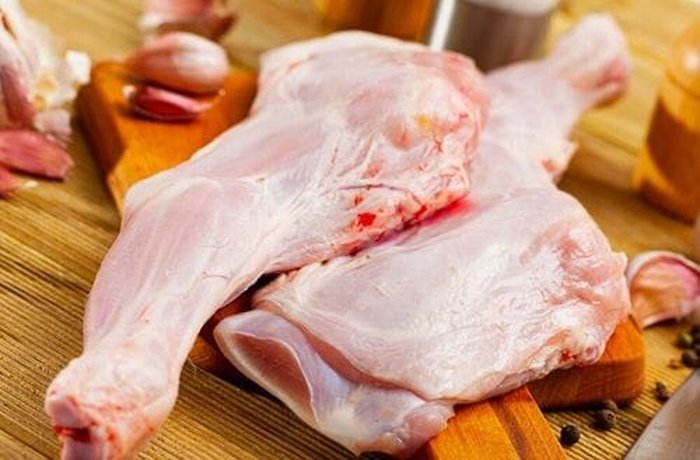
- In a large pan, add the oil and heat over medium-high heat; add the reserved goat pieces and brown them. Reduce the heat and continue cooking for 20 to 30 minutes, until the goat meat is tender. Remove from the pan onto a plate and set aside.
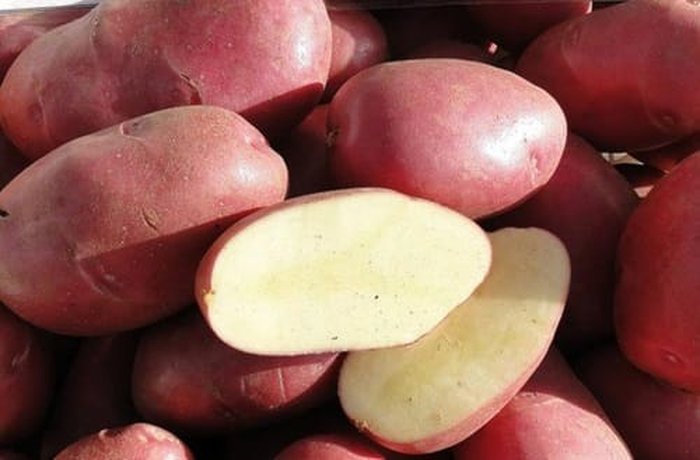
- In a large pot, add the remaining oil and half of the butter, heat over medium-high heat, add the potatoes and thyme, and brown them, shaking the pot by hand from time to time. Reduce the heat, cover, and cook over low heat until the potatoes are tender. Season and set aside warm.
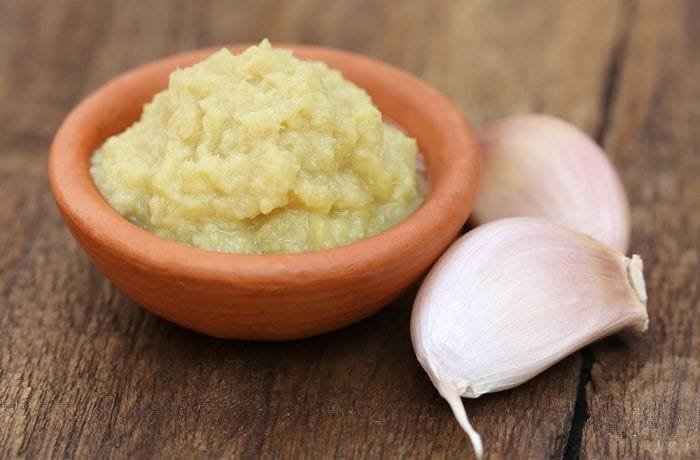
- Discard the excess oil from the pan used to cook the goat and add the rest of the butter, garlic, parsley, and scallions; sauté for a few minutes. Add the cooked goat pieces to the pan, stir, and transfer to a serving dish along with the hot potatoes.
Additional Homemade Tips
Choose bone-in cuts
When preparing goat meat, it is best to use bone-in cuts, whether leg, loin, or shoulder, to achieve a better result in the dish.
Best cuts for slow cooking
The best cuts are those with a good amount of connective tissue and bone, since slow cooking helps the collagen dissolve. Leg (or haunch), shoulder, and ribs are recommended. Bone is essential because it adds flavor, moisture, and structure to the finished dish.
Why sear the meat first
Searing or browning at high heat kicks off the Maillard reaction on the surface of the meat, creating a layer of toasted, complex, more intense flavors. This browned layer also seals in the meat’s initial juices, contributing to a better final result.
| Substitution | Use instead of | Effect |
|---|---|---|
| Lamb shoulder | Goat meat | Similar texture, milder flavor |
| Baby potatoes | New potatoes | Comparable size and texture |
| Green onion | Scallions | Similar mild onion flavor |
| Dried thyme | Fresh thyme | Use one-third the quantity |
Frequently Asked Questions (FAQs)
1. What cuts of goat are best for slow cooking?
The best cuts are those with a good amount of connective tissue and bone, since the slow-cooking process helps the collagen dissolve. Cuts like the leg (or haunch), shoulder, or ribs are recommended. Bone is essential because it adds flavor, moisture, and structure to the finished dish.
2. Why is marinating necessary in this cabrito recipe?
Marinating is a key step to tenderize the meat and, more importantly, to deeply infuse the flavors of the spices (salt, pepper, parsley, and garlic) into the goat. Although goat meat isn’t excessively tough, marinating with salt helps break down some muscle fibers, ensuring the flavor penetrates beyond the surface before cooking in the pot.
3. Why is it recommended to sear the goat before final cooking?
This step is essential for flavor. Searing or browning at high heat starts the Maillard reaction on the surface of the meat, creating a layer of toasted, complex, more intense flavors. This browned layer seals in the meat’s initial juices, contributing to a better final result.
4. Can this dish be made with an older goat?
Yes. One of the keys to this preparation is bringing out the flavor of the meat, and the meat doesn’t need to come from a very young animal — slow cooking tenderizes it regardless.
What Is Cabrito a la Olla?
Cabrito a la olla or cacerola is a traditional preparation from the Limarí area, where the goal is to bring out the meat’s flavor through slow cooking rather than relying on a particularly young animal.
History of Cabrito a la Olla in Chile
Most goats in Chile are raised extensively for meat, with natural weaning and the sale of kids at around two months of age, while milk production accounts for only about 5% of national dairy output.
Did You Know?
Goat meat is highly recommended for low-fat cooking, as its fat content is 40% lower than chicken and nearly 10 times lower than beef, pork, or lamb.
How to adapt this recipe to a vegan or vegetarian version?
How to adapt this recipe to a gluten-free version?
How to adapt this recipe to a keto (ketogenic) version?
Recommended
- Traditional Chilean Seafood Pulmay
- Chilean Pea Chicken with Rice
- Original Chilean Bistec a lo Pobre
- Homemade Mapuche Merkén