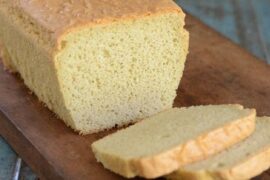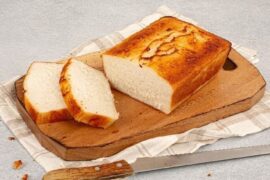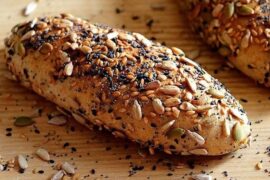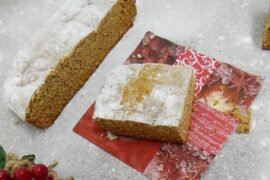
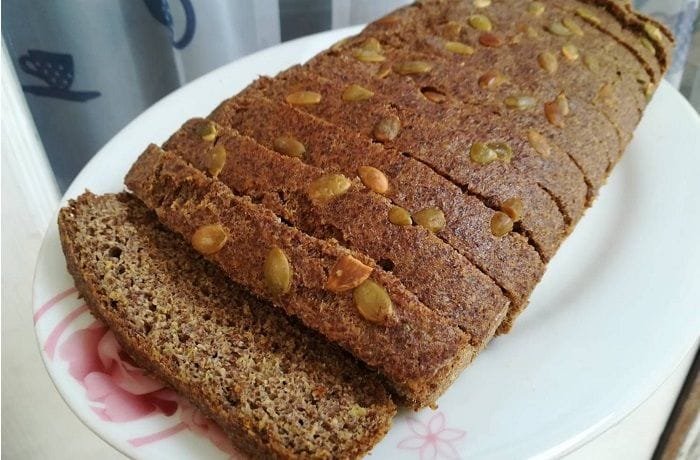
Flaxseed and chia bread, or pan de linaza, is a yeast free loaf made with flaxseed flour, whole flax and chia seeds, egg whites, water, baking powder, baking soda, and salt, mixed into a dough and baked in a loaf pan. It takes 20 minutes of preparation and about 25 minutes in the oven, and makes 10 slices.
It is rich in fiber and essential fatty acids, has no added sugar, and is ready to eat in less than an hour.
How to Make Flaxseed and Chia Bread?
Quick and easy, this bread uses no yeast. The flaxseed flour, baking powder, baking soda, and salt are sifted together, the seeds, egg whites, and water are added, and the dough is spread in a greased pan, topped with more flaxseed, and baked at 180°C (356°F).
Nutritional Information
Each slice of flaxseed and chia bread (1/10 of the loaf) contains approximately 220 kcal, 10 g of protein, 16 g of fat, 15 mg of cholesterol, 12 g of carbohydrates, 0 g of sugars, 12 g of fiber, and 300 mg of sodium. These values are estimates and may vary depending on ingredients and portion sizes.
Homemade Flaxseed and Chia Bread Recipe
Preparation: 20 minutes
Cooking: 20 to 25 minutes
Servings: 10 slices
Ingredients
- 300 g of flaxseed flour
- 300 ml (1¼ cups) of water
- 60 g of whole flaxseeds
- 60 g of chia seeds
- 30 g of baking powder
- 5 egg whites
- 2 teaspoons of salt
- 2 teaspoons of baking soda

Instructions
- In a large bowl, sift the flaxseed flour, baking powder, baking soda, and salt. Add the flaxseeds, chia seeds, egg whites, and water and mix with a wooden spoon or your hands until the dough is even and elastic. Preheat the oven to 180°C (356°F) for at least 10 minutes.
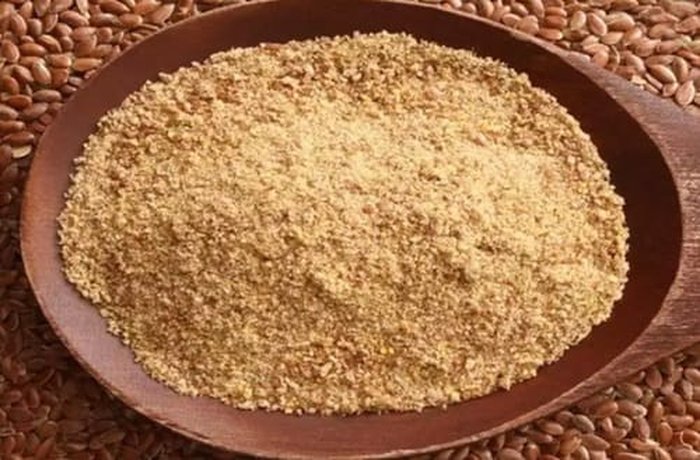
- Spread the dough in a buttered metal loaf pan or a silicone mold, smooth the top, and let it settle for a couple of minutes. Sprinkle with flaxseeds to taste. Bake for about 20 to 25 minutes, checking with a toothpick. Cool on a rack.
Additional Tips
Use an oven thermometer
Home ovens often run hotter or cooler than the dial says. A thermometer helps you bake this dense bread evenly.
Spread it evenly
Settle the dough evenly in the pan so the loaf bakes uniformly from edge to center.
Store it in the fridge
Because it is moist and rich in fats, keep it wrapped in the fridge and toast slices before eating.
| Original ingredient | Substitute | Ratio | Flavor note |
|---|---|---|---|
| Egg whites | Flax eggs | 1 tablespoon ground flax + 3 tablespoons water per white | Vegan |
| Chia seeds | Sesame seeds | 1:1 | Toastier flavor |
| Flaxseed flour | Half almond flour | 150 g + 150 g | Milder, softer |
| Salt | Herb salt | 1:1 | More aromatic |
Frequently Asked Questions (FAQs)
1. What is flaxseed?
Flaxseed, called linaza in Spanish, is a small oval seed from the flax plant, valued for its fiber, protein, and omega 3 fatty acids.
2. What is chia?
Chia is an herbaceous plant of the mint family whose seeds are its main product, prized for their fiber and their ability to absorb water and form a gel.
3. Does this bread contain gluten?
Flaxseed flour and seeds are naturally gluten free. Check that your baking powder is labeled gluten free if you need a strictly gluten free bread.
4. How do I know it is baked?
Insert a toothpick in the center. If it comes out clean, the bread is ready. Let it cool on a rack before slicing.
Benefits of Flaxseed
Flaxseed and its flour are an excellent source of fiber, which supports digestion, and they are rich in alpha linolenic acid, a plant omega 3 fatty acid that the body cannot make on its own.
What Is Pan de Linaza?
Pan de linaza is a dense, moist bread made mainly from ground flaxseed. Without yeast or wheat flour, it is a popular high fiber, low carbohydrate alternative to regular bread.
Did You Know?
Flax is one of the oldest cultivated plants, grown for thousands of years both for its seeds and for its fibers, which are used to make linen.
How to adapt this recipe to a vegan or vegetarian version?
How to adapt this recipe to a gluten-free version?
How to adapt this recipe to a keto (ketogenic) version?
Recommended
- Chilean Lentil Bread Recipe
- Gluten Free Rice Bread Recipe
- Homemade Multigrain Bread Recipe
- Homemade Pan Amasado Recipe