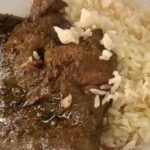
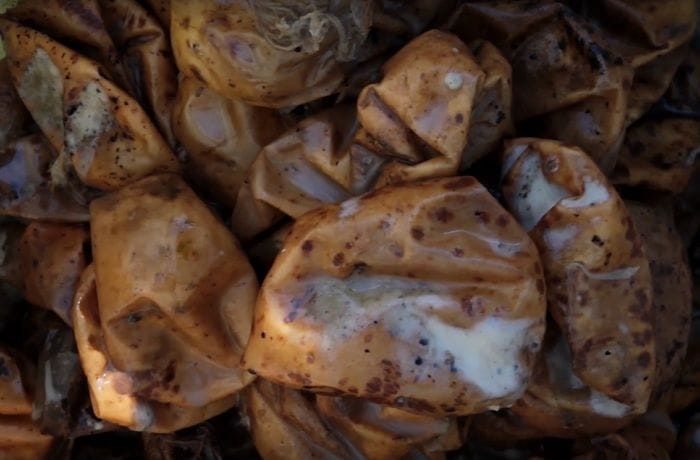
Papas buna, or poñi füna in Mapudungun, is an ancient Lafkenche Mapuche preparation made by fermenting white potatoes (yagana variety) underwater in anaerobic conditions for four to six months. The potatoes soften completely, develop a strong fermented smell, and are then boiled twice — the second time with sugar — and mashed into a smooth, sweet paste similar to a thick porridge or jam.
This ancestral food originates from the Chan-Chán coastal community in the Mariquina municipality, Los Ríos Region, and is one of the oldest known food preservation techniques in Mapuche gastronomy. Despite the pungent fermentation smell during cooking, the final result is a delicate, starchy, and mildly sweet mazamorra — energy-dense and traditionally used in Mapuche medicine to soothe fever.
How to Make Papas Buna?
Papas buna is a traditional Mapuche preservation technique rather than a conventional recipe. White or yagana potatoes are stored in sacks and submerged under a diverted stream (estero) for four to six months until they slowly ferment in anaerobic conditions. Once retrieved, the softened potatoes are boiled twice — the first water is discarded to remove the pungent odor — and then mashed with sugar into a thick, sweet paste.
Nutritional Information
Each serving of papas buna (poñi füna) contains approximately 180 kcal, 42 g of carbohydrates, 15 g of sugars, 0 g of total fats, 3 g of protein, 4 g of fiber, and 10 mg of sodium. Values are estimates and may vary depending on the potato variety used and the amount of sugar added during preparation. (*)
Homemade Papas Buna Recipe
Preparation: 120 days
Cook time: 20 minutes
Servings: 20 people
Ingredients
- 25 kg white or yagana potatoes
- Water
- Sugar
Instructions
- Store the potatoes in sacks and dig a pit beside a stream. Cover the pit with stones and abundant straw, place the sacks inside, cover again with straw and heavy stones, then divert a small watercourse to flood the pit completely.
- Cover the pit with soil and restore the natural water flow. Allow the potatoes to rest for at least 4 months — ideally 6 months — during which they will slowly decompose until they reach a consistency similar to chuño. When ready, divert the stream again, open the pit, remove the needed potatoes, and re-seal.
- Wash the potatoes thoroughly and place them in a large pot. Cover with water and cook for about 10 minutes — they will release a strong fermentation odor during this phase. Drain the water completely, then cook the potatoes again in fresh water with sugar. Break them apart by hand, grind, and mix with additional sugar. Serve as a smooth paste similar to porridge or jam (poñi vuna).
Additional Tips
How to Tell if the Papas Buna Have Fully Fermented
When you open the pit, the potatoes should be completely soft with a texture similar to chuño — dehydrated on the inside despite the wet environment. A strong fermented smell is normal and indicates the anaerobic process worked correctly. If the potatoes have become completely liquid or disintegrated, the pit was flooded too much or the straw did not adequately protect the sacks.
Why Boil the Papas Buna Twice and Discard the First Water
The first boiling removes fermentation compounds responsible for the strong odor. That first cooking water must be discarded entirely. The second boiling in clean water with sugar removes the residual bitterness and transforms the potato into a dense, sweet paste — the final poñi vuna mazamorra ready for consumption.
Small-Scale Preparation Without a Stream
In a domestic setting without access to a natural stream, you can bury small sacks in a pit flooded with controlled irrigation water, or use sealed containers submerged in a large vessel with cold water changed periodically to simulate anaerobic conditions. Without the natural stream flow, fermentation is slower and may take up to 8 months for equivalent results.
| Ingredient | Traditional | Substitute | Notes |
|---|---|---|---|
| White / yagana potato | High-starch local variety | Russet potato | High starch content is key |
| Stream water | Flowing stream (estero) | Cold water with daily changes | Slower anaerobic process |
| Sugar | White sugar | Honey or panela | Adjust quantity to taste |
| Straw | Local paja brava | Any insulating plant material | Creates anaerobic environment |
Frequently Asked Questions (FAQs)
1. What does poñi füna actually taste like?
Despite the pungent fermentation smell during preparation and the first boiling, the final product is surprisingly pleasant. The texture is silky and the flavor is delicate — very similar to a sweet starch porridge or sweetened potato pudding. The strong odor disappears almost entirely after the second cooking with sugar.
2. What type of potato is traditionally used for papas buna?
The local white or yagana potato varieties are preferred due to their high starch content, which is crucial to withstand months of submersion without completely disintegrating during the anaerobic fermentation process.
3. Can papas buna be replicated on a small scale without a stream?
Yes. In a domestic setting away from a natural stream, small sacks can be buried in a flooded pit with controlled water, or sealed containers submerged in frequently renewed cold water can simulate the anaerobic conditions. Without the natural stream flow, fermentation slows and the process may take up to 8 months.
4. How is papas buna stored once dug up?
Once cooked and mashed into a paste, papas buna can be stored in clean glass jars with tight lids in a cool place or refrigerated, where the paste keeps well for several weeks.
5. What medicinal properties are attributed to papas buna?
In traditional Mapuche medicine (lawen), the papas buna mazamorra has been traditionally used as a light and highly digestible food, ideal for soothing the body and helping to reduce fever. Its high starch content and easily absorbed energy make it suitable for periods of illness or recovery.
What Is Papas Buna?
Papas buna, known in Mapudungun as poñi füna (literally “rotten potato”), is an ancestral food preparation of the Lafkenche Mapuche communities of the southern Chilean coast, specifically the Chan-Chán area in the Mariquina municipality, Los Ríos Region. The technique involves fermenting white or yagana potatoes in anaerobic conditions by submerging them in sacks under a diverted stream for four to six months, allowing the tubers to slowly decompose into a chuño-like consistency. The resulting product is then cooked twice and mashed with sugar into a sweet, silky porridge.
History of Papas Buna in Chile
Papas buna is considered one of the oldest known food preservation and transformation methods in Mapuche culinary history. The technique was widely used during the Spanish colonization attempts in the Arauco Province, where Lafkenche communities developed sophisticated methods to store food during periods of conflict and scarcity. The process of submerging potatoes under stream water — an anaerobic fermentation technique — allowed communities to preserve large quantities of energy-dense food underground for months without refrigeration. Today, this ancestral practice survives primarily in the Chan-Chán coastal community of Hualpín, where the women’s entrepreneurial group “La Esperanza” has helped document and revitalize this preparation, co-financed by the Araucaía Regional Government.
Did You Know?
In traditional Mapuche medicine, the papas buna mazamorra was considered a restorative and medicinal food — light enough for sick individuals, yet energy-dense enough to sustain physical work. The strong fermented odor that emerges during the first boiling was seen as a sign of proper fermentation rather than spoilage. When the double-boiled paste is mixed with sugar, the final product smells pleasant and tastes like a delicate sweet starch pudding — nothing like the powerful aroma during preparation.
How to adapt this recipe to a vegan or vegetarian version?
How to adapt this recipe to a gluten-free version?
How to adapt this recipe to a keto (ketogenic) version?
Recommended
- Chilean Pea Muday — Mapuche Fermented Pea Drink
- Chilean Cochayuyo Seaweed Burgers
- Chilean Charqui Dried Meat Canapés
- Chilean Mapuche Rosehip Chicha