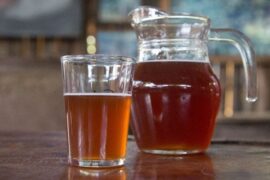
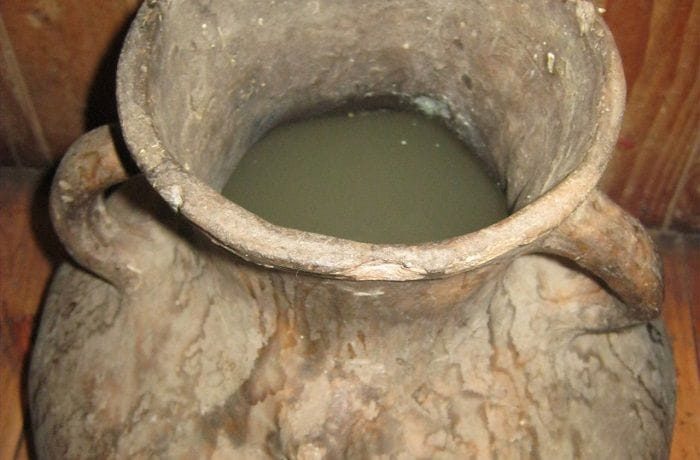
Muday de arveja is a traditional fermented beverage of the Mapuche people of southern Chile, made from peas — either the fresh shells or dried whole peas — combined with toasted flour and sometimes potato, then left to ferment slowly in a clay vessel called a menkuwe. Consumed fresh within 24 to 48 hours, it is a lightly tart, mildly sweet refreshment. Left for three to five days, it develops into a low-alcohol chicha prized across generations in the Cañete area of the Biobío region.
Two versions of this drink have been preserved in the Pangueco community of Cañete, one of the last places where muday de arveja — known in Mapudungun as muday alfiza — is still prepared with its traditional clay vessel and fire-toasted grains. Both recipes are included below: the simpler pea shell version and the fuller dried pea and potato preparation.
How to Make Muday de Arveja?
In both versions the process follows the same logic as all muday: a starchy base is ground or extracted, combined with water, briefly warmed, and then left to ferment covered with cloth in a clay or wooden vessel. The fermentation is slow and natural — no yeast is added. The drink is ready to consume at 24 hours as a light, slightly acidic refreshment, and becomes progressively more alcoholic over the following days. The clay menkuwe is traditionally preferred because its porous walls maintain an even, cool temperature that supports controlled fermentation.
Nutritional Information
The pea shell version (Recipe 1) provides approximately 50 calories per 250 ml serving, with 12 g of carbohydrates (1 g sugars), 1 g of protein, negligible fat, and no sodium or cholesterol. The dried pea and potato version (Recipe 2) is more substantial: around 120 calories per serving, with 25 g of carbohydrates (2 g sugars), 4 g of protein, 3 g of dietary fiber, 0.5 g of fat, and 8 mg of sodium. The dried pea version is also a meaningful plant-based source of plant protein and complex carbohydrates. Both versions are naturally gluten-free when made with certified gluten-free toasted flour.
Homemade Muday de Arveja Recipe
Recipe 1 — Pea Shell Chicha (Chicha de Cáscara de Arvejas)
Prep time: 20 minutes | Fermentation: 24 hours | Servings: 20
Ingredients
- 500 g fresh pea shells
- 10 liters purified water
- 500 g fine toasted flour (harina tostada)
- 1 tablespoon sugar
Instructions
- Prepare the pea shells: Wash the pea shells thoroughly under cold running water. Place them in a large pot, cover with water, and bring to a boil. Simmer over medium-high heat for 10 minutes. Remove from heat and let cool completely. Once cool, squeeze and grind the shells by hand to extract as much liquid and starch as possible.
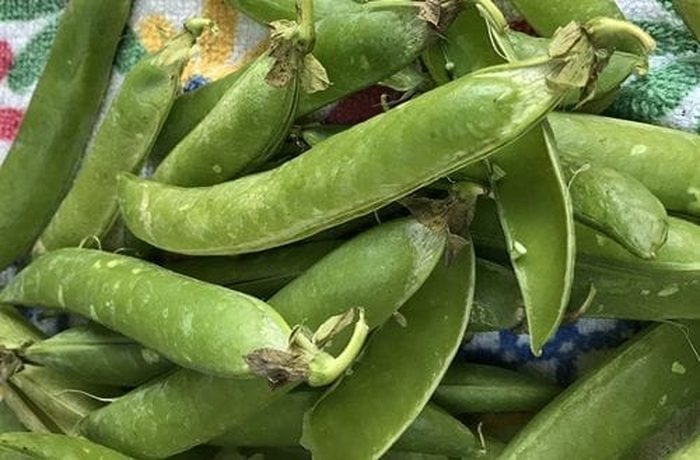
- Add flour and sugar: Sift the toasted flour directly over the pot with the pea shell liquid. Add the sugar and stir thoroughly with a large wooden spoon until everything is evenly dissolved and combined.
- Ferment: Warm a clay menkuwe vessel gently (or a large ceramic or wooden container). Pour the liquid in, cover tightly with a clean cloth tied at the rim, and leave at room temperature for a minimum of 24 hours before consuming, stirring occasionally. Alcohol content develops gradually over subsequent days.
Recipe 2 — Dried Pea and Potato Chicha (Chicha de Arvejas Secas con Papas)
Prep time: 2 hours | Fermentation: 24 hours | Servings: 20
Ingredients
- 500 g dried peas
- 1 kg potatoes, unpeeled
- 500 g fine toasted flour
- 10 liters cold water
Instructions
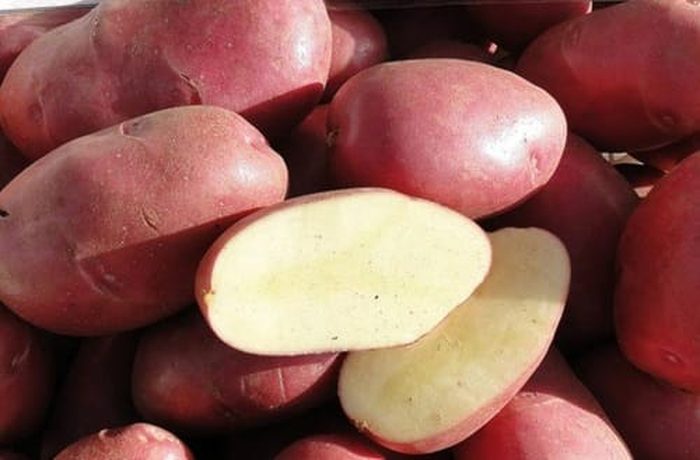
- Cook the potatoes: Wash the unpeeled potatoes and place in a large pot. Cover with water and cook over medium heat for about 20 minutes until completely tender. Drain and discard the cooking water. Let the potatoes cool, then peel them and reserve the skins in cold water.
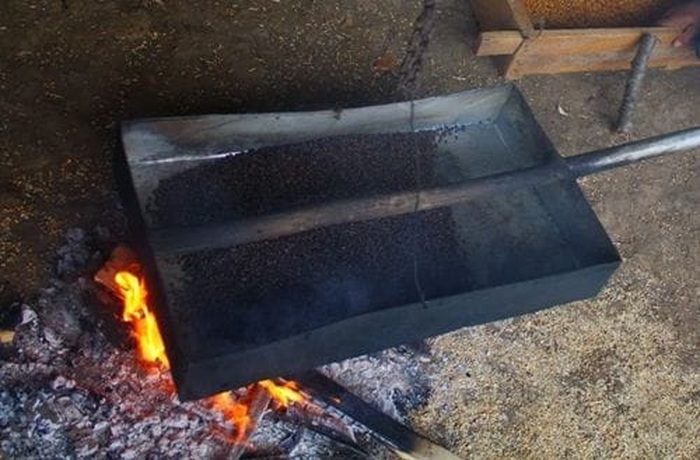
- Toast and grind the peas: Clean the dried peas, removing any debris or shriveled seeds. Toast them in a callana (a traditional Mapuche flat clay pan) over an open fire, or carefully in a dry skillet over medium heat, stirring constantly until golden and the hulls begin to loosen. Do not burn them. Let cool completely, then grind in a mill or food processor to a fine flour consistency.
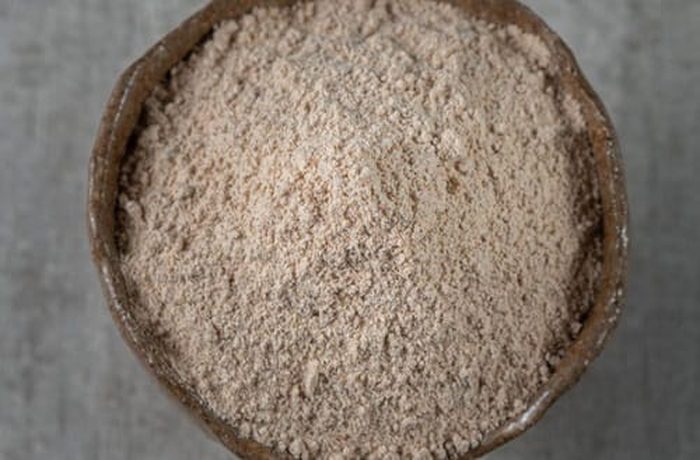
- Extract the potato starch: Pass the cooked, peeled potatoes through a fine-mesh strainer over a large pot containing the 10 liters of cold water. Press firmly to extract only the liquid starch — discard the dry pulp. Sift the pea flour and toasted flour together and add to the potato water, mixing thoroughly until smooth. Warm the mixture gently over low heat, stirring constantly. Do not boil.
- Ferment: Warm the clay menkuwe gently. Pour in the liquid and flour mixture, cover with a clean cloth tied firmly at the rim, and set in a cool, ventilated place. Let rest for a minimum of 24 hours before consuming. For a more alcoholic result, ferment for 3 to 5 days in a cool location, tasting daily.
Additional Tips
Choosing the Right Container
The traditional menkuwe — a large, unglazed clay vessel — is the ideal fermentation container because its porous surface allows slight evaporation that keeps the liquid cool and supports even, slow fermentation. A large ceramic pot, wooden barrel, or glass demijohn are acceptable modern alternatives. Avoid plastic containers, which can impart off-flavors, and reactive metals like copper or aluminum, which can interact with the mildly acidic liquid as it ferments.
Controlling Fermentation Strength
The alcohol content of muday de arveja depends entirely on how long it ferments. At 24 hours it is a gentle, slightly sour refreshment with trace alcohol. By day three it is a light chicha. By day five or beyond, depending on ambient temperature, it becomes noticeably alcoholic. A warmer environment accelerates fermentation; a cool, ventilated space slows it. Taste daily after the 24-hour mark to catch the drink at your preferred stage.
Sweetening and Serving
Both recipes can be sweetened with honey or chancaca (unrefined cane sugar) dissolved into the mixture before fermentation begins. Serve chilled in earthenware cups. The drink is traditionally consumed alongside Mapuche foods such as catutos, sopaipillas de papa, or roasted meat. For a non-alcoholic version, consume within the first 24 hours before fermentation produces significant alcohol.
| Ingredient | Substitution | Notes |
|---|---|---|
| Pea shells (Recipe 1) | Dried green pea skins | Use the outer husks from dried peas if fresh shells unavailable |
| Toasted flour | Toasted oat flour | Changes flavor profile slightly; use the same quantity |
| Sugar | Honey or chancaca | Dissolve fully before the fermentation period |
| Clay menkuwe | Large ceramic pot or glass jar | Avoid metal and plastic for best fermentation flavor |
Frequently Asked Questions (FAQs)
What is muday de arveja?
Muday de arveja is a traditional Mapuche fermented beverage made from peas — either the fresh shells or dried whole seeds — combined with toasted flour and water, then left to ferment naturally in a clay vessel. Known in Mapudungun as muday alfiza, it is one of the oldest documented chicha preparations in southern Chile and is still made in the Pangueco community of Cañete in the Biobío region.
What is the difference between muday and chicha?
Both terms refer to traditional fermented beverages in Chile. Muday is the Mapuche word for their fermented grain and legume drinks, while chicha is the broader Spanish-language term (from Quechua) applied to fermented beverages across the Andes and Chile. In Chilean everyday speech the terms are often used interchangeably for the same drink.
How long does muday de arveja take to ferment?
The minimum resting time before consumption is 24 hours, at which point the drink is a mild, lightly tart refreshment with very low alcohol. Fermentation continues over the following days: by day three it is a proper light chicha, and by day five it is noticeably alcoholic. The ideal fermentation window depends on personal preference and ambient temperature.
Is muday de arveja alcoholic?
Not immediately. After 24 hours the alcohol content is negligible and the drink functions as a non-alcoholic (or very low-alcohol) refreshment. As fermentation progresses over three to five days, alcohol develops naturally. The traditional practice was to consume it at various stages — fresh as a daily drink and more fermented for ceremonial occasions.
What is a callana and can I substitute it?
A callana is a traditional Mapuche flat, unglazed clay pan used to toast grains, seeds, and legumes over an open fire. It distributes heat evenly and is ideal for toasting dried peas without burning them. A heavy cast-iron skillet or a dry stainless steel pan over medium heat works as a substitute — the key is constant stirring and careful temperature control to toast evenly without scorching.
What Is Muday de Arveja?
Muday de arveja (muday alfiza in Mapudungun) is the pea-based variant of muday, the family of traditional fermented beverages that the Mapuche people of Chile and Argentina have produced for centuries using grains, legumes, and tubers. Peas — both fresh shells and dried seeds — provide the base starch that feeds the natural yeast fermentation. The addition of toasted flour adds body and a characteristic roasted, nutty note to the drink. The potato variant in Recipe 2 further enriches the liquid with additional starch and a subtle earthiness that deepens the flavor of the finished chicha.
History of Muday de Arveja in Chile
Muday has been central to Mapuche ceremonial and daily life since before European contact. The term encompasses a range of fermented drinks made from wheat, maize, quinoa, potato, and legumes — each adapted to the agricultural resources available in different zones of Mapuche territory. The pea variant, muday alfiza, is associated specifically with the Lafkenche communities of the coastal Biobío region, where pea cultivation was part of the traditional horticultural system. In Pangueco, a small community near Cañete, the preparation has survived into the twenty-first century as one of the few places where the full traditional process — including the callana toasting and the menkuwe fermentation vessel — is still practiced. Its persistence is documented in Chilean ethnobotanical and culinary heritage studies as an example of living Mapuche food culture.
Did You Know?
Chile is one of the primary pea-producing countries in South America, with approximately 7,000 hectares dedicated to pea cultivation, concentrated in the Valparaíso, O’Higgins, and Metropolitan regions. While most commercial production is destined for the canned and frozen vegetable market, the heritage use of peas in traditional fermented beverages like muday alfiza represents a parallel culinary tradition that predates modern agriculture by centuries. The carbohydrate-rich pea shell — a waste product in commercial processing — is, in the traditional recipe, the star ingredient.