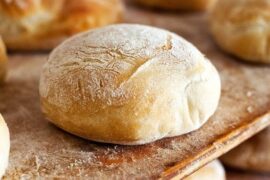
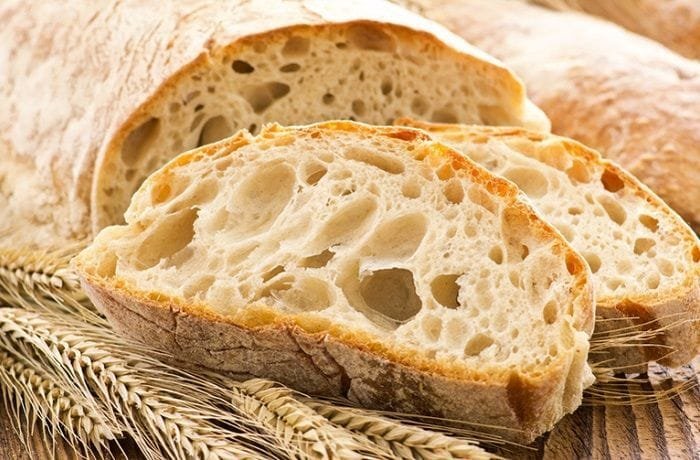
Homemade ciabatta, called pan chapata in Chile, is a very wet Italian bread made from a 12-hour starter of bread flour, water, milk, yeast, and honey, mixed with more flour, water, salt, olive oil, and yeast, beaten until elastic, left to triple for 3 hours, shaped gently into two loaves, and baked at 220 C (428 F) for 30 minutes. It takes 15 hours of preparation, mostly fermentation, plus 30 minutes of baking and serves 4 people.
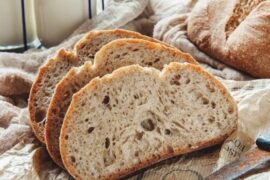
Its name, Italian for slipper, comes from its flat, elongated shape, and its long rise and high hydration give a light, open crumb.
How to Make Ciabatta at Home?
A traditional ciabatta starts a day ahead with a starter, which is then mixed into a very soft dough and handled gently so the large air bubbles survive. No extra flour is added during mixing, since the moisture creates the open crumb.
Nutritional Information
Each serving of ciabatta contains approximately 250 kcal, 50 g of carbohydrates, 1 g of fat, 8 g of protein, 2 g of fiber, 1 g of sugars, 0 mg of cholesterol, and 450 mg of sodium. These values are estimates and may vary depending on ingredients and portion sizes.
Homemade Ciabatta (Pan Chapata) Recipe
Preparation: 15 hours
Cooking: 30 minutes
Servings: 4 people
Ingredients
Starter
- 150 g (1 1/4 cups) of bread flour
- 150 ml (2/3 cup) of water
- 3 teaspoons of milk
- 1/2 teaspoon of dry yeast
- 1/2 teaspoon of honey
Ciabatta Dough
- 350 g (2 3/4 cups) of bread flour
- 250 ml (1 cup) of water
- 1 1/2 teaspoons of salt
- 1/2 teaspoon of olive oil
- 1/2 teaspoon of dry yeast
Instructions
- For the starter, sprinkle the yeast into a large bowl, add the water and milk, and let stand for 5 minutes. Add the honey and the starter flour and stir until just combined. Cover with a clean kitchen towel and let rest for at least 12 hours.
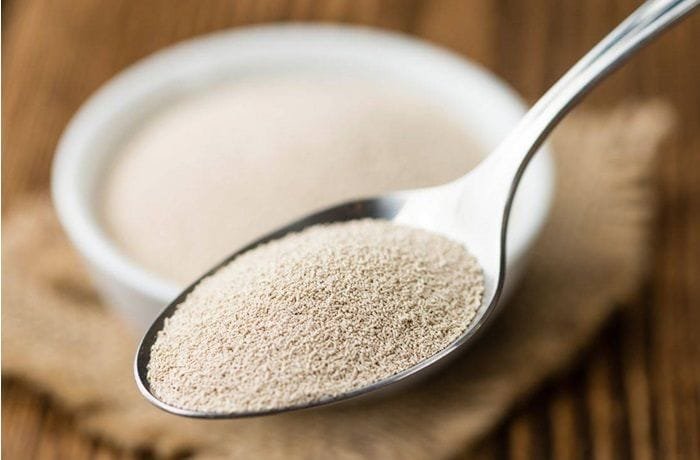
- Sprinkle the dough yeast into a small bowl with a little of the water, let it stand for 5 minutes, and stir until dissolved. Place the starter in a medium bowl and add the dissolved yeast, the rest of the water, and the olive oil, and mix well.
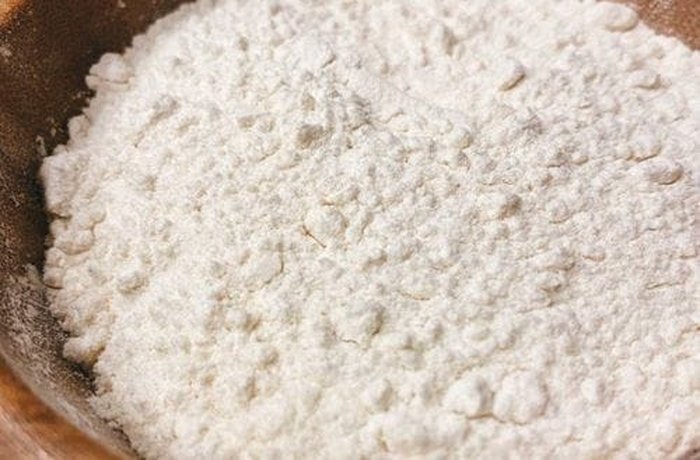
- In a large bowl, combine the sifted flour, salt, and the starter mixture into a wet, sticky dough. Beat with a wooden spoon for 5 minutes, until spongy and starting to pull away from the sides but still too soft to knead. Cover and let rise for 3 hours, or until tripled and full of bubbles. Do not punch it down.
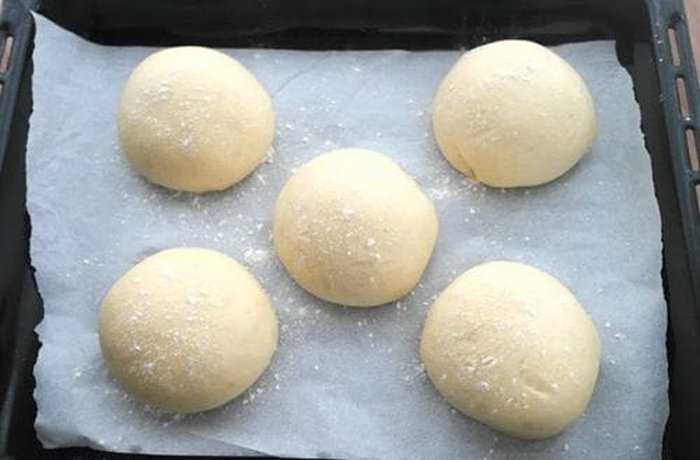
- Divide the dough in half in the bowl and turn one half onto a well-floured baking sheet. With floured hands, shape a rectangle about 30 cm (12 in) long, tucking the edges underneath to build up the sides. Repeat with the other half and let rise, uncovered, for 20 more minutes; the loaves will spread.
- Bake in an oven preheated to 220 C (428 F) for 30 minutes, until puffed, golden, and hollow-sounding when tapped underneath. Cool on a rack so the crust stays crisp.
Additional Tips
Do not add extra flour
Ciabatta dough is very wet; resisting extra flour is what creates the large, irregular holes.
Judge by the dough, not the clock
Let both the starter and dough rise fully; baking too early gives a dense loaf.
Add steam
Place a pan of hot water in the oven or spray the walls with water before baking for a crisp, golden crust.
| Original ingredient | Substitute | Ratio | Flavor note |
|---|---|---|---|
| Bread flour | All-purpose flour | 1:1 | Smaller holes |
| Starter | Extra yeast in the dough | 1 teaspoon | Less complex flavor |
| Honey | Sugar | 1:1 | Same result |
| Two loaves | Four small rolls | Bake 18 to 20 minutes |
Frequently Asked Questions (FAQs)
1. Why doesn’t my ciabatta have big holes?
Usually because extra flour was added or the dough did not rise long enough, both of which reduce the hydration and fermentation needed.
2. Can I make ciabatta without a starter?
Yes, with more yeast in the final dough, although the flavor will be less complex than with a long fermentation.
3. How should I store it?
At room temperature in a cloth or paper bag for a day or two, or frozen after baking and reheated in the oven.
4. How is ciabatta different from focaccia?
Ciabatta has an airier crumb and a firmer crust for sandwiches, while focaccia is flatter, richer in olive oil, and often topped with herbs or olives.
What Is Ciabatta?
Ciabatta is a flat, rustic Italian bread with a very open crumb and a thin, crisp crust, known in Chile as pan chapata and popular for sandwiches.
The Benefits of Homemade Bread
Baking your own bread gives you full control over the ingredients, from the type of flour to the amount of salt.
Did You Know?
Ciabatta is a surprisingly modern bread, created in 1982 in the Veneto region of Italy by baker Arnaldo Cavallari as an Italian answer to the French baguette.
How to adapt this recipe to a vegan or vegetarian version?
How to adapt this recipe to a gluten-free version?
How to adapt this recipe to a keto (ketogenic) version?
Recommended
- Chilean Pan Frica Burger Bun
- Homemade Yeast-Free Bread
- Garlic and Oregano Breadsticks
- Chilean Milk Bread Rolls