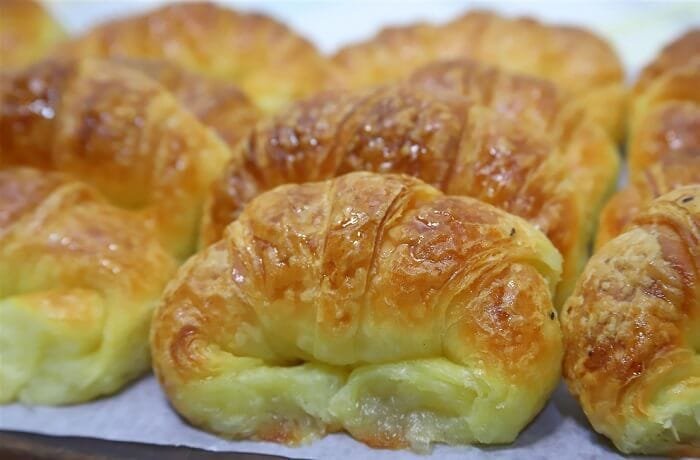
Homemade medialunas are sweet South American croissants made from an enriched yeast dough with milk, egg, sugar, honey, vanilla, and lemon zest, laminated with a butter and flour block, shaped into crescents, baked until golden, and brushed with sugar syrup. They take about 2 hours of preparation and 30 minutes in the oven, and make about 24 medialunas.
Especially loved in Argentina and very popular in Chile, they are a classic for breakfast and afternoon tea.
How to Make Sweet Medialunas?
Medialunas are made from an egg and butter enriched dough. A butter block is folded into the dough and rolled and folded three times with rests in the fridge, then the dough is rolled thin, cut into triangles, rolled into crescents, risen, brushed with egg, baked, and glazed with syrup.
Nutritional Information
Each medialuna contains approximately 190 kcal, 3 g of protein, 9 g of fat, 36 mg of cholesterol, 25 g of carbohydrates, 7 g of sugars, 1 g of fiber, and 150 mg of sodium. These values are estimates and may vary depending on ingredients and portion sizes.
Homemade Medialunas Recipe
Preparation: 2 hours
Cooking: 30 minutes
Servings: About 24 medialunas
Ingredients
Dough
- 500 g (4 cups) of all purpose flour
- 300 ml (1¼ cups) of whole milk
- 40 g (3 tablespoons) of sugar
- 15 g of honey
- 14 g of instant dry yeast
- 10 g of salt
- 2 eggs (1 for the dough, 1 for brushing)
- 1 teaspoon of vanilla extract
- Lemon zest
Butter block
- 225 g (1 cup) of butter, softened
- 40 g (⅓ cup) of flour
Syrup
- 125 ml (½ cup) of water
- 100 g (½ cup) of sugar
Instructions
- In a small bowl, mix the butter and the 40 g of sifted flour with a fork until smooth. Spread it on parchment paper into a square of about 15 cm and refrigerate for 15 minutes. In a large bowl, warm the milk to 40°C (104°F), add the yeast, stir to dissolve, and let rest about 10 minutes until bubbly.
- In a large bowl, combine the sifted flour, sugar, vanilla, honey, salt, one egg, and the lemon zest. Mix with your fingers while adding the milk and yeast little by little. Work into a sticky dough, then knead on a floured counter for about 20 minutes until smooth and soft.
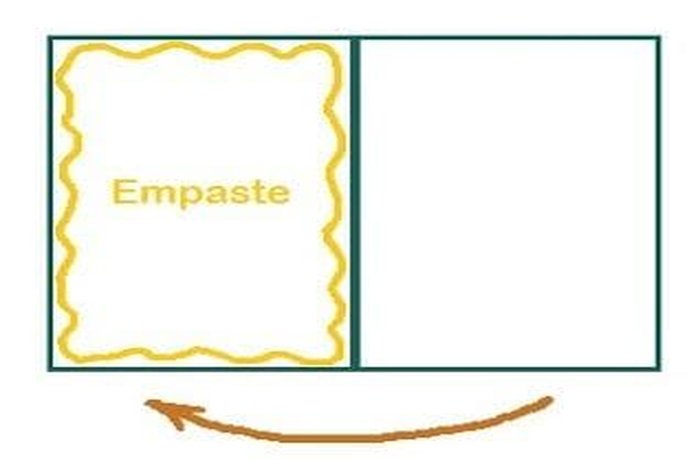
- Roll the dough into a rectangle of about 50 x 30 cm, place the butter block on the left half, fold the other half over to cover it completely, and seal the edges. Roll gently so the butter and dough stick together, keeping the rectangular shape.
- Roll the dough to 1 cm thick, fold it in three, and refrigerate for about 30 minutes.
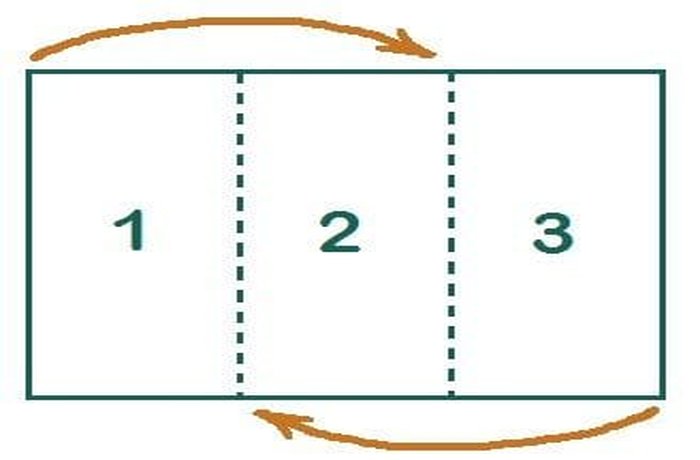
- Turn the dough 90 degrees and repeat the rolling and folding two more times, chilling it each time.
- Roll the dough on a floured counter into a square of about 50 x 50 cm, or about 3 mm thick. Cut it into two rectangles and then into triangles with a base of about 12 cm.
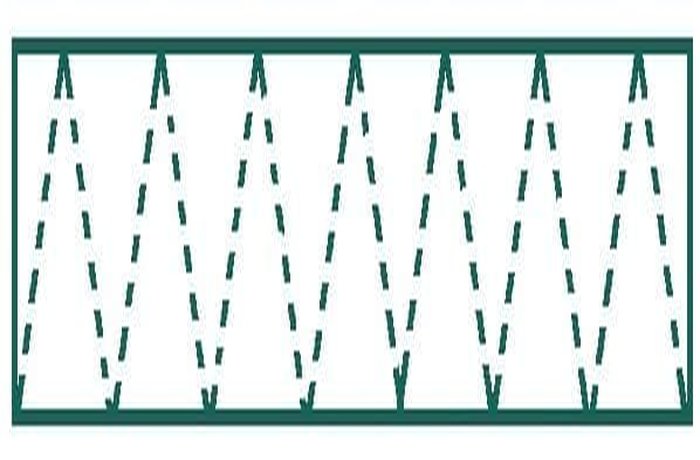
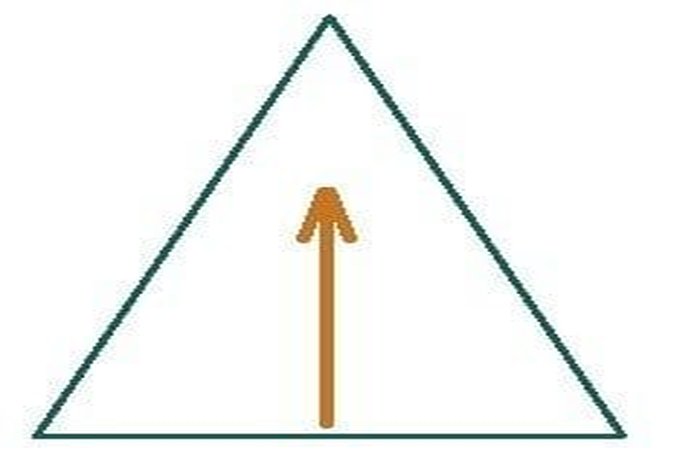
- Stretch each triangle slightly and roll it up gently starting from the wide base.
- Preheat the oven to 180°C (356°F) for about 10 minutes. Butter a baking sheet and place the rolls on it, curving the ends into crescents, 5 cm apart. Cover with a clean towel and let rise in a warm place for about 30 minutes.
- Brush the medialunas with the beaten egg and bake for 30 minutes, rotating the tray if needed, until deep golden. Meanwhile, heat the water and sugar in a small pot over medium heat, stirring to dissolve, and simmer for about 4 minutes to reduce.
- As soon as they come out of the oven, prick the medialunas in several places with a toothpick and brush them with the syrup until absorbed. Serve warm or at room temperature.
Additional Tips
Keep the butter cold
The butter block must stay firm to form separate layers. If it starts to melt while rolling, put the dough back in the fridge.
Knead well
The dough needs about 20 minutes of kneading to develop the elasticity that makes medialunas soft and airy.
Store them covered
Covered at room temperature, medialunas stay fresh for up to 3 days. Leaving them uncovered dries them out.
| Original ingredient | Substitute | Ratio | Flavor note |
|---|---|---|---|
| Butter block | Lard (medialunas de grasa) | 1:1 | Flakier, savory, less sweet |
| Honey | Sugar | 15 g | Slightly less moist |
| Syrup glaze | Powdered sugar dusting | To taste | Less sticky |
| Instant yeast (14 g) | Fresh yeast | 40 g | Same rise |
Frequently Asked Questions (FAQs)
1. Are medialunas and croissants the same?
Not exactly. Medialunas are a South American take on the croissant, popular in Argentina and Chile. Their dough is enriched with egg, milk, honey, and vanilla, and they are brushed with syrup after baking, which makes them sweeter and shinier.
2. Why chill the dough between folds?
The butter must stay firm to form separate layers. The dough is rolled to 1 cm, folded in three, and chilled for 30 minutes, three times in all, turning it 90 degrees each time.
3. How do I glaze medialunas?
As soon as they come out of the oven, prick them with a toothpick and brush them with a syrup of 125 ml of water and 100 g of sugar simmered for about 4 minutes.
4. How long do homemade medialunas keep?
Covered at room temperature, they stay fresh for up to 3 days.
Medialunas de Manteca vs de Grasa
In Argentina there are two classic types. Medialunas de manteca are made with butter and glazed with syrup, sweet and soft, like this recipe, while medialunas de grasa are made with beef fat or lard and are flatter, flakier, and less sweet.
What Are Medialunas?
Medialunas, half moons in Spanish, are the crescent shaped pastries found in every bakery in Argentina, Uruguay, and Chile. They are smaller, sweeter, and denser than French croissants and are usually eaten with coffee.
Did You Know?
Medialunas descend from the French croissant, brought to the Río de la Plata by European bakers in the nineteenth and early twentieth centuries and adapted to local tastes.
How to adapt this recipe to a vegan or vegetarian version?
How to adapt this recipe to a gluten-free version?
How to adapt this recipe to a keto (ketogenic) version?
Recommended
- Chilean Palmeritas Recipe
- Chilean Cachitos Pastry Horns Recipe
- Homemade Cinnamon Rolls Recipe
- Chilean Milk Bread Rolls Recipe