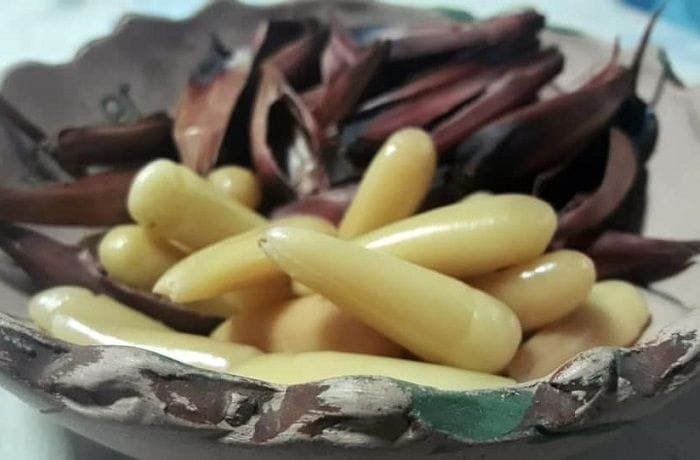
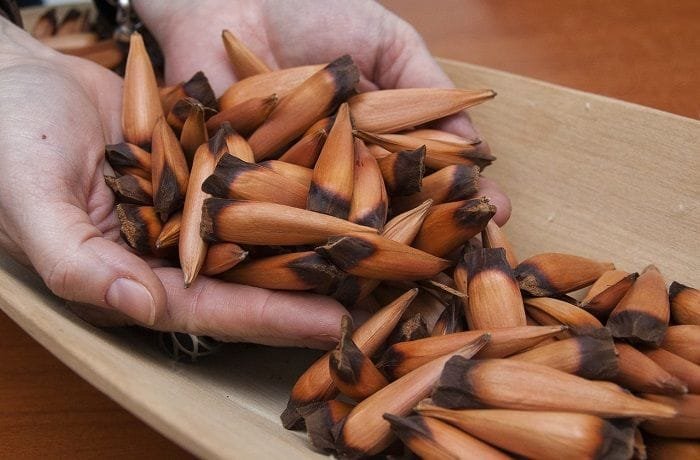
Pine nuts in syrup are a sweet, modern preparation from southern Chilean cooking. The araucaria tree’s seeds are boiled until tender, peeled, and simmered in a thick syrup made with ulmo honey.
Nutritional Information
Each serving of pine nuts in honey syrup contains approximately 320 kcal, 68 g of carbohydrates, 3 g of fat, 3 g of protein, 4 g of fiber, 60 g of sugars, 0 mg of cholesterol, and 5 mg of sodium. (*)
(*) Values may vary depending on ingredients and portion sizes.
How to Make Pine Nuts in Syrup?
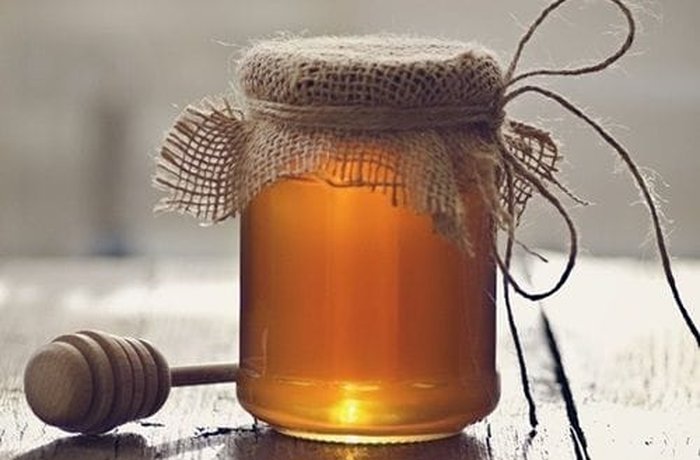
Pine nuts in syrup are made from a simple water-and-sugar base, to which natural bee honey is added, ideally ulmo honey, a very traditional ingredient in southern Chile.
Prep time: 15 minutes
Cook time: 2 hours 15 minutes
Servings: 6 people
Ingredients
- 1 kg peeled pine nuts
- 750 ml water
- 250 g sugar
- 250 g ulmo honey
Instructions
- Wash the pine nuts thoroughly in cold water, place them in a large pot, and cover with plenty of freshly boiled water. Cook over medium heat for about 2 hours (30 minutes in a pressure cooker), drain, cool for a few minutes, and peel the pine nuts while still warm, pressing from the base without breaking them.
- In a large pot, add the water and sugar, stir until dissolved, and bring to a boil, then add the honey little by little, stirring, until fully combined. Submerge the pine nuts in the syrup and cook covered over medium-high heat for about 10 minutes.
- Turn off the heat, cool to room temperature, and keep refrigerated until ready to serve. To preserve, place the pine nuts in sterilized jars, cover with the syrup, seal the jars, and process in a water bath for 20 to 30 minutes.
Preparation Tips
If you only have dried pine nuts, soak them for at least 8 hours in cold water before cooking so they absorb the syrup better and improve in texture. For a more concentrated flavor and firmer texture, let them rest chilled for 24 hours so they take on the floral aromas of the ulmo honey.
| Substitution | Use instead of | Effect |
|---|---|---|
| Wildflower honey | Ulmo honey | Less floral, still sweet and aromatic |
| Pressure cooker (30 min) | Stovetop boil (2 hours) | Same tenderness, much faster |
| Brown sugar | White sugar | Deeper caramel note in the syrup |
| Chestnuts | Pine nuts | Similar starchy texture, different flavor |
Frequently Asked Questions (FAQs)
1. Can I use dried pine nuts for this recipe?
Yes, but it’s essential to soak them for at least 8 hours in cold water before the long cooking. This rehydrates the fibers and lets the nut regain the porosity it needs to absorb the syrup.
2. What is ulmo honey, and why is it recommended?
It’s a honey made from the nectar of the ulmo tree flower (Eucryphia cordifolia). It’s famous in Chile for its cream color and intense aroma, which perfectly complements the pine nut’s neutral, earthy flavor.
3. How long do pine nuts in syrup last?
If the jar has been sterilized and vacuum-sealed, they can last up to 12 months in a cool, dark place. Once opened, keep refrigerated and consume within 2 weeks.
4. How do I know when the pine nut is properly cooked?
It should be soft but offer slight resistance when bitten, similar to a cooked chestnut. If they’re too firm, they won’t absorb the syrup; if overcooked, they’ll fall apart in the jar.
5. Can I use a sweetener instead of sugar?
You can use substitutes for the base syrup, but the final texture won’t be as dense, and it won’t preserve the fruit the same way sugar and honey do, since both act as natural preservatives.
Characteristics of the Araucaria Tree
The Chilean araucaria, also known as “pewén” in Mapuche, is an iconic tree found mainly in southern Chile. Its seeds, called “piñones,” are a traditional and nutritious food in the Chilean diet, and the tree itself is prized for its unique shape and cultural significance.
Did You Know?
The word “almibar” (syrup) comes from the Arabic “al-miba,” which in turn comes from the Persian “mey be,” a type of quince nectar that, according to legend, was accidentally discovered by the Arab princess Valentina.