
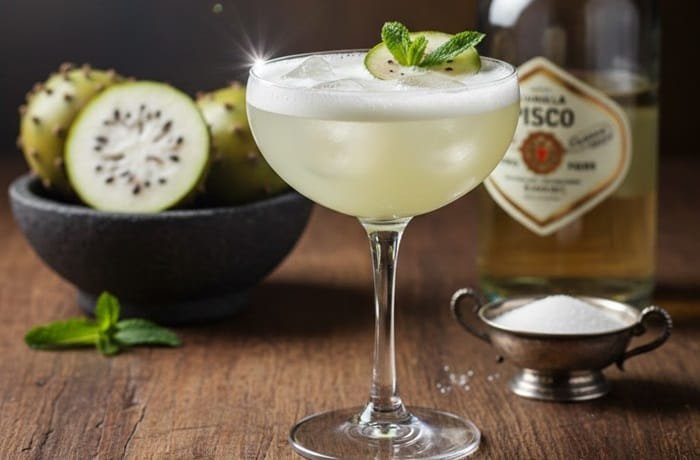
Copao sour is a Chilean cocktail made by blending the pulp of the copao, the fruit of a wild cactus native to Chile’s Atacama Desert, with pisco, sugar and ice. It takes about 15 minutes to prepare and yields four chilled glasses with a tangy, lightly sweet desert flavor.
The copao (Eulychnia acida) grows on a tall, branching cactus found only between Copiapó and Illapel, on the arid coastal and inland hills of northern Chile. Local communities in the region have long turned its fruit into drinks and preserves, and this cocktail is one of the easiest ways to taste it.
Nutritional Information
Each serving of copao sour contains approximately 150 kcal, 20 g of carbohydrates, 0 g of fat, 0 g of protein, 1 g of fiber, 19 g of sugars, 0 mg of cholesterol, and 2 mg of sodium. (*)
(*) Values may vary depending on ingredients and portion sizes.
How to Make Copao Sour?
Copao sour turns the pulp of this desert cactus fruit into a smooth, chilled cocktail. The pulp is macerated with sugar, blended with pisco and ice, then served right away in cold glasses.
Prep time: 15 minutes
Servings: 4 people
Ingredients
- 8 copao fruits
- 250 ml pisco
- White sugar
- Ice cubes

Instructions
- Halve the copaos, scoop the pulp out with a spoon into a medium bowl, add about 4 tablespoons of sugar, and stir gently until dissolved. Let the pulp macerate for a couple of minutes.
- Transfer the pulp to a blender, pour in the pisco, cover, and process at medium speed for about 20 seconds. Adjust sweetness and add ice to taste, plus a splash of water if the mixture still feels too thick, until you reach the consistency you want.
- Serve the copao sour right away in chilled cocktail glasses, optionally garnished with thin slices of copao or pica lemon.
Copao Sour Preparation Tips
Choosing Ripe Copaos
Pick copaos that feel soft to the touch and show a deep, even color. Riper fruit gives a naturally sweeter pulp, so you can cut back on the added sugar.
Straining for a Smoother Drink
If you prefer a finer texture, pass the blended mixture through a strainer before serving to remove the small seeds and fibers naturally found in the copao pulp.
Adjusting Sweetness Naturally
Taste the pulp before blending and adjust the sugar in small amounts, since ripeness varies a lot from one copao to another.
| Substitution | Use instead of | Effect |
|---|---|---|
| Honey or agave syrup | White sugar | More natural sweetness, subtle flavor shift |
| Prickly pear (tuna) pulp | Fresh copao | Closest substitute outside northern Chile |
| Strained mixture | Unstrained pulp | Smoother texture, no seeds or fiber |
| Vodka | Pisco | Neutral option when pisco isn’t available |
Frequently Asked Questions (FAQs)
1. Where can I find copaos?
Copaos are sold at local markets and roadside stands across northern Chile, especially in the Atacama and Coquimbo regions, during their harvest season from summer to fall.
2. What type of pisco works best?
A good quality clear pisco (labeled “reservado” or similar) is the best choice, since it won’t mask the copao’s fresh, tangy flavor.
3. Do I need to use white sugar?
No, you can swap the white sugar for honey, agave syrup, or another natural sweetener if you prefer a lighter alternative.
4. Does copao have any nutritional benefits?
Yes, the copao fruit is rich in vitamin C, calcium, iron, magnesium, and antioxidant compounds, according to recent research on the species.
History of Copao in Chile
The copao was first documented in 1864 by naturalist Rodolfo Amando Philippi, and scientific studies since 2005 have confirmed that its fruit is a valuable source of minerals and vitamins.
Did You Know?
Beyond cocktails, copao pulp is now used to make nectar, jam, fresh juice, and even hair and skin products such as shampoo, soap, and lotion.