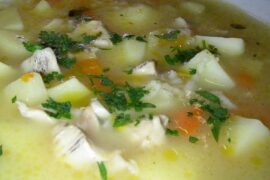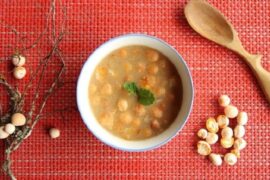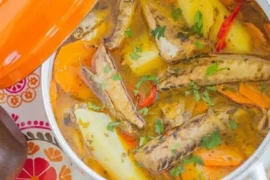
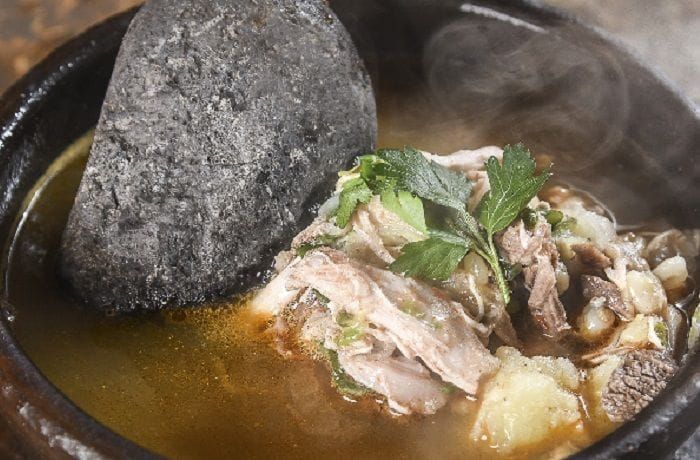
Chilean calapurca (also spelled kalapurca) is a pre-Columbian Aymara soup made with shredded llama meat, hulled hominy corn (mote), unpeeled potatoes, carrots, onion, garlic, and ají de color, slow-cooked in broth — then finished by plunging two glowing-hot river stones directly into the pot, intensifying the heat and deepening the flavors. It serves 4 and takes around 75 minutes to prepare.
A ceremonial dish of the Aymara people of northern Chile, Bolivia, and Peru, calapurca is one of the oldest documented soups in South America. Its defining technique — heating river stones in a fire and submerging them in liquid — predates pottery by thousands of years and represents one of the earliest methods of cooking with indirect heat.
How to Make Chilean Calapurca?
Calapurca requires two parallel processes that must be synchronized: the long simmering of the llama meat (60 minutes total) and the heating of the river stones on an open fire (40 to 60 minutes). The stones go into the pot at the very end, after the soup has already reached its final consistency, to deliver a final surge of heat and the ceremonial element that gives the dish its identity. Time the stone heating to be ready when the soup finishes its last 15-minute simmer.
Nutritional Information
Each serving of Chilean calapurca contains approximately 350 calories, 40 g of carbohydrates, 10 g of total fats, 20 g of proteins, 6 g of fiber, 4 g of sugars, 50 mg of cholesterol, and 600 mg of sodium. Llama meat is a lean, high-protein red meat exceptionally rich in iron, zinc, and B12, with lower fat and cholesterol levels than beef, making calapurca one of the most nutritionally dense traditional soups in South American cuisine.
Homemade Chilean Calapurca Recipe
Prep Time: 45 minutes
Cook Time: 75 minutes (plus 40–60 min to heat stones)
Servings: 4
Ingredients
- 500 g llama meat (or lamb shoulder, or chicken)
- 500 g potatoes, unpeeled
- 250 g hulled hominy corn (mote de maíz pelado)
- 3 garlic cloves, finely chopped
- 2 tablespoons ají de color (Chilean mild chili powder)
- 2 tablespoons fresh cilantro, chopped
- 2 carrots, diced
- 1 onion, diced
- Sunflower oil
- Fine salt
- 2–3 porous black river stones or volcanic stones (fist-sized)
Instructions
- Start the stones and cook the meat: Before anything else, set your river stones on a wood fire to heat — they need 40 to 60 minutes to reach the correct temperature (surface turns whitish-gray). Meanwhile, wash the llama meat and place it in a large pot. Cover with cold water, add one teaspoon of salt, and bring to a boil. Simmer for 15 minutes, skimming any foam from the surface.
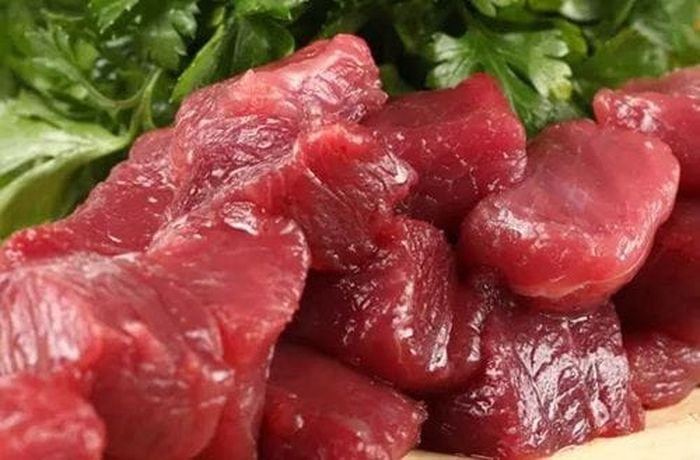
- Shred the meat and make the sofrito: Reduce heat to low and cook the meat for a further 45 minutes, continuing to skim foam. Transfer the meat to a board, shred it with two forks, and set aside — keep the cooking broth. In a large skillet, heat a drizzle of oil over medium heat. Add the diced onion, carrot, garlic, and ají de color. Sauté for 2 to 3 minutes, stirring constantly, until the onion softens and the chili releases its color. Set aside.
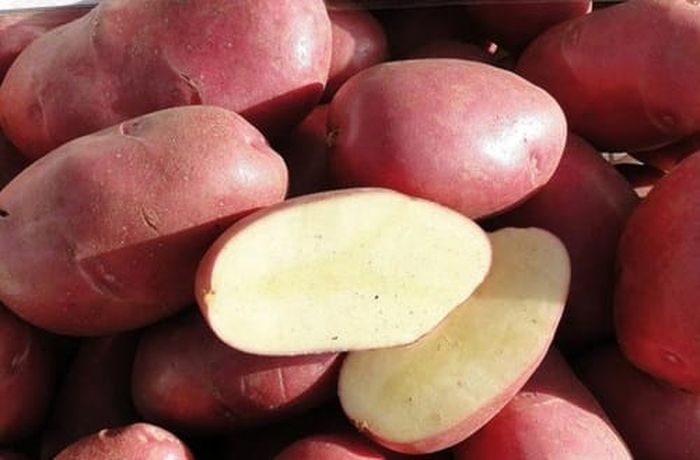
- Cook the potatoes and corn: In a medium pot, combine the unpeeled potatoes and the hominy corn. Cover with cold water, bring to a boil, and cook for 15 minutes until the potatoes are tender. Drain. Break the potatoes apart with your hands — do not mash completely, leave some texture. Add the sofrito, broken potatoes, and corn to the large pot with the shredded meat. Pour in enough cooking broth to reach a medium consistency — neither too thick nor too liquid. Stir gently to combine.
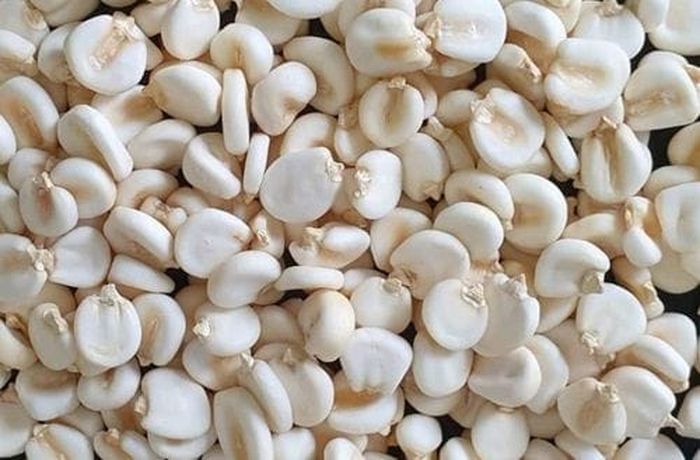
- Final simmer and the hot stones: Taste and adjust seasoning. Bring to a boil and cook for a further 15 minutes, adjusting broth level as needed. Using long metal tongs, carefully lower the glowing-hot river stones into the pot — the soup will bubble intensely for a moment. Cover the pot and let it rest undisturbed for 10 minutes. Serve immediately in deep bowls, topped with freshly chopped cilantro.
Additional Tips
How to Make the Authentic Aymara Sofrito
The sofrito — called ahogado in Aymara communities — is traditionally made with fresh rocoto or ají amarillo rather than the milder ají de color used in the standard recipe, and with Andean oregano (orégano andino) rather than dried Mediterranean oregano. Fry in generous oil over medium heat until the onion turns completely translucent and the chili releases its deep red-orange color into the oil — this step is the flavor foundation of the entire soup and should not be rushed.
Which Stones to Use — and Which to Avoid
Use medium-sized (fist-sized) porous black river stones or volcanic stones. These have the thermal mass to deliver an intense heat boost and the structural stability to withstand rapid temperature changes. Never use limestone, quarry stone, or stones of unknown origin: limestone and similar sedimentary rocks can contain trapped moisture that expands violently when heated, causing the stone to crack or explode; some mineral compositions can also leach into the broth when submerged. River stones that have been used repeatedly for this purpose and show no signs of cracking are the safest choice.
How Long to Heat the Stones
Place the stones directly on burning wood — not just embers — and heat for a minimum of 40 to 60 minutes. The surface of a correctly heated stone will shift from its natural dark color to a whitish or light grayish tone as the heat reaches and penetrates the full depth of the stone. If the stones still look dark after 40 minutes, leave them longer. Handle only with long tongs (wooden handles preferred to avoid heat transfer) and lower into the pot slowly and deliberately to control the splashing of the boiling broth.
| Country / Region | Primary Meat | Distinctive Ingredients | Heat Level |
|---|---|---|---|
| Chile (Norte Grande) | Llama or lamb | Hulled hominy (mote), river stones | Mild (ají de color) |
| Bolivia | Llama or alpaca | Chuño (freeze-dried potato) | Spicy (rocoto) |
| Peru (Altiplano) | Alpaca | Moraya, purple corn | Medium (ají amarillo) |
| Modern (no fire) | Chicken or beef | No stone; made on stovetop or in oven | To taste |
Frequently Asked Questions (FAQs)
What can I use instead of llama or alpaca meat?
Lamb is the most common substitute in northern Chile — it has a similar depth and shreds well after 60 minutes of simmering. Chicken is used for a milder version; reduce the initial simmer to 30 minutes. If using lamb shoulder or leg, keep the full 60-minute simmer as with llama.
Can calapurca be made without the hot stone?
Yes — it is still a rich Andean soup without the stone. Simply ensure the broth is at a rolling boil before serving. The stone does not fundamentally change the flavor; its role is to deliver an extreme final burst of heat and to carry the ancestral ceremonial significance of the preparation.
What makes Chilean calapurca different from Bolivian and Peruvian versions?
The Chilean version uses hulled hominy corn (mote pelado), unpeeled potatoes, and a mild ají de color sofrito, producing a gently spiced broth. Bolivia uses chuño (freeze-dried potato) and rocoto for sharper heat. Peru uses moraya, purple corn, and ají amarillo. All three share the defining technique of the glowing-hot stones.
How long must the river stones be heated before adding them to the soup?
At least 40 to 60 minutes on a wood fire until the surface turns whitish or grayish. If still dark, heat longer. Use long tongs to handle them and lower carefully into the pot to avoid splashing. Use only porous black river stones or volcanic stones — never limestone or quarry stone.
What Is Chilean Calapurca?
Calapurca (also spelled kalapurca) is a pre-Columbian Aymara soup from the high Andean plateau of northern Chile, Bolivia, and Peru, built on llama or alpaca meat, hulled hominy corn, and potatoes, and distinguished from all other soups by its finishing technique: glowing-hot river stones, heated on a wood fire for over an hour, are plunged into the pot at the end of cooking to deliver an intense final surge of heat. The word derives from the Aymara kala phurk’a, meaning stew prepared with burning stones. Historically, calapurca was a ceremonial dish consumed at dawn following important community celebrations in Aymara culture.
History and Origin of Calapurca
The technique of cooking with heated stones submerged in liquid predates pottery by thousands of years and appears across multiple ancient cultures on every continent — from the Pacific Islands (where hot-stone cooking persists in the hangi and umu) to pre-Columbian Mesoamerica and the Andes. In the Aymara tradition of the Chilean altiplano, the specific combination of llama meat, hominy corn, and hot river stones became the calapurca as it is known today. The dish is still prepared for community events, festivals, and family gatherings in the Arica y Parinacota and Antofagasta regions of northern Chile, often using the same ancestral technique unchanged.
Did You Know?
Llama (Lama glama) was domesticated in the Andean highlands between 4,000 and 5,000 years ago, making it one of the earliest domesticated animals in the Americas. Unlike beef cattle, llamas produce meat with significantly lower fat and cholesterol levels, higher iron content, and a distinct, slightly gamey flavor that deepens with slow cooking — exactly the qualities that make it ideal for long-simmered soups like calapurca. Today, llama meat is experiencing renewed interest in Andean gastronomy as a sustainable, high-protein, low-impact alternative to conventional red meat.