Versión en Español: Receta de alfajores de chancaca
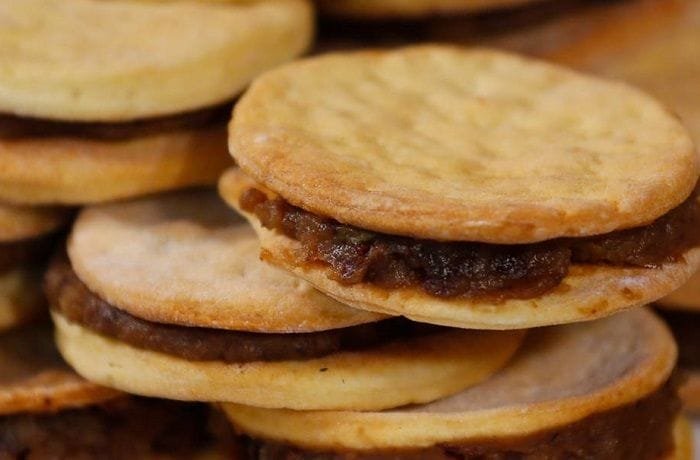
This recipe for Chilean chancaca alfajores won the 2016 “Tu receta, tu historia” competition organized by the Mercado de Providencia. It was submitted by Haydee Guzmán, then 93 years old, who learned it from her mother — a recipe with roots in the small town of Chahuilco, in Chile’s Lakes Region, going back more than 150 years.
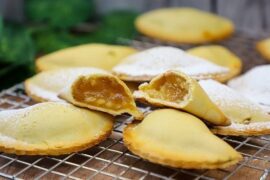
The alfajor is a classic sandwich cookie made of thin, crispy hojarasca wafers filled with a rich mixture of chancaca (raw cane sugar), walnuts, raisins, and orange juice. The 24-hour resting time after assembly is not optional — it is what transforms the cookie from crisp to perfectly tender.
Nutritional Information
Each serving of chancaca alfajores contains approximately 500 kcal, 75 g of carbohydrates, 20 g of fat, 10 g of protein, 4 g of fiber, 40 g of sugars, 180 mg of cholesterol, and 60 mg of sodium. Values are estimated and may vary depending on exact ingredient quantities and portions.
How to Make Chilean Chancaca Alfajores?
One of Chile’s most traditional sweets, chancaca alfajores are built around two components prepared separately: a thin, egg-rich hojarasca dough baked into crispy rounds, and a thick, aromatic chancaca filling cooked with orange, cloves, walnuts, and raisins. The two meet only at assembly.
Prep Time: 30 minutes
Cook Time: 30 minutes
Servings: 8 people
Ingredients
1. Alfajor Dough (Hojarasca)
- 600 g wheat flour
- 200 ml whole milk
- 16 eggs
- 4 tbsp lard (manteca)
- 4 tbsp chuño (potato starch)
- 4 tsp pisco
- Baking powder
2. Chancaca Filling
- 400 ml water
- 225 g chancaca (panela / piloncillo)
- 200 g walnuts, roughly chopped
- 100 g black raisins
- 100 g golden raisins
- 100 ml fresh orange juice
- 6 tbsp wheat flour
- 1 tsp whole cloves
- Orange peel (half an orange)
Equipment Needed
- Adjustable rolling pin (uslero)
- Round cookie cutter, 5–7 cm diameter
- Heavy-bottomed saucepan
- Greased baking sheet
Instructions
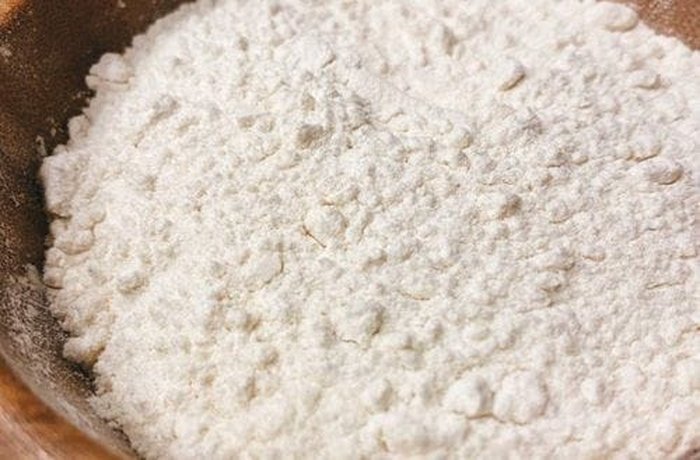
- In a large bowl, beat the eggs and add one cup of sifted flour, the chuño, milk, 2 teaspoons of baking powder, lard, and pisco. Work the mixture with your fingers until combined, then gradually incorporate the remaining flour until a firm dough forms that does not stick to your hands.
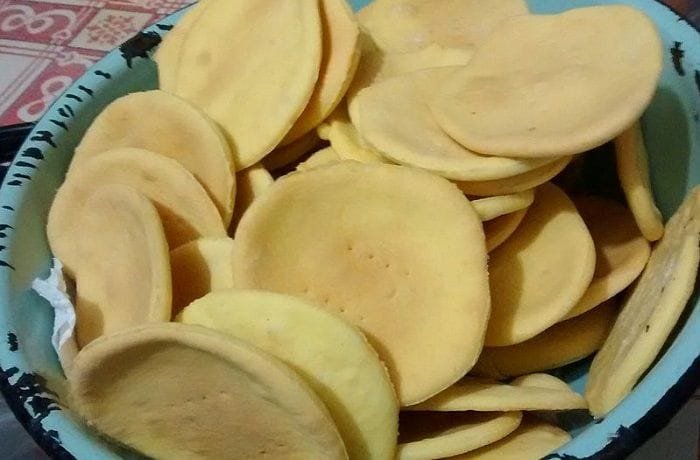
- Transfer the dough to a clean surface, finish kneading, and roll out with a rolling pin to a thickness of 2 to 3 millimeters. Cut rounds with the cookie cutter (5–7 cm in diameter). These rounds are the hojarascas.
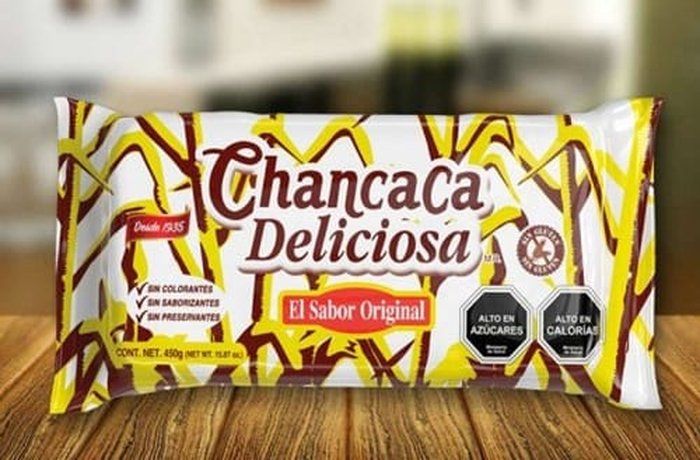
- Place the hojarasca rounds on a greased baking sheet and bake at 200°C (400°F) for 8 minutes, until lightly golden. Remove from the oven, cool completely, and set aside. Meanwhile, in a medium saucepan, dissolve the chancaca in the water, add the orange peel and whole cloves, and bring to a gentle boil over medium heat. Remove from heat and set aside.
- In a small saucepan, toast the flour over medium heat, stirring constantly, until it turns a light yellow color. Pour in the dissolved chancaca mixture and stir to combine. Add the orange juice, then cook over medium heat, stirring continuously, until the mixture thickens into a paste. Add the chopped walnuts and raisins, stir to incorporate, remove from heat, and leave to cool completely.
How to Assemble the Alfajores?
- Hold a hojarasca wafer between your fingertips, spoon a generous amount of the cooled chancaca filling onto the center, and press a second hojarasca on top to form the sandwich cookie. Do not press too hard — the filling will spread naturally as the alfajor rests. Once assembled, leave the alfajores to rest for at least 24 hours before serving.
- Serve the chancaca alfajores as a sweet snack, dessert, or afternoon treat alongside plain hojarascas. Store in an airtight container in a cool, dry place for up to 5 days.
Additional Tips
Resting Time Is Not Optional
The 24-hour rest after assembly is essential to the final texture. During this time, the moisture from the chancaca filling slowly penetrates the hojarasca, transforming it from crispy to the soft, yielding texture that defines a properly made alfajor. Cutting this time short will result in a dry, crumbly cookie.
Getting the Dough Right
The dough should be firm but pliable — not sticky, not crumbly. If it tears when rolled, add a teaspoon of milk and knead briefly. The pisco and chuño are what give the hojarasca its characteristic lightness; do not substitute both at once, as the texture depends on their combined effect.
Ingredient Substitutions
| Original Ingredient | Substitution |
|---|---|
| Lard (manteca) | Vegetable shortening or unsalted butter |
| Chuño (potato starch) | Cornstarch (same quantity) |
| Chancaca (panela) | Piloncillo, jaggery, or dark brown sugar |
| Pisco | White rum or brandy (same quantity) |
Frequently Asked Questions (FAQs)
How long do chancaca alfajores stay fresh?
They keep well for up to 5 days stored in an airtight container in a cool, dry place. Resting for at least 24 hours after assembly actually improves the texture, as the filling slowly moistens the hojarasca wafers.
What do chuño and pisco do in the dough?
Chuño (potato starch) makes the hojarasca dough softer, lighter, and crispier. Pisco acts as a gluten inhibitor — it limits gluten development so the baked wafer stays tender and delicate rather than tough or chewy.
How do I know when the chancaca filling is ready?
The filling is ready when it reaches a thick, paste-like consistency that holds its shape once cooled. The test: drag a spoon across the bottom of the pot — if the mixture stays separated for a couple of seconds before closing back in, it is done.
Can I substitute the lard in the dough?
Yes. Vegetable shortening or unsalted butter both work as substitutes. Butter will produce a hojarasca with a slightly more pronounced dairy flavor, but the texture difference is minor.
Can I make a gluten-free or egg-free version?
For egg-free alfajores, substitute each egg with hydrated ground flaxseed (1 tbsp flax + 3 tbsp water, rested 5 minutes) or unsweetened apple purée. For gluten-free, replace the wheat flour with a blend of rice flour and cornstarch, though the dough consistency will need adjustment.
Did You Know?
The word chancaca comes from the Nahuatl chiancaca, meaning “brown sugar,” or from the Quechua chamq’ay, meaning “to grind” or “to crush.” Across Latin America, the same ingredient is sold under more than a dozen names: panela, rapadura, piloncillo, papelón, raspadura, atado de dulce, and others — each a regional variation of the same ancient raw cane sugar produced by boiling and molding fresh cane juice without further refining.