
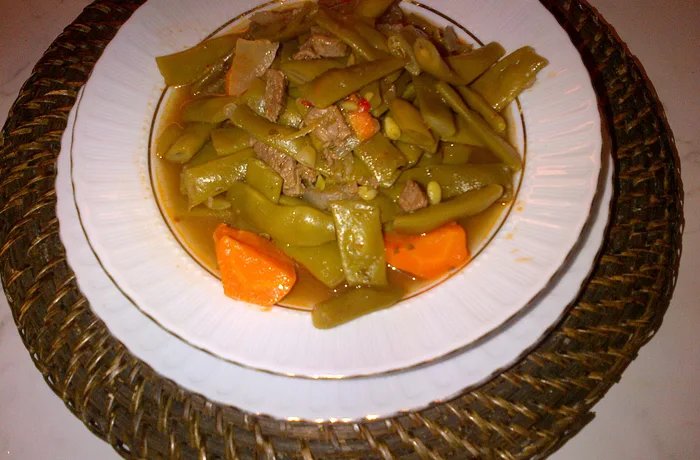
Chilean green bean stew, or guiso de porotos verdes, is a country dish of sliced green beans cooked with potatoes, onion, carrot and ají de color (Chilean sweet paprika), then bound at the end with beaten egg. It takes 20 minutes of prep and 35 minutes on the stove, and it makes an inexpensive summer lunch for 4.
What sets it apart is its moist, thick texture, somewhere between a charquicán (a mashed vegetable and meat hash) and a cazuela without the broth. It is served hot in deep bowls, often with Chilean tomato salad and pan amasado, a dense homemade bread.
How to Make Green Bean and Potato Stew with Egg?
This is a sofrito stew with a short cooking time. First the onion is softened with carrot, garlic and ají de color to give the base flavor and color. Then the potatoes simmer in a little broth, and the green beans go in with the corn, since they need less time. The beaten egg is stirred in at the end and thickens the stew without overcooking.
Nutritional Information
Each serving of Chilean green bean stew (one 400 g serving) contains approximately 300 kcal, 13 g of protein, 12 g of total fat (2.5 g of saturated fat), 185 mg of cholesterol, 36 g of carbohydrates, 7 g of sugars and 450 mg of sodium. These values are estimates and may vary depending on ingredients and portion sizes.
Homemade Green Bean and Potato Stew with Egg Recipe
Preparation: 20 minutes
Cooking: 35 minutes
Servings: 4 servings
Ingredients
- 600 g (1.3 lb) green beans
- 3 medium potatoes, diced
- 1 large onion, diced
- 1 carrot, peeled and diced
- 2 garlic cloves, minced
- 1 teaspoon ají de color (Chilean sweet paprika)
- 1/2 teaspoon ground cumin
- 1/2 teaspoon dried oregano
- 1 cup corn kernels (150 g)
- 2 cups (500 ml) vegetable broth
- 2 tablespoons oil
- 4 eggs
- Fine salt
- Black pepper
- 1 tablespoon chopped parsley

Instructions
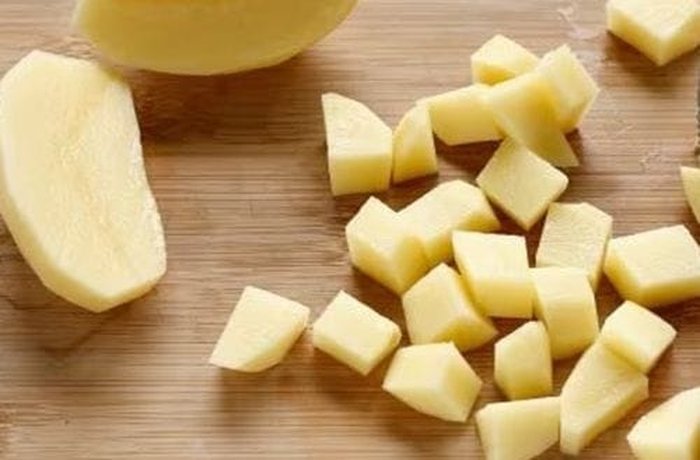
- Wash the green beans, trim the ends and pull off the side string if they have one. Cut them into thin lengthwise strips, on the diagonal or into 3 cm (1 1/4 inch) pieces, whichever way your household prefers. Peel the potatoes, cut them into 2 cm (3/4 inch) cubes and keep them in cold water so they do not darken while you make the sofrito.

- Heat the oil in a pot over medium heat and cook the onion and carrot for 6 to 8 minutes, until the onion is translucent. Add the garlic, ají de color, cumin and oregano and stir for 1 minute without letting them burn, because ají de color turns bitter over high heat.
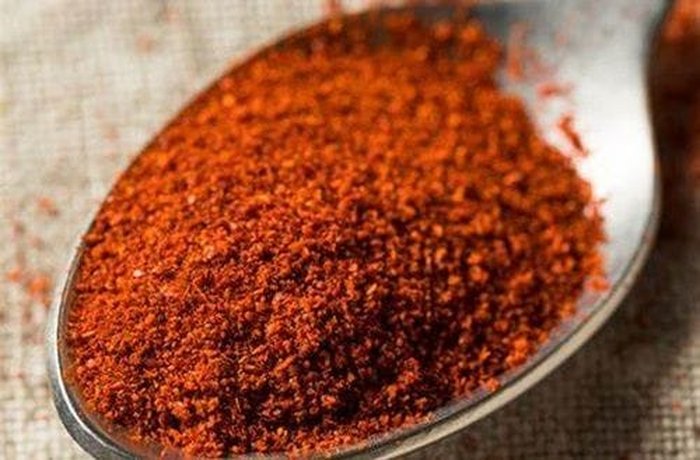
- Drain the potatoes and add them to the pot with the hot vegetable broth, season with salt and pepper and bring to a boil. Cover and cook over medium low heat for 10 minutes, until the potatoes are soft outside but still firm in the center. The liquid should come only about halfway up the ingredients.
- Add the green beans and corn, stir, cover and cook for 12 to 15 minutes more, until the beans are tender but still bright green. Stir now and then so nothing sticks to the bottom. If the stew gets too dry, add a little hot water.

- Beat the eggs in a bowl with a pinch of salt. Turn the heat down to the lowest setting, pour the eggs over the stew and stir gently for 2 to 3 minutes, until they set into strands and thicken the juices. Taste for salt, sprinkle with the chopped parsley and serve right away in deep bowls.
Additional Tips
How do you pick good green beans?
The best green beans for stew have firm pods, an even green color and snap cleanly when you bend them. If they bend without breaking or have brown spots, they are old and will turn out stringy. In summer they are cheap at farmers markets. Out of season, frozen beans work fine; add them straight to the pot and give them a few minutes less.
Beaten egg or whole eggs on top
The most common method is to beat the eggs and stir them into the stew so they bind the juices. Another country option is to make four hollows in the surface, crack an egg into each, cover the pot and cook over low heat for about 5 minutes, until the whites set and the yolks stay soft. That way every plate gets a whole egg, as with charquicán topped with a fried egg.
For a heartier version
This stew takes whatever extras you have on hand. A piece of winter squash, diced and added with the potatoes, brings sweetness and more body, and 200 g (7 oz) of sliced longaniza (a Chilean pork sausage), browned before the sofrito, adds fat and a smoky flavor. For a tastier base than water, use homemade vegetable broth made ahead and kept in the fridge.
These are common ways to adapt the base recipe with seasonal ingredients.
| Variation | What is added or changed | When to add it |
|---|---|---|
| With beaten egg | 4 beaten eggs that bind the juices | At the end, over the lowest heat |
| With whole eggs | 4 whole eggs cracked over the surface | At the end, pot covered for 5 minutes |
| With squash | 300 g (10 oz) diced winter squash | Together with the potatoes |
| With longaniza | 200 g (7 oz) sliced longaniza sausage | Browned before the sofrito |
| Without egg | Leave out the egg and add more corn | Together with the green beans |
Frequently Asked Questions (FAQs)
1. What goes into Chilean green bean stew?
The traditional recipe uses sliced green beans, potatoes, onion, carrot, garlic, ají de color, cumin and oregano, cooked in a little broth or water. Egg is added at the end, either beaten or whole. Corn kernels are a frequent addition in summer.
2. How long do green beans take to cook in the stew?
Cut into strips or 3 cm (1 1/4 inch) pieces, the green beans become tender in 12 to 15 minutes with the pot covered. If they cook too long they lose their green color and get too soft, which is why they go in after the potatoes have cooked for 10 minutes.
3. Can you make this stew with frozen green beans?
Yes. Frozen green beans go straight into the pot without thawing and need about 8 to 10 minutes of cooking, a little less than fresh ones. Check the salt, because some frozen products are blanched in salted water before freezing.
4. What is the difference between guiso de porotos verdes and porotos quebrados?
Porotos quebrados are prepared as a warm salad, with cooked green beans dressed with onion and oil, no potatoes or egg. Guiso de porotos verdes is a main course cooked in a pot with potatoes, sofrito and egg, and it is served as a complete lunch.
What Is Green Bean and Potato Stew with Egg?
Guiso de porotos verdes is a Chilean country stew made with green beans, potatoes and a sofrito of onion, carrot, garlic and ají de color, finished with egg that sets into strands and thickens the juices. It is a one pot summer dish from central Chile, made with whatever the garden offers, and it can take corn, winter squash or a piece of longaniza sausage. It is served hot as a full lunch.
History of Green Bean and Potato Stew with Egg in Chile
The bean is a legume native to the Americas that was grown in what is now Chile before the Spanish arrived. Green beans are the tender pods of the same plant, harvested before the seed matures.
In the country cooking of central Chile they became a summer ingredient for one pot stews made with potatoes, sofrito and egg, an inexpensive formula that follows the same logic as charquicán and other Chilean stews.
Did You Know?
Green beans, fresh shelling beans (porotos granados) and dried beans can all come from the same species, Phaseolus vulgaris. The difference is when they are harvested. Green beans are picked while the pod is tender, shelling beans when the seed is formed but still fresh, and dried beans when the plant finishes its cycle and the seed dries out.
How to adapt this recipe to a vegan or vegetarian version?
How to adapt this recipe to a gluten-free version?
How to adapt this recipe to a keto (ketogenic) version?
Recommended
- Authentic Chilean charquicán, a hearty vegetable and beef hash
- Chilean zucchini stew, another budget friendly one pot meal
- Porotos granados with pilco, a Chilean summer bean classic
- Chilean green bean omelette made with the same fresh beans