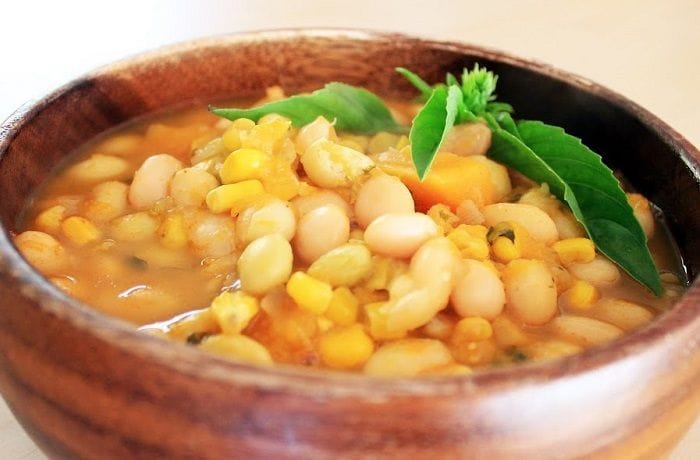
Porotos Granados with Pilco is a hearty Chilean bean stew combining fresh white beans, shelled corn, and pumpkin in a single pot — ready in 90 minutes. Rooted in Mapuche culinary tradition since at least 1550, this summer staple delivers around 400 calories per serving, making it a complete and satisfying meal on its own.
How to Make Porotos Granados with Pilco?
Porotos Granados with Pilco is one of Chile’s oldest preparations, consumed traditionally during summer when fresh beans and corn are in season. The key to its deep flavor lies in building a sofrito base with onion, garlic, and tomato before adding the legumes, which slowly absorb the broth and release their natural starch to thicken the stew.
Nutritional Information
Each serving of Porotos Granados with Pilco contains approximately 400 calories, 60 g of carbohydrates, 8 g of fats, 18 g of protein, 10 g of fiber, and 800 mg of sodium.
Homemade Porotos Granados with Pilco Recipe
Ingredients
- 700 g of white beans
- 350 g of shelled corn
- 250 g of pumpkin, chopped
- 150 g of green beans, chopped
- 1 clove of garlic, chopped
- 1 cup of finely chopped tomato
- 1 beef broth cube
- 2 leaves of chopped basil
- 2 tablespoons of oil
- 2 teaspoons of salt
- ½ onion, chopped
- ½ teaspoon of ground red chili
- Pepper
- Cumin
Instructions
- In a large pot, pour the oil and heat over medium heat, add the onion, garlic, and sauté for about 5 minutes, incorporate the chopped tomato, ground red chili and continue cooking for another minute.
- Dissolve the beef broth cube in 400 ml of hot water and add to the pot, fill with 1½ liters of water, add the washed Porotos Granados and salt, cover the pot and bring to a boil, then reduce the heat to low and cook for 40 minutes.
- Add the chopped pumpkin, green beans, basil, pepper, and cumin to taste, cover again and cook for another 20 minutes, add the shelled corn and cook for 20 minutes or until everything is well cooked.
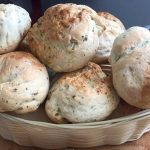
- Serve the Porotos with Pilco immediately in a deep clay dish, piping hot, accompanied by kneaded bread.
Additional Tips
Use fresh beans when in season — dried beans change the texture
The authentic pilco uses fresh shelled white beans, available in Chile from December through March. If using dried beans, soak them overnight and increase the cooking time to at least 60 minutes before adding the other vegetables. The texture and creaminess of the stew will differ significantly from the fresh version.
Build the sofrito slowly — it defines the flavor base
The onion, garlic, and tomato sofrito is not a formality — it is the backbone of the dish. Cook it over medium-low heat until the tomato breaks down completely and the oil turns reddish, about 6 to 8 minutes. Rushing this step produces a bland stew regardless of how long the beans cook.
Control the consistency by mashing a few beans
For a thicker, creamier pilco, press a wooden spoon against the side of the pot during the last 10 minutes of cooking to lightly mash some beans into the broth. This is the traditional way to achieve the characteristic dense texture without adding cornstarch or flour.
| Ingredient | Substitution and result |
|---|---|
| White beans | Cranberry beans or borlotti — similar starch content and texture; use same quantity |
| Fresh corn | Frozen corn kernels — add in the last 10 minutes only to avoid overcooking |
| Pumpkin | Butternut squash or kabocha — use equal weight; kabocha is firmer and holds its shape better |
| Beef broth cube | Vegetable broth cube — makes the dish fully vegetarian with minimal flavor change |
Frequently Asked Questions (FAQs)
1. What is the difference between Porotos Granados and Porotos con Pilco?
Porotos Granados refers to the fresh shelled white beans used in the dish. Pilco is the specific Mapuche preparation that combines those beans with corn and pumpkin in a stew. The full name — Porotos Granados con Pilco — describes both the main ingredient and the preparation method. In everyday Chilean speech, the two terms are often used interchangeably.
2. Can I use canned beans instead of fresh?
Yes, but add them at the very end — during the last 10 minutes of cooking — since they are already fully cooked. Do not simmer canned beans for 40 minutes or they will turn mushy and dissolve into the broth, losing the texture that defines the dish.
3. Why is Porotos Granados traditionally eaten in summer?
Because the recipe depends on fresh seasonal ingredients: white beans are harvested from December to March in Chile, and corn reaches peak sweetness in January and February. Outside of those months, the dish was historically unavailable, which is why it remains strongly associated with Chilean summer cooking.
4. Can I make this dish vegetarian or vegan?
Yes. Replace the beef broth cube with a vegetable broth cube — the rest of the ingredients are already plant-based. The flavor profile changes slightly since the beef broth adds depth, but a good vegetable broth with a pinch of smoked paprika produces an excellent result.
What Is Porotos Granados with Pilco?
Pilco is by definition a preparation of beans, shelled corn, and pumpkin that derives from the Mapudungun word “pidco,” which phonetically evolved to “pilco,” one of the iconic dishes of Chilean gastronomy of Mapuche origin.
History of Porotos Granados with Pilco in Chile
Porotos Granados with Pilco is one of the oldest documented dishes in Chilean culinary history, predating the Spanish conquest. The combination of beans, corn, and pumpkin — known in Mesoamerican cultures as the “Three Sisters” — was a staple of Mapuche agriculture and cooking long before Europeans arrived in the Americas. When Pedro de Valdivia wrote to the King of Spain in 1550, he described this very preparation with admiration, noting how the indigenous population cultivated and consumed it throughout the summer months. Over the following centuries, the dish was adopted across Chilean social classes and became one of the defining flavors of Chilean summer cuisine. Today it is considered a symbol of traditional Chilean home cooking and appears on the menu of both rural households and restaurants celebrating local heritage.
Did You Know?
The earliest records of Porotos with Pilco date back to 1550, when Pedro de Valdivia mentions in a letter sent to the king of Spain, the wonders of a typical Mapuche dish that contained maize (corn), beans (porotos), and pumpkin.