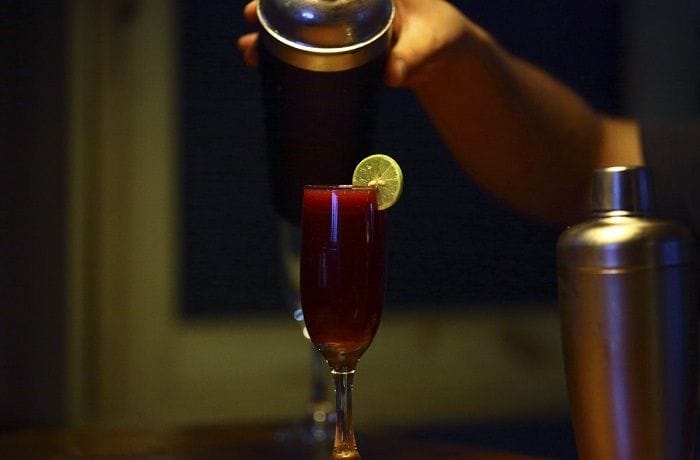
Calafate sour is considered one of the best-kept secrets of the Austral Road, and it’s a chilean cocktail originally created by the Magellan writer and bartender René Andrades.
How to Make a Calafate Sour Cocktail?
Here we share two variations of this preparation, one made with calafate liqueur and another made with pisco and calafate syrup, two classic examples of the multiple variety of products made with this traditional fruit from southern Chile.
Nutritional Facts
Each serving of homemade calafate sour contains approximately 75 kcal, 12 g of carbohydrates, 0 g of fats, 0 g of proteins, 0 g of fiber, 12 g of sugars, and 2 mg of sodium.
Homemade Calafate Sour Recipe
Prep Time: 5 minutes
Calories: 300 kcal
Servings: 4 people
Ingredients
- 600 ml of calafate liqueur
- 200 ml of natural lemon juice
- 1 egg white (optional)
- Pica lemon slices
- Calafate berries
- Ice

Preparation Steps
- In a blender, add the calafate liqueur, lemon juice, egg white, and about 4 ice cubes, and blend at medium speed for about 20 seconds until everything is integrated and a light foam crown is formed.
- Serve the calafate sour immediately in tall glasses, optionally decorated with a slice of lemon and/or fresh calafate berries.
Calafate Sour Recipe with Pisco
Ingredients
- 300 ml of 35° Chilean pisco
- 150 ml of calafate syrup
- 100 ml of lemon juice
- 2 tablespoons of powdered sugar
- 1 egg white
- Laminated Pica lemon
- Fresh calafate berries
- Ice cubes
Preparation Steps
- In a blender, add the Chilean pisco, calafate syrup, lemon juice, egg white, powdered sugar, and about 6 ice cubes, and blend everything at medium speed for about 20 seconds to integrate.
- Serve the calafate sour with pisco immediately, very fresh, optionally decorated with a slice of lemon and whole calafate berries.
Benefits of Calafate
Calafate is considered a superfood as it’s one of the highest sources of antioxidants on the planet, helping our bodies protect against cellular aging.