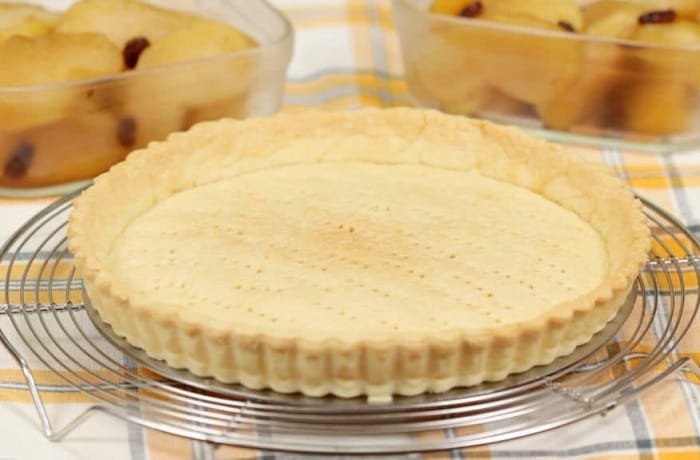
Masa 123, also known as masa murbe, is a foundational Chilean pastry dough used to make tarts, pies, and cookies, named for the ratio of its ingredients, one part sugar, two parts butter, and three parts flour. It takes about 40 minutes total (20 minutes prep plus chilling and baking) and serves four.
The dough is simple to work with: it needs no lengthy kneading, since developing elasticity is exactly what you want to avoid, just a mandatory rest in the refrigerator to stabilize the fat before rolling and baking it into a crumbly, melt-in-your-mouth crust.
How to Make Chilean Masa 123 (Murbe Dough)?
To prepare masa 123 or masa murbe, you only need three main ingredients in simple proportions, giving you a base dough you can use in countless preparations, optionally adding vanilla, lemon zest, or cocoa powder.
Nutritional Information
Each serving of masa 123 contains approximately 800 kcal, 6 g of protein, 52 g of total fat (33 g of saturated fat), 130 mg of cholesterol, 75 g of carbohydrates, 25 g of total sugars, and 400 mg of sodium. (*) Values may vary depending on the ingredients and portion sizes used.
Homemade Chilean Masa 123 Recipe
Preparation: 20 minutes
Chilling and baking: 20 minutes
Servings: 4 people
Ingredients
- 300 g (10.5 oz) all-purpose flour
- 200 g (7 oz) butter
- 100 g (3.5 oz) sugar
Instructions
- In a large bowl, combine the sugar and butter and mix until you get a smooth, creamy dough. Add the previously sifted flour and mix by hand until you get a uniform dough, optionally using an electric mixer with a paddle attachment.
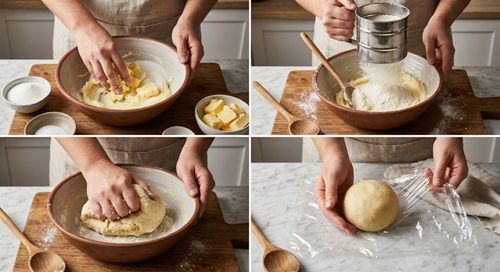
- Shape it into a ball, wrap in plastic wrap, and refrigerate for at least 30 minutes so the dough firms up slightly and becomes easier to handle. Use the dough in your chosen recipe, following the specific baking shape and temperature instructions for each preparation.
1, 2, 3 Cookies
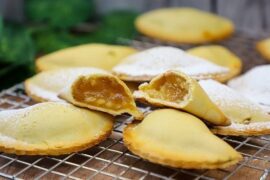
One of the simplest preparations with masa 123 is the well-known 1, 2, 3 cookies, made by taking small portions of dough, rolling them into balls, flattening them with your hands, and baking them on a sheet pan at 180°C (356°F) for about 15 minutes, then coating them in a mixture of sugar and cinnamon.
Additional Tips
Use the Rubbing-In Technique
To make sure the dough keeps its crumbly texture, incorporate the flour using the rubbing-in technique with your fingertips or a pastry cutter, avoiding rubbing it between your palms.
Roll from Center to Edges
When rolling out the dough with a rolling pin, move from the center toward the edges, turning the piece a quarter turn regularly to keep it from sticking to the counter.
Add Flavor Without Breaking the Ratio
Vanilla extract, lemon zest, or cocoa powder can be added to flavor the base dough without significantly affecting its texture, since they don’t change the core sugar-butter-flour ratio.
| Original Ingredient | Substitute | Notes |
|---|---|---|
| Butter | Margarine | Usually has more water, which can toughen the dough |
| Butter | Lard or vegetable shortening | Paler, less flavorful, but very tender result |
| All-purpose flour | Gluten-free flour blend | Texture will be more delicate, handle the dough gently |
| Sugar | Powdered sugar | Gives an even more tender, finer crumb |
Frequently Asked Questions (FAQs)
1. Why is it essential to refrigerate the dough?
Refrigeration serves three functions: hardening the butter, relaxing the gluten, and stabilizing the structure, preventing the fat from melting and the dough from shrinking excessively during baking.
2. Can I substitute butter for margarine or lard?
Yes, but the flavor and texture will change. Butter gives the best flavor. Margarine can work, but it usually has more water, which could make the dough tougher. Lard or vegetable shortening will give a paler, less flavorful but very tender dough. The key is using a solid, cold fat.
3. What do I do if my dough crumbles when rolling it out?
This means it’s too cold or lacks a bit of binding. Knead it gently for a few seconds or let it sit at room temperature for 5 minutes. If it still crumbles, add a teaspoon of ice water or an egg yolk (breaking the 1:2:3 ratio) to help bind the mixture without developing too much gluten.
4. Can masa 123 be frozen?
Yes. Once shaped into a ball and wrapped in plastic wrap, you can freeze it for up to 3 months. To use it, thaw it overnight in the refrigerator and let it sit at room temperature for 10 minutes before rolling it out.
What Is Masa 123?
Masa 123 is a simple shortcrust pastry dough made from one part sugar, two parts butter, and three parts flour, used as the base for tarts, pies, and cookies across Chilean and Central European baking.
History of Masa 123 in Chile
Masa 123 is the technical and linguistic adaptation of the traditional German Mürbeteig, a word that translates literally as “tender dough” or “shortcrust dough.” This Central European formula, essential to classic German, Austrian, and Swiss pastry-making, took hold in southern Chile during the 19th century with the arrival of German settlers in the provinces of Valdivia, Osorno, and Llanquihue.
Did You Know?
The name murbe comes from the German Mürbeteig, which translates as “tender dough” or “shortcrust dough.” This dough is essential in German, Austrian, and Swiss pastry-making, forming the base of countless cakes and Christmas cookies.