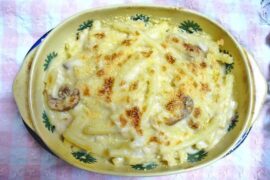
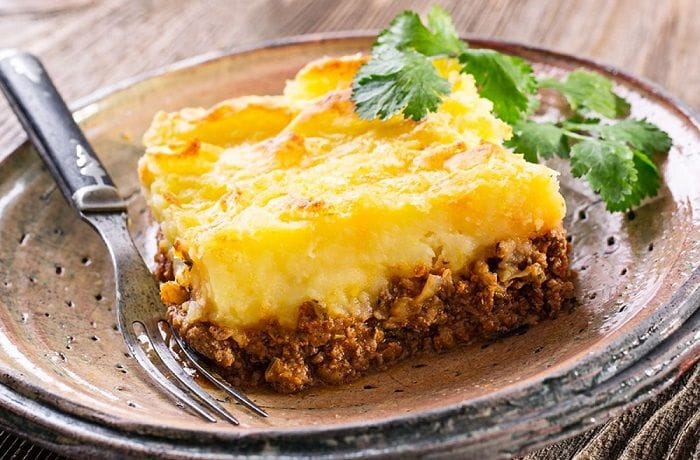
Potato pie is one of Chile’s most classic comfort dishes — a savory baked casserole of seasoned minced meat, olives, hard-boiled eggs, and chicken, topped with a layer of creamy mashed potatoes and cheese. Ready in 2.5 hours, each serving provides approximately 400 calories.
Especially popular in winter when the body craves something filling and warming, this recipe is equally welcome in any season.
How to Make Homemade Potato Pie?
The key to a great potato pie is preparing the filling in advance and letting it rest in the refrigerator for at least a couple of hours — this step integrates the flavors and makes the final result noticeably richer. The mashed potato topping should be thick enough to hold its shape when spread over the filling.
Nutritional Information
Each serving of Chilean potato pie contains approximately 400 calories, 42 g of carbohydrates, 18 g of fats, 22 g of proteins, 4 g of fiber, 8 g of sugars, and 580 mg of sodium.
Homemade Potato Pie Recipe
Prep Time: 60 minutes
Cook Time: 90 minutes
Servings: 6
Ingredients
Meat filling
- 400 g minced or ground meat
- 100 ml beef broth
- 10 black olives
- 4 small pieces of cooked chicken
- 2 hard-boiled eggs
- 1 onion
- 1 garlic clove
- ½ cup yellow raisins (optional)
Mashed potatoes
- 10 large potatoes
- 200 ml milk
- 100 g grated cheese
- 4 tablespoons sugar
- 2 tablespoons butter
- Complete seasoning
- Salt
- Pepper
Instructions
Meat filling
- Sauté the minced meat over medium heat in a pan with a little oil. Add finely chopped onion and stir. Add minced garlic, season with salt, pepper, and complete seasoning to taste, and stir until well combined.
- Add the beef broth and optionally the raisins, reduce the heat, and cook for about 10 minutes. Cool to room temperature, then cover with plastic wrap and refrigerate for at least 2 hours to integrate the flavors. Set aside.
Mashed potatoes
- Wash, peel, and cut the potatoes into medium-sized cubes. Cook in a large pot covered with cold salted water. Boil for 10 to 15 minutes until tender, then remove from heat and drain.
- Mash the potatoes in the same pot or a large bowl using a manual whisk or potato masher. Add milk, butter, and salt to taste. Stir until smooth and set aside.
Assembling and baking
- Distribute the meat filling in a large ovenproof dish or individual molds. Add a piece of cooked chicken to each portion along with two olives and half a hard-boiled egg.
- Spread the mashed potatoes evenly over the filling to form a smooth top layer. Sprinkle grated cheese over the surface.
- Bake in a preheated oven at 180°C (356°F) for about 15 minutes or until the potato topping is golden. Serve immediately with Chilean salad.
Additional Tips
Refrigerate the filling before assembling for deeper flavor
Resting the cooked meat filling in the refrigerator for at least 2 hours — or overnight — allows the broth, spices, and aromatics to fully integrate. The difference in flavor between a freshly made filling and a rested one is significant. If time is short, at least 30 minutes of refrigerator rest is better than none.
Add Parmesan to the mashed potatoes for a firmer, crunchier crust
Mixing 2 to 3 tablespoons of grated Parmesan directly into the mashed potato layer gives it more structure and produces a crispier top once baked. This also adds a more intense savory flavor to the topping, which balances the sweetness of the sugar in the mash.
Use equal depth of filling and mashed potato for the right balance
A common mistake is too much mashed potato relative to filling. Aim for roughly equal depth of each layer — about 3 to 4 cm of filling and 3 to 4 cm of mashed potatoes. This ensures every bite contains both components and prevents the dish from tasting starchy.
| Ingredient | Substitution and result |
|---|---|
| Minced beef | Mixed pork and beef — more fat, deeper flavor; same cooking time |
| Cooked chicken pieces | Omit or replace with extra ground meat — simplifies the filling without losing substance |
| Yellow raisins | Dried cranberries — slightly more tart; use the same quantity |
| Black olives | Green olives — sharper and more saline flavor, equally traditional |
| Grated cheese topping | Parmesan — gives a firmer, crunchier crust than standard grating cheese |
Frequently Asked Questions (FAQs)
1. Can I prepare the potato pie ahead of time?
Yes. Assemble the pie completely — filling, mashed potato layer, and cheese — then cover and refrigerate for up to 24 hours before baking. When ready, bake at 180°C for 20 to 25 minutes (5 to 10 minutes longer than usual to account for the cold start).
2. Can I make a vegetarian version?
Yes. Replace the minced meat with textured soy (hydrated and seasoned), lentils, or a combination of lentils and chopped mushrooms. Keep the olives, eggs, and raisins — they provide flavor complexity and color to the filling even without meat.
3. Why does the mashed potato recipe include sugar?
Adding a small amount of sugar to the mashed potato topping is traditional in the Chilean version of this dish. It creates a lightly sweet crust when baked and balances the saltiness of the filling and cheese. You can reduce or omit it according to your preference.
4. Can I freeze potato pie?
Yes. Let it cool completely, portion into individual servings, and freeze in airtight containers for up to 2 months. Thaw overnight in the refrigerator and reheat in the oven at 170°C (338°F) for 15 to 20 minutes covered with foil, removing it for the last 5 minutes to re-crisp the top.
What Does “Pastel de Papa” Mean?
Pastel de papa translates literally to “potato pie” or “potato cake” in Spanish. In Chilean cooking, the word pastel refers to a baked savory casserole assembled in layers — the same logic applies to pastel de choclo, where corn replaces the potato topping. The potato layer acts simultaneously as a lid for the filling and as a main component of the dish.
History of Potato Pie in Chile
Chilean potato pie evolved from the Spanish colonial tradition of pasteles — baked savory pies that combined European techniques with local ingredients. The combination of minced meat, olives, raisins, and hard-boiled eggs reflects the Spanish-Moorish culinary influence brought to Chile in the 16th and 17th centuries. As potatoes became a staple crop in the central valley, they replaced bread-based toppings and gave the dish its modern form. Today, pastel de papa is one of the most iconic Chilean winter dishes, alongside pastel de choclo.
Did you know?
For a vegetarian version, the meat can be replaced with textured soy, lentils, or mushrooms. Potato pie also reheats exceptionally well — many Chileans consider leftover pastel de papa eaten the next day to taste better than when freshly made, as the flavors continue to integrate overnight.
How to adapt this recipe to a vegan or vegetarian version?
How to adapt this recipe to a gluten-free version?
How to adapt this recipe to a keto (ketogenic) version?
Recommended
- Grilled anticuchos recipe
- Chilean chicken feet broth
- Chilean black garlic recipe
- Chilean fried fish sandwich