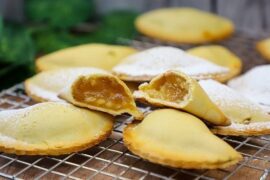

Blueberry kuchen is one of the most popular recipes during the season in Chile. Fresh, flavorful, and often generously sized, blueberries have undoubtedly become one of the favorite fruits throughout the country.
Nutrition Facts
Each serving of Chilean Blueberry Kuchen contains approximately 480 kcal, 8 g of protein, 22 g of fat, 65 g of carbohydrates, 110 mg of cholesterol, and 180 mg of sodium.
(*) Estimated values based on the provided ingredients; actual values may vary depending on portion size.
How to Make Blueberry Kuchen?
Kuchen is typically a versatile base recipe that can be paired with various ingredients. One of its most popular versions features blueberries—delicious and nutritious.
Preparation: 20 minutes
Cooking: 20 minutes
Servings: 6 people
Ingredients
- 600 g condensed milk
- 300 g fresh blueberries
- 300 g all-purpose flour
- 200 g butter
- 100 g powdered sugar
- 3 eggs

Instructions
- In a large bowl, combine sifted flour, powdered sugar, and butter. Mix with a wooden spoon until you get a sandy texture. Add one egg and stir until fully integrated without kneading. Roll out the dough and distribute it over the surface of a greased kuchen mold, stretching it gently.

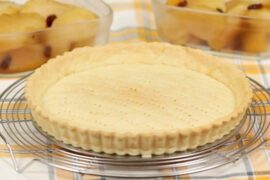
- Seal any possible cracks with your fingers, cover with plastic wrap, and refrigerate for 30 minutes. Preheat the oven to 200°C (396°F) for at least 10 minutes. Bake the kuchen dough for 10 minutes. Remove and set aside.
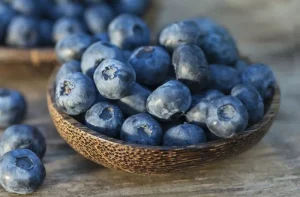
- Thoroughly wash the blueberries, removing any dirt or damaged fruits. Reserve them in a bowl and add condensed milk and 2 beaten egg yolks. Mix gently and pour over the pre-cooked dough in the mold. Return it to the oven and bake until the surface begins to caramelize. Remove and cool to room temperature.
Technical Keys for a Perfect Kuchen
- The “Sandy” Texture: When mixing the flour, sugar, and butter, aim for a sandy consistency before adding the egg. This technique, known as sablage, ensures the crust remains light and crumbly rather than tough.
- Avoid Over-kneading: Once the egg is added, stir only until the dough comes together. Kneading develops gluten, which would make the base hard and bread-like instead of a delicate shortcrust.
- Blind Baking (Pre-cooking): Pre-baking the dough for 10 minutes at 200°C is crucial. This creates a barrier that prevents the creamy filling from making the base soggy.
- Surface Caramelization: The second bake should last until the surface begins to brown. This caramelizes the sugars in the condensed milk, adding a deep, toffee-like note to the blueberry flavor.
Frequently Asked Questions (FAQ)
1. Can I use frozen blueberries?
Yes, but do not thaw them first. Toss the frozen berries in a tablespoon of flour before mixing them with the condensed milk to prevent the juices from bleeding too much into the filling.
2. Why do I need to refrigerate the dough?
Chilling the dough for 30 minutes allows the butter to firm up and the gluten to relax. This prevents the crust from shrinking down the sides of the mold during the initial bake.
3. What is the difference between a Kuchen and a Pie?
Technically, a Chilean kuchen (from the German word for cake) often features a more substantial, biscuit-like base and a creamy or fruit-heavy topping, whereas traditional pies often have a thinner crust and more liquid fillings.
4. How do I prevent cracks in the crust?
If cracks appear when rolling out the dough, use your fingers to seal them gently once the dough is in the mold. The high butter content allows you to “patch” the dough easily.
5. How should I store the kuchen?
Because of the condensed milk and eggs, it should be kept in the refrigerator once cooled. It is even better the next day after the flavors have fully set.
Benefits of Consuming Blueberries
- Blueberries are small berries rich in antioxidants, vitamins, and essential minerals. They offer benefits ranging from improving the immune system to reducing the risk of certain types of cancer.
- Antioxidants help combat harmful free radicals in our bodies, preventing many chronic and debilitating conditions such as Alzheimer’s or rheumatoid arthritis.

Did You Know?
In Chile, almost 100,000 tons of fresh blueberries are produced each year, with around one-third destined for export. Chile ranks first globally in blueberry production, with the Maule region being the country’s largest producer, accounting for 30.6% of the total national production.