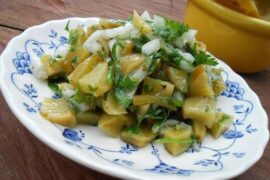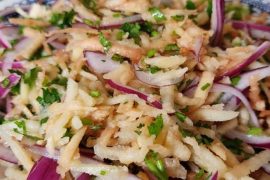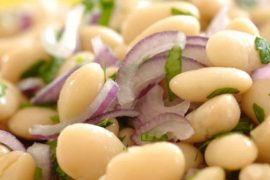
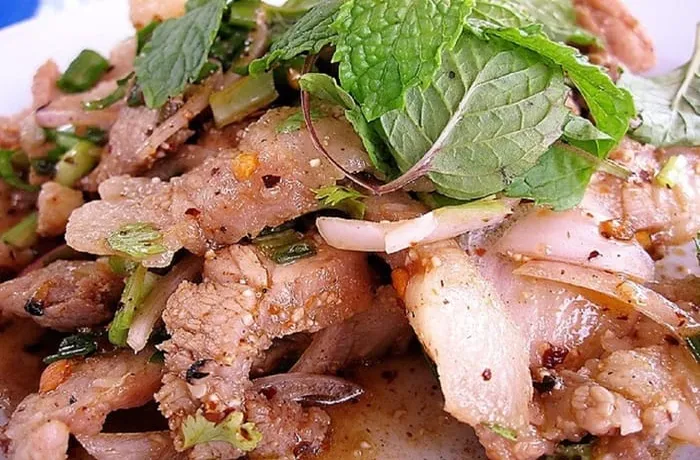
Chilean campesino pork causeo is a traditional cold salad made from slow-cooked pork offal — liver, trotters, tongue, and heart — diced and dressed with fresh onion, tomato, cilantro, lemon juice, and a touch of ají. It is served cold as an appetizer or between-meal snack, accompanied by pan amasado or pan de campo.
The dish takes two hours of unattended boiling followed by 30 minutes of preparation. Each cut of offal cooks at a different rate: the liver and heart come out at 30 minutes, the tongue shortly after, and the trotters last at the full two hours. The result is a textured, protein-rich salad with earthy, mineral depth from the offal balanced by the acidity of fresh lemon.
How to Make Chilean Campesino Pork Causeo?
The key to a well-balanced causeo is the blanching step before the main cook. A 2 to 3 minute boil in acidulated water — with a splash of vinegar or lemon juice — removes surface impurities from the offal and neutralizes the strong aroma without affecting the final flavor. Skip this step and the finished dish carries a pronounced gaminess that dominates the fresh herbs.
Remove each cut of offal as it becomes tender and let it cool completely before dicing. Hot offal cut into cubes releases steam that wilts the fresh onion and cilantro added at the end, softening the contrast that defines the dish.
Nutritional Information
Per serving (approximately 300 g): 380 kcal, 30 g protein, 18 g total fat, 25 g carbohydrates, 5 g fiber, 3 g sugars, 380 mg cholesterol, 700 mg sodium. Pork offal is an excellent source of iron, zinc, vitamin B12, and collagen. Note: this dish is high in saturated fat and sodium — portion size matters.
Chilean Campesino Pork Causeo Recipe
Prep time: 30 minutes | Cook time: 2 hours | Servings: 4
Ingredients
- 250 g pork liver (hígado de cerdo)
- 4 pork trotters (patitas de cerdo)
- 4 potatoes
- 3 hard-boiled eggs
- 1 pork tongue (lengua de cerdo)
- 1 pork heart (corazón de cerdo)
- 1 onion
- 1 teaspoon ají (chili paste or fresh chili)
- 1 tomato
- Fresh cilantro to taste
- Vegetable oil
- Fine salt
- Fresh lemon juice

Instructions
- Place the pork liver, tongue, heart, and trotters in a large pot and cover with cold water. Bring to a boil over high heat. Remove the liver and heart after 30 minutes, the tongue after about 60 minutes, and continue cooking the trotters for the full 2 hours until the skin and cartilage are completely tender. Remove each piece as it finishes, let cool completely, then dice into 1 to 2 cm cubes.
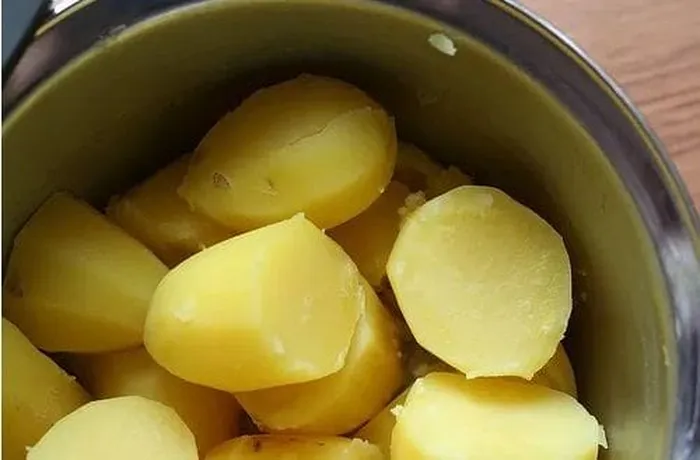
- While the offal cooks, boil the potatoes in their skins in salted water for about 20 minutes until tender. Drain, cool, peel, and dice. Slice the onion into thin feather-cut strips (pluma), rinse under cold water, and drain. Dice the tomato and hard-boiled eggs. Set everything aside.
- In a large bowl, combine all the diced offal with the onion, ají, cilantro, garlic, tomato, and chopped hard-boiled eggs. Add vegetable oil, fresh lemon juice, and salt to taste. Stir everything together with a wooden spoon until well combined. Serve immediately.

Additional Tips
How to neutralize the strong smell of pork offal before cooking?
Blanch all the offal in a separate pot of boiling water with a generous splash of white vinegar or lemon juice for 2 to 3 minutes. Discard this first water, rinse the pieces under cold running water, then proceed with the main 2-hour cook in fresh water. This two-step approach removes surface blood and impurities that cause the strong aroma without leaching flavor from the meat.
How to get the right texture in each cut of offal?
Each cut has a different collagen and muscle fiber structure and requires different cooking times. The liver and heart are dense muscle — they toughen if overcooked, so pull them at 30 minutes. The tongue has a thick outer skin that must be peeled while still warm after cooking — run it under cold water, score the tip, and the skin slips off easily. The trotters need the full two hours to dissolve their cartilage into a gelatinous texture. A pressure cooker reduces the trotter time to 45 to 60 minutes if needed.
How to serve causeo for a crowd?
Causeo improves with a short rest: mix everything and refrigerate for 1 to 2 hours before serving so the lemon juice and onion juices distribute through the diced meats. For a buffet presentation, serve in a large shallow bowl lined with lettuce leaves, with lemon wedges and extra ají on the side. Provide toothpicks and sliced pan amasado or pan de campo for scooping.
Chilean Causeo Variations
| Version | Main protein | Region | Defining character |
|---|---|---|---|
| Campesino (this recipe) | Liver, trotters, tongue, heart | Central and southern Chile | Full offal, zero-waste |
| Patitas de chancho | Pork trotters only | Nationwide | Gelatinous, collagen-rich |
| Mariscos | Clams, mussels, sea urchin | Coastal Chile | Briny, fresh seafood |
| Vegetariano | Chickpeas, broad beans | Urban Chile | Plant-based, modern |
Frequently Asked Questions (FAQs)
1. How long does Chilean pork causeo keep?
Stored in an airtight container in the refrigerator, pork causeo keeps for up to 3 days. Serve cold or at room temperature — do not reheat, as warming offal changes its texture significantly and wilts the fresh herbs and tomato.
2. Why is it called causeo?
The name derives from the Quechua word causay, meaning life or sustenance. In Chilean rural tradition, causeo refers to a cold preparation of cooked meats eaten between the main meals of the day — a practical, high-protein snack for farm workers that could be prepared ahead, kept without refrigeration for a few hours, and eaten in the field.
3. Should causeo be served hot or cold?
Always cold or at room temperature. The fresh lemon juice, cilantro, and tomato are the structural counterpoint to the heavy offal — they rely on being served cold to maintain their brightness. Heating causeo collapses these contrasts and produces a one-dimensional, greasy dish.
4. How do I reduce the strong smell of pork offal?
Blanch the liver, heart, and tongue in boiling water with a splash of vinegar or lemon juice for 2 to 3 minutes before the main cooking. This removes surface impurities and neutralizes the strong aroma without affecting the final flavor. Using very fresh offal also helps — the smell intensifies as the product ages.
5. Can I use only one type of pork offal instead of all four?
Yes. A simplified version using only pork trotters is also traditional in Chile. You can also use just liver and heart if trotters or tongue are unavailable. The campesino version uses all four because it was historically a zero-waste preparation, using every part of the pig slaughtered for a rural family or community gathering.
What Is Chilean Campesino Pork Causeo?
Causeo de cerdo campesino is the full rural version of Chile’s traditional cold pork salad — a zero-waste preparation that uses every part of the pig: liver, trotters, tongue, and heart. These cuts are slow-cooked separately, diced, and dressed with fresh onion, tomato, cilantro, lemon juice, and ají. The word causeo is used in Chile for any cold salad of cooked protein eaten outside of the main meal hours — a practical tradition rooted in agricultural life where field workers needed portable, high-protein food that required no reheating.
History of Causeo in Chile
Causeo traces its origins to the hacienda and smallholder farm traditions of central and southern Chile, where pigs were raised as the primary source of protein for rural families. At slaughter, every part of the animal was used — the premium cuts for roasting, the offal for causeo and other preparations that could be eaten the same day. The Quechua word causay entered the Chilean rural vocabulary through the agricultural workers who migrated from the Andean interior, bringing their culinary terminology for between-meal sustenance foods. The practice of eating causeo in the fields during the workday is documented in Chilean costumbrista literature of the nineteenth and early twentieth centuries.
Did You Know?
In Chilean culinary tradition, causeos are specifically defined as preparations eaten outside the standard meal hours — not as starters served at the table, but as standalone snacks consumed at mid-morning or mid-afternoon. This cultural specificity explains why causeo is always served cold: it was prepared at home in the morning, carried to the fields, and eaten hours later without access to heat.