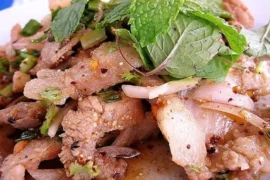
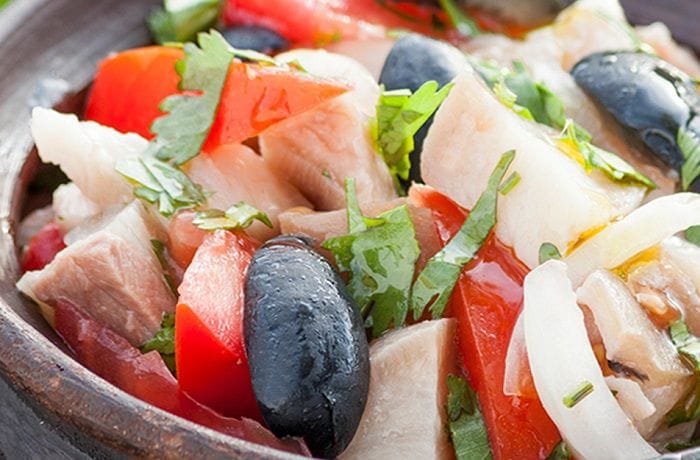
The Chilean causeo is a traditional dish in our cuisine, essentially a salad that often includes some kind of animal protein, such as pork trotters or beef, served cold. It’s typically enjoyed as an evening meal with fresh marraqueta bread.
Nutritional Facts
Each serving of pork trotters causeo contains approximately 350 kcal, 15 g of proteins, 20 g of total fats (including 5 g of saturated fats), 80 mg of cholesterol, 10 g of carbohydrates, 2 g of sugars, and 600 mg of sodium.
How to Make Pork Trotters Causeo
In preparing causeo, the base usually consists of onions sliced into feathers or cubes, lemon juice, oil, cilantro, and chili sauce, to which meat from pork trotters or beef is often added. This can be further complemented with cheese and olives.
Prep Time: 30 minutes
Cook Time: 90 minutes
Servings: 4 people
Ingredients
- 4 pork trotters
- 3 cloves of finely chopped garlic
- 2 large tomatoes cubed
- 2 tablespoons of chopped cilantro
- 2 bay leaves
- 1 large onion, sliced into feathers
- 1 sprig of fresh parsley
- 1 tablespoon of oregano
- ½ green bell pepper cubed
- Juice of ½ lemon
- Wonder oil (or a similar vegetable oil)
- Red chili paste
- Salt
- Pepper

Instructions
- Thoroughly wash the pork trotters, removing excess moisture, and expose them to a gas flame to eliminate any remaining hair on the skin. Cut the trotters in half lengthwise and place them in a pressure cooker. Cover with a liter of water, and add a teaspoon of salt, bay leaves, and oregano.

- Cover the pot and cook over medium heat for 90 minutes. Depressurize and cool to room temperature. Drain the trotters, debone, shred, and cut them into medium cubes. Reserve in a large bowl. Add onion, garlic, and green pepper to the bowl, along with chopped fresh cilantro.

- Mix everything with a wooden spoon. Add the chopped tomatoes, a splash of oil, lemon juice, and red chili paste to taste. Gently integrate all the ingredients and let it rest for a few minutes. Serve the pork trotters causeo as an appetizer, a starter, or a side dish to a main course.
Expert Secrets for a Master-Level Causeo
- The “Flame Finish”: Never skip flaming the trotters over a gas burner. This doesn’t just remove microscopic hairs; it singes the skin slightly, providing a subtle smoky depth that balances the fattiness of the meat once it’s boiled.
- Thermal Shock Management: After the 90-minute pressure cook, allow the trotters to cool to room temperature before deboning. If you debone while they are piping hot, the meat will shred into a mush. Letting them set slightly ensures clean, professional-looking cubes.
- The “Collagen Gold” Broth: Do not throw away the cooking water. It is a concentrated collagen bomb. Filter it and freeze it; it is the perfect base for adding body and “lip-sticking” richness to any bean stew or soup.
- Maceration Timing: Add the lemon juice and chili paste at least 10 minutes before serving, but keep the tomatoes out until the very last second. The acidity needs time to penetrate the trotters and “cut” the fat, but the tomatoes will turn the dish watery if they sit in the salt for too long.
Frequently Asked Questions (FAQ)
1. What can I use if I don’t have a pressure cooker?
You can use a traditional heavy-bottomed pot, but you will need to increase the cooking time to about 2.5 to 3 hours. The trotters are ready when the meat begins to pull away from the bone with minimal resistance.
2. Can I substitute pork trotters with beef trotters?
Yes, beef trotters (patitas de vacuno) are a very common variation. They are generally larger and may require an extra 20–30 minutes of cooking, but the final “causeo” preparation remains the same.
3. Why did my causeo turn into a solid block in the fridge?
This is a sign of high-quality, natural gelatin. Because pork trotters are almost pure collagen, the liquid will solidify when cold. Simply take it out of the fridge 15–20 minutes before serving to let it reach a mellow, room-temperature consistency.
4. How can I make the onion less “strong” for a delicate palate?
Perform the “amortiguado” technique: soak the sliced onions in cold water with a pinch of sugar or salt for 10 minutes, then rinse and drain. This preserves the crunch while removing the aggressive sulfurous bite.
5. How long does deboned causeo last?
Because of the high acidity from the lemon and the preservative nature of the salt/chili, it stays fresh in an airtight container for up to 3 days. In fact, many say it tastes even better on day two!
History and Origins of Chilean Causeo
According to research by the historian Eugenio Pereira Salas, this preparation became firmly established in Chilean culture toward the end of the 19th century. It emerged as an economic and highly practical solution to ensure no part of the slaughtered animal went to waste, transforming cuts like trotters into a cold, nutritious salad.
Did You Know?
The word causeo carries a profound history. Derived from the Quechua word “kawsay”, it literally means “sustenance of life”. In the late 19th century, it was the go-to meal for workers during their “once” (afternoon break) because it was cheap, filling, and packed with the protein and minerals needed to finish the day’s labor.