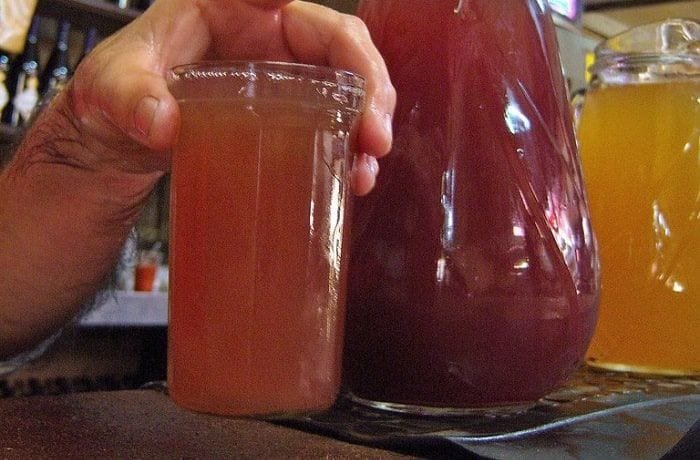
Chilean chichón is one of the simplest cocktails in the country’s rural drinking tradition: equal parts grape chicha and pipeño wine, stirred together and served cold in a tall glass. The name comes from the Chilean slang for the bump on your head after a fall — a wry acknowledgment of what tends to happen when you underestimate a drink that tastes sweet and fruity but carries the combined alcohol of two fermented beverages.
Both ingredients are products of Chile’s central valley wine country. Grape chicha is young, partially fermented grape must — sweet, cloudy, and lightly effervescent. Pipeño is a dry, barely-processed wine made from País or Moscatel grapes, with a raw, earthy character. Mixed in equal parts, the sweetness of the chicha and the dryness of the pipeño cancel each other out into something balanced and completely its own.
How to Make Chilean Chichón?
There is no technique involved — the only variable is the chicha-to-pipeño ratio, which you adjust to taste. Start at 50/50. If the chicha is very sweet, shift toward more pipeño (40/60). If you want a sweeter drink, shift the other way (60/40) or add a pinch of sugar. Stir, rest for one minute, and serve immediately.
Nutritional Information
Each serving of chichón provides approximately 150 kcal, 14 g carbohydrates, 0 g fat, 0 g protein, 0 g fiber, 14 g sugar, 0 mg cholesterol, and 10 mg sodium. Values are estimates and vary with the specific chicha and pipeño used.
Homemade Chilean Chichón Recipe
Prep time: 5 minutes
Servings: 2
Ingredients
- 400 ml (1¾ cups) grape chicha (chicha de uva)
- 400 ml (1¾ cups) pipeño wine
- Sugar, to taste (optional)

Instructions
- Pour the grape chicha and pipeño into a large glass pitcher in equal parts — or adjust the ratio to taste: more chicha for a sweeter drink (60/40), more pipeño if the chicha is very sweet (40/60). Add a pinch of sugar if desired.
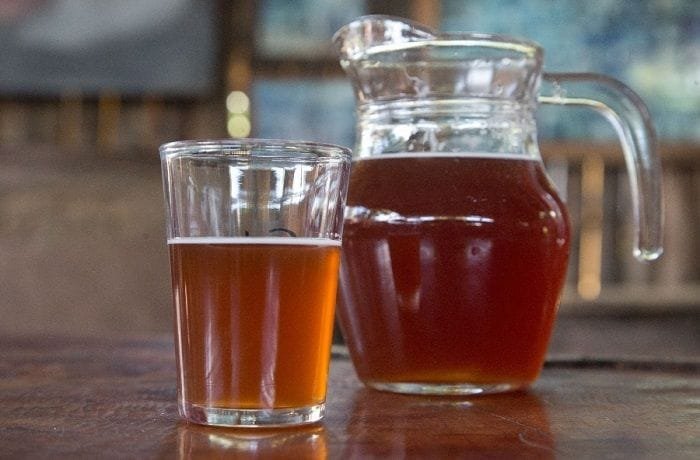
- Stir with a long spoon and let rest for one minute so the aromas and flavors integrate. Serve immediately in tall glasses, well chilled. Do not store — chichón is best made and drunk fresh.
Traditional Tips
Match the dryness of the pipeño to the sweetness of the chicha
Grape chicha varies considerably depending on how long it has fermented. A very young, barely fermented chicha is almost grape juice — intensely sweet. A chicha that has been fermenting for several days will be drier and slightly fizzy. Taste both before mixing and adjust the ratio accordingly. The goal is a drink that is neither cloyingly sweet nor sharp.
Serve very cold
Chichón is a warm-weather drink, consumed at outdoor celebrations and harvest events. Both components should be refrigerator-cold before mixing. Ice can be added to the glass if the chicha is particularly young and sweet.
Make it fresh and drink it immediately
Unlike wine or spirits, chichón does not improve with time. The chicha continues to ferment after mixing, which changes the flavor and increases the alcohol content unpredictably. Mix what you will drink in the next hour and leave the rest in separate bottles.
Frequently Asked Questions (FAQs)
1. What is the best grape chicha to use for chichón?
Fresh, unfiltered grape chicha with low fermentation is ideal. Avoid pasteurized supermarket versions — they lack the live fermentation character that makes the drink interesting. Chicha from Curacaví or the central valley wine regions is the traditional choice.
2. What food pairs well with chichón?
Chichón pairs naturally with empanadas, grilled meats, fresh cheese, pan amasado (Chilean kneaded bread), and traditional sweets like alfajores or hojarascas. Its sweet-tart fruitiness amplifies savory criollo dishes.
3. How strong is chichón?
Deceptively strong. The flavor is soft and fruity, but the combination of two fermented beverages can reach 12 degrees of alcohol or more depending on the pipeño used. Treat it as you would a light wine, not a soft drink.
4. Is chichón only drunk at Fiestas Patrias?
No. While September is its high season — tied to national holidays and grape harvests — chichón appears at rural asados, wine harvests (vendimias), and outdoor celebrations year-round in Chile’s central and southern regions.
History and Origin of Chichón
Chichón is a campesino cocktail — a drink born in the agricultural communities of Chile’s central valley, where grape chicha and pipeño were the beverages of harvest season. Its name comes from the Chilean word for the bump that forms on your head after a fall, a humorous reference to the consequences of drinking too much of something that goes down easily but carries real alcohol. The drink predates any formal cocktail culture in Chile and represents the kind of improvised, ingredient-driven mixing that happens when two available beverages happen to complement each other.
What Is Pipeño Wine?
Pipeño is a Chilean wine classification for beverages produced by the partial alcoholic fermentation of fresh grape must, made with authorized winemaking practices from vinifera grape varieties. Chilean law requires a minimum total alcohol content of 11.5 degrees GL and a volatile acidity below 1.5 g/L expressed as acetic acid. In practice, pipeño is an unaged, minimally processed wine — rustic, earthy, and often slightly cloudy — that comes directly from small producers and is sold young, close to harvest.
Did You Know?
The Curacaví valley, located in the Metropolitan Region of Santiago, is one of the traditional centers of grape chicha production in Chile. The town holds an annual chicha festival during the harvest season, and its chicha is considered a benchmark for the style — fresh, slightly fizzy, and sweet enough to be drunk on its own or mixed into a chichón.