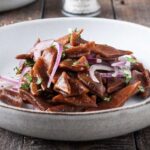
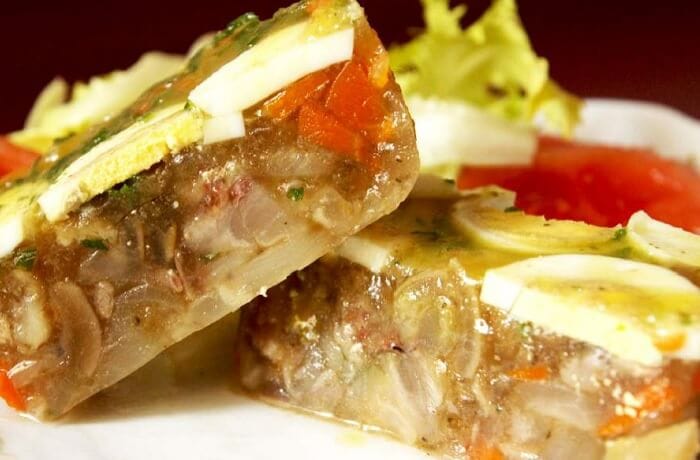
Beef trotter jelly is an old preparation introduced to Chile during colonial times and mostly popularized since the mid-19th century, primarily made in the summer.
How to Make Beef Trotter Jelly?
Beef trotter jelly is an easily prepared, cost-effective, and very light recipe that can be enjoyed as both an appetizer or a main dish at any time of the year.
Nutritional Information
Category: Appetizers
Cuisine: Chilean
Calories: 300
Preparation: 30 minutes
Cooking: 50 minutes
Servings: 6 people
Each serving of Chilean jellied beef trotters contains approximately 300 calories, 5 g of carbohydrates, 14 g of fats, 38 g of proteins, 0 g of fiber, 2 g of sugars, 120 mg of cholesterol, and 580 mg of sodium.
Homemade Beef Trotter Jelly Recipe
Ingredients
- 1 beef trotter
- 4 eggs
- 4 garlic cloves
- 4 carrots
- 1 onion, thinly sliced
- 1 teaspoon oregano
- 1 teaspoon pepper
- Salt
- Freshly chopped cilantro
- Freshly chopped parsley

Instructions
- Shave the beef trotter to remove any hair residues, wash it thoroughly, and drain.
- Cut the beef trotter into small pieces and carefully place them at the bottom of a pressure cooker, completely cover with water, and add the chopped onion, chopped garlic, oregano, salt, and optionally some herbs of your choice such as rosemary or thyme. Cover and cook for about 30 minutes or until the meat is tender enough.
- Add the carrots cut into long pieces or cubes, cover, and cook for an additional 10 minutes or until everything is well-cooked.
- Empty the pieces into a pudding mold, chop them into even smaller pieces, remove all the bones, and set aside.
- Strain and pour the broth over the meat in the pudding mold, settle and incorporate the chopped cooked vegetables into small pieces, add cilantro and freshly chopped parsley to taste, check seasoning, and gently mix with a wooden spoon.
- Distribute the boiled and sliced eggs on the surface, cover with plastic wrap, and let it rest in the refrigerator for at least 12 hours.
- Serve the chilled beef trotter jelly alone or accompanied, as an appetizer, or main dish.
Additional Tips
Extracting the Maximum Gelatin
The collagen in the trotter is what makes the jelly set. Use a pressure cooker to extract maximum collagen in minimum time — 30 minutes in a pressure cooker is equivalent to 2–3 hours of open simmering. If you want a firmer jelly, reduce the strained broth by simmering it uncovered for 10–15 minutes before pouring it into the mold.
Layering for Visual Impact
The assembly order matters for presentation: arrange eggs and carrots at the bottom of the mold (which becomes the top when unmolded), then add the meat, then pour the broth. This ensures the most visually appealing layer is on top when served. Chill for at least 12 hours — 24 hours gives the firmest result.
Serving and Accompaniments
Unmold by running a thin knife around the edge and briefly dipping the base of the mold in hot water for 10 seconds. Invert onto a serving plate. Slice with a sharp, wet knife for clean cuts. Serve with pickled vegetables, pebre (Chilean salsa), homemade bread, or a squeeze of lemon to cut through the richness of the jelly.
| Ingredient | Substitute | Notes |
|---|---|---|
| Beef trotter | Pig’s trotter | More delicate, slightly fattier |
| Carrots | Turnips or celery | Changes color and flavor profile |
| Fresh cilantro | Flat-leaf parsley | Less pungent, more neutral |
| Boiled eggs | Quail eggs | More elegant presentation |
Frequently Asked Questions (FAQs)
How long does jellied beef trotters keep in the refrigerator?
The jelly keeps well for up to 5 days in the refrigerator, covered tightly with plastic wrap or in an airtight container. It does not freeze well — the gelatin structure breaks down on thawing. Consume within 5 days for the best texture and flavor.
Do I need a pressure cooker to make this recipe?
No, but it speeds up the process considerably. Without a pressure cooker, simmer the trotter in a covered pot for 2–3 hours over low heat until the meat is completely tender and falls away from the bone. The gelatin extraction is the same; only the time differs.
How do I know if the broth will set into a proper jelly?
Test the broth before pouring it into the mold: place a small spoonful on a cold plate and refrigerate for 5 minutes. If it sets into a firm jelly, the collagen content is sufficient. If it remains liquid, simmer the broth uncovered for 15–20 minutes to concentrate the gelatin.
Can I add other vegetables to the jelly?
Yes. Peas, green beans, or sliced bell peppers can be added for color and nutrition. Cook them lightly before adding to the mold — they should be tender but not mushy, as they will continue to cook slightly when submerged in the hot broth.
What Is Chilean Jellied Beef Trotters?
Chilean jellied beef trotters (jalea de pata de vaca) is a cold, savory jelly made by slow-cooking a beef trotter until the collagen-rich bones and connective tissue release a natural gelatin into the broth. The strained broth sets into a firm, translucent jelly when cooled, encasing layers of shredded trotter meat, boiled eggs, cooked carrots, and fresh herbs. It is a preparation that is simultaneously rustic and refined, deeply rooted in Chilean rural cooking tradition. Beef trotter is naturally rich in collagen — an important protein for skin, nails, hair health, and joint support — and is an excellent source of complete protein and essential minerals.
History of Jellied Beef Trotters in Chile
Beef trotter jelly was introduced to Chile during the Spanish colonial period, where similar preparations existed in medieval European cuisine as a way to use every part of a slaughtered animal and preserve it without refrigeration. The technique was particularly practical in colonial Chile, where cattle were plentiful and the natural gelatin in the trotter acted as its own preservative. By the 19th century, beef trotter jelly had become a staple of Chilean summer cooking, especially in rural areas where it was made in large quantities and kept cool in cellars or stone rooms. Today it remains a nostalgic preparation found in traditional Chilean restaurants, markets, and family kitchens.
Did You Know?
Generally, trotter jellies are made by cooking the extremities of animals such as cattle and poultry, from which collagen protein is obtained.